GIOVE-B hydrogen atomic clock ticks through three years in orbit
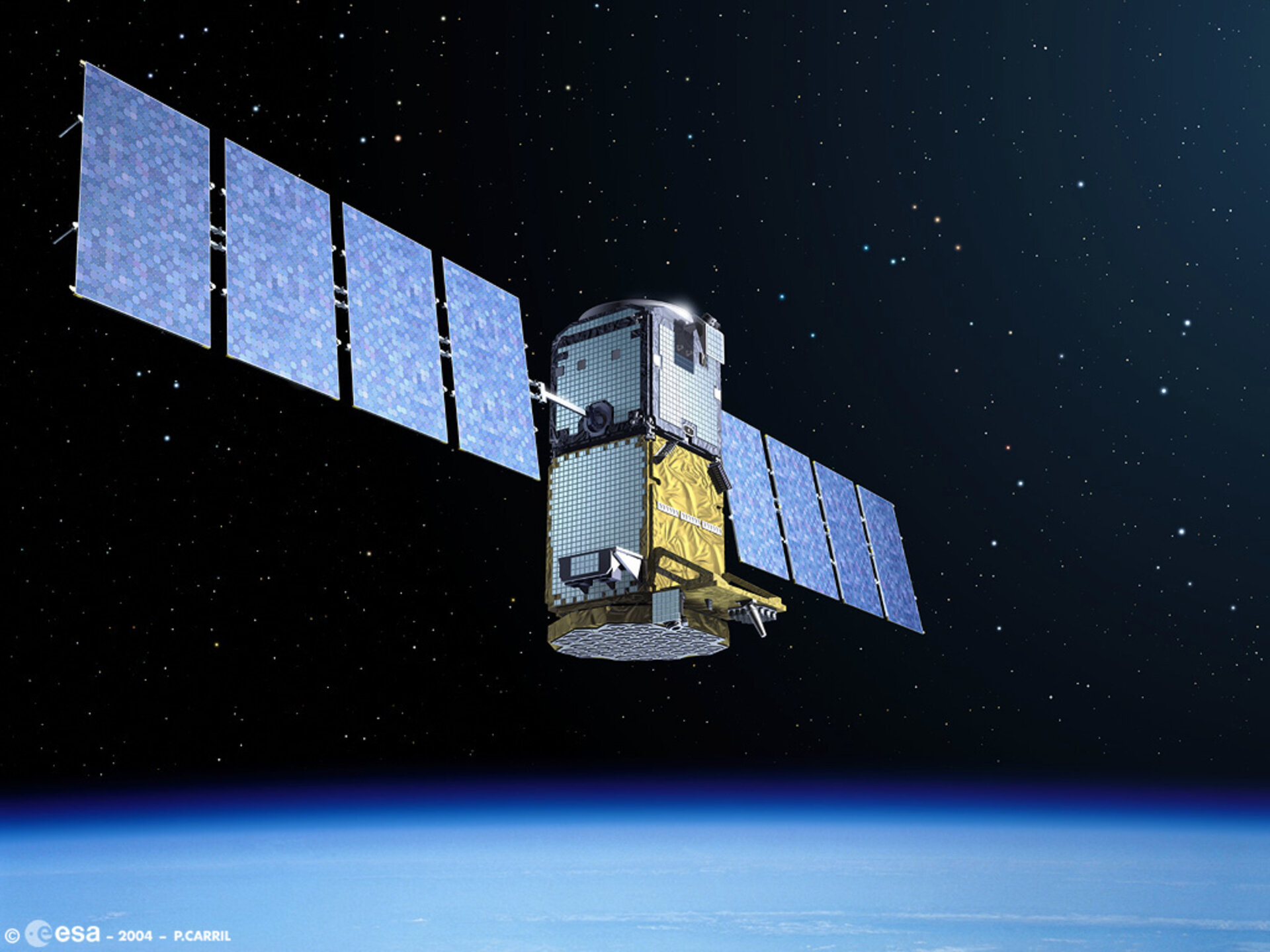
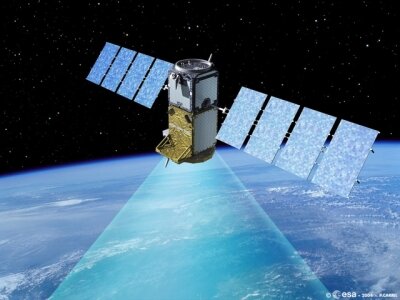
Three years after ESA’s Galileo prototype GIOVE-B reached orbit, the passive hydrogen maser at its heart is still ticking away as the most precise atomic clock ever flown in space for navigation – that is, until the first Galileo satellites join it later this year.
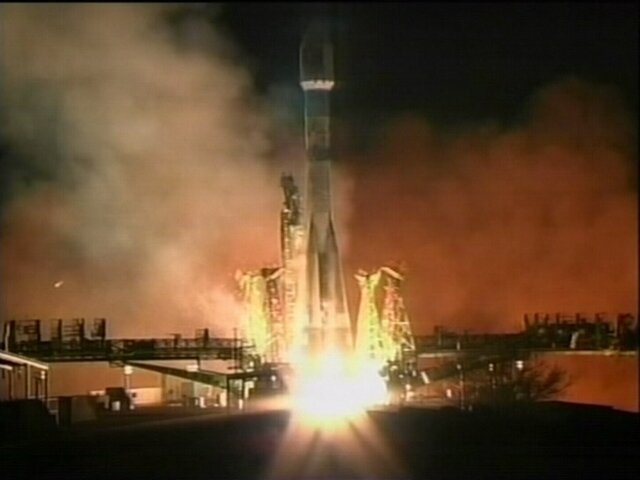
Launched by Soyuz rocket from Baikonur in Kazakhstan on 27 April 2008, GIOVE-B was ESA’s second Galileo In-Orbit Validation Element satellite to fly. The first, GIOVE-A, made it to orbit on 28 December 2005.
The satellites had the same goals: secure the radio frequencies provisionally allocated to Europe’s Galileo satnav system by the International Telecommunications Union, gather data on the radiation environment of medium Earth orbit, and validate key Galileo payloads in orbit.

“GIOVE-B has now been in orbit for 36 months, nine months more than its nominal lifetime,” said Valter Alpe, overseeing GIOVE operations for ESA.
“Both satellites are still working well. GIOVE-A has reached 64 months in orbit. This longevity is partly due to an unusually mild solar cycle, but also reflects well on the operating margins built into their design.
“Most notably, GIOVE-B’s passive hydrogen maser – Europe’s main technological advance for Galileo – is still operating as precisely as planned. We haven’t experienced any real surprises. As a result, much the same design is being used for the operational Galileo satellites.”

GIOVE-B became the first navigation satellite to carry a passive hydrogen maser (PHM), accurate to one second in three million years, compared to an accuracy of three seconds in one million years for the smaller rubidium clocks first demonstrated on GIOVE-A. GIOVE-B also carries two rubidium clocks as back-up.
Operational Galileo satellites – starting with the first two In-Orbit Validation satellites due to launch this year by Soyuz from French Guiana – will carry two types of each clock, with the PHMs serving as the ‘master clock’.
The PHM’s resonating frequency at 1 420 405 752 Hz is essential to achieve the accuracy of Galileo services. A single nanosecond’s error means a ranging error of 30 cm.
“At this level of accuracy, any changes in the surrounding environment could potentially affect the results,” said Valter.
“So GIOVE-B has been carefully designed to maintain constant conditions – most particularly any temperature variation is limited to less than one-tenth of one degree.”
This poses a particular challenge in Earth orbit, where the move from sunlight to shadow can plunge temperatures from +100° C to –150° C in an instant. GIOVE-B incorporates all standard thermal management tools, including multi-layer insulation, liquid-filled heat pipes that work like a closed-loop version of human sweat to transport away excess heat, radiators to dump it out into space and heaters to warm up areas that are getting too cold.
And the satellite itself also rotates on its axis as the Sun moves to keep the section of hull hosting the PHM in perpetual shadow.
Among GIOVE-B’s other firsts, the satellite has also been used to practise the ranging capabilities of the Galileo Telemetry and Telecommand Stations.
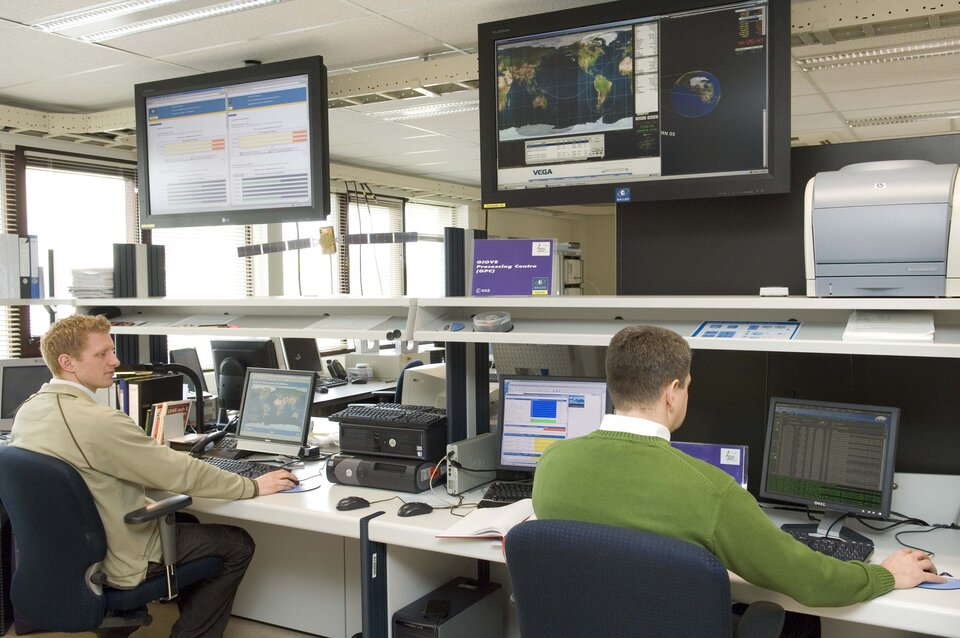
In the same way that a ground receiver uses the travel time of Galileo signals to calculate its position, sensor stations do the same in reverse, using signal delay to pinpoint the orbits of Galileo satellites above them.
“GIOVE-B has helped qualify the Galileo deployed ground segment for this tracking,” said Stefano Binda, Systems Performance Engineer for GIOVE.
“This capability is essential for the working of the Galileo system, as a means of predicting the spacecraft orbit and timely contacting of it to upload freshly-computed navigation correction messages.”