• → European Space Agency

      • Space for Europe
      • Space News
      • Space in Images
      • Space in Videos
    • About Us

      • Welcome to ESA
      • DG's News and Views
      • For Member State Delegations
      • Business with ESA
      • ESA Exhibitions
      • ESA Publications
      • Careers at ESA
    • Our Activities

      • Space News
      • Observing the Earth
      • Human Spaceflight
      • Launchers
      • Navigation
      • Space Science
      • Space Engineering
      • Operations
      • Technology
      • Telecommunications & Integrated Applications
    • For Public

    • For Media

      • Media
      • ESA TV
      • Videos for professionals
      • Photos
    • For Educators

    • For Kids

    • ESA

    • Navigation

    • EGNOS

    • Galileo

    • Evolution

    • About satellite navigation
    • Europe's satellite navigation services
    • Resources
    • Development Facilities
    • Navipedia
    • Multimedia
    • Galileo's In-Orbit Validation phase - 2012 video
    • Galileo - Europe leads the way 3D video
    • Image gallery
    • Video gallery
    • Documents
    • Galileo factsheet (PDF)
    • Galileo IOV factsheet (PDF)
    • Galileo FOC factsheet (PDF)
    • GNSS Evolution factsheet (PDF)
    • Galileo IOV brochure (PDF)
    • Galileo IOV brochures in French and German (PDF)
    • Archives
    • News archive
    • Navigation projects
    • Services
    • Subscribe

    ESA > Our Activities > Navigation

    Galileo gets the go-ahead

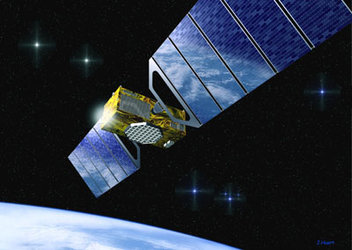
    Galileo constellation
    Galileo
    26 March 2002

    ESA PR 19-2002. The European Space Agency warmly welcomes the decision taken today by the European Union Transport Ministers, meeting in Brussels.

    Galileo has now been given the official go-ahead but for ESA that simply means that work on Galileo can continue! ESA teams have already been working for a number of years on satellite navigation systems, including the development of critical technologies such as atomic clocks and signal generators.

    Developed by ESA in collaboration with the European Union and co-funded by the two organisations on a 50-50 basis, Galileo is a complete civil system, designed to be operational from 2008 and to provide the world in general and Europeans in particular with an accurate, secure and certified satellite positioning system.

    There are many potential applications in road, rail, air and maritime traffic control, synchronisation of data transmission between banks, etc., and the economic implications for the coming 15 years are tremendous, with an estimated 4.6 return on investment and the creation of more than 100 000 jobs.

    Satellite navigation undoubtedly represents a real technological revolution comparable, some say, to the invention of the timepiece!
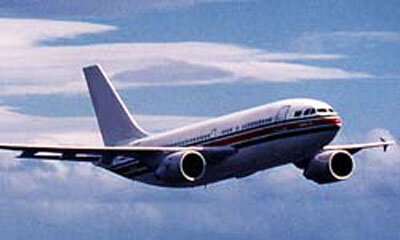
    Improving aviation safety with EGNOS
    Many potential applications including air traffic control

    Once, we needed to know the time. Now, we need to know the time and also where we are.

    So Galileo will be of vital importance to ordinary men and women both in Europe and throughout the world because at present everything depends on the GPS set up and controlled by the US military. Galileo will be in commercial competition with the GPS but will also complement it and provide redundancy. The result will be a continuity of service that could not be achieved by a single system.

    The go-ahead for Galileo is particularly important for European industry, which will now be able to develop the advanced technologies required not only for the purposes of the satellite network and its ground support system but also for the numerous applications associated with it.

    ESA was able to start work on applications several years ago, thanks to the European Global Navigation Overlay Service EGNOS, which refines current GPS data and foreshadows the services Galileo will provide.

    "Galileo marks an important step for Space Europe", said ESA Director General Antonio Rodotá, "because it is the first time a project has been conducted jointly by the European Space Agency and the European Union". It is also the first time the European Union has set up a joint undertaking. The partnership, comprising the European Commission and ESA, will have overall responsibility for the development and validation phase and the preparations for deployment and operations.

    It is thus a great step forward for space activities and for Europe, a step that will bring benefits to people all over the world.

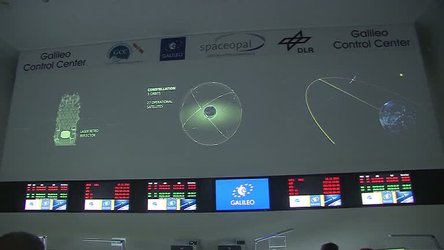
    The Galileo system will consist of 30 satellites (27 in operation and 3 in reserve), deployed in three circular Medium Earth Orbits at an altitude of 23 616 km and an inclination of 56° to the equator. This will provide excellent coverage of the planet. Two Galileo Control Centres will be set up in Europe to monitor the operation of the satellites and manage the navigation system.

    Rate this

    Views

    Share

    • Currently 0 out of 5 Stars.
    • 1
    • 2
    • 3
    • 4
    • 5
    Rating: 0/5 (0 votes cast)

    Thank you for rating!

    You have already rated this page, you can only rate it once!

    Your rating has been changed, thanks for rating!

    11
    Tweet
    • Related articles
      • ESA welcomes conclusions of the Barcelona European council on Galileo
        • What is Galileo?
          • Why Europe needs Galileo
            • Who's involved in Galileo?
              • Market prospects and business opportunities
                • Galileo technology developments
                • Related links
                • Galileo website (European Commission)
                • Click to start video
                  Europe shows the way - Windows media player
                • Click to start video
                  Europe shows the way - Windows media player
                • Click to start video
                  Europe shows the way - Quick time
                • Click to start video
                  Europe shows the way - Quick time

    Connect with us

    • RSS
    • Youtube
    • Twitter
    • Flickr
    • G+
    • Facebook
    • Livestream
    • Subscribe
    • App Store
    • LATEST ARTICLES
    • · Rare merger reveals secrets of gal…
    • · Watching for hazards: ESA opens as…
    • · ESA astronaut Timothy Peake set fo…
    • · Space drives e-mobility
    • · Proba-V opens its eyes
    • FAQ

    • Jobs at ESA

    • Site Map

    • Contacts

    • Terms and conditions