• → European Space Agency

      • Space for Europe
      • Space News
      • Space in Images
      • Space in Videos
    • About Us

      • Welcome to ESA
      • DG's News and Views
      • For Member State Delegations
      • Business with ESA
      • ESA Exhibitions
      • ESA Publications
      • Careers at ESA
    • Our Activities

      • Space News
      • Observing the Earth
      • Human Spaceflight
      • Launchers
      • Navigation
      • Space Science
      • Space Engineering
      • Operations
      • Technology
      • Telecommunications & Integrated Applications
    • For Public

    • For Media

    • For Educators

    • For Kids

    • ESA

    • Navigation

    • EGNOS

    • Galileo

    • Evolution

    • About satellite navigation
    • Europe's satellite navigation services
    • Resources
    • Development Facilities
    • Navipedia
    • Multimedia
    • Galileo's In-Orbit Validation phase - 2012 video
    • Galileo - Europe leads the way 3D video
    • Image gallery
    • Video gallery
    • Documents
    • Galileo factsheet (PDF)
    • Galileo IOV factsheet (PDF)
    • Galileo FOC factsheet (PDF)
    • GNSS Evolution factsheet (PDF)
    • Galileo IOV brochure (PDF)
    • Galileo IOV brochures in French and German (PDF)
    • Archives
    • News archive
    • Navigation projects
    • Services
    • Subscribe

    ESA > Our Activities > Navigation

    Galileo moves forward

    Galileo - an accurate and secured means of satellite positioning
    19 July 2004

    The GalileoSat development and in-orbit validation phase is well under way and the European Space Agency (ESA) has just released its procurement process to Industry indicating that the first completely civil satellite navigation system is moving forward.

    Galileo Implementation: a phased approach

    The Galileo Programme is being implemented in three phases:

    • Definition phase
    • Development and in-orbit validation
    • Full Deployment and Operations

    The Definition phase was completed in 2003 resulting in the basic specifications for the system.


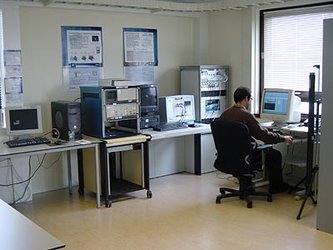
    Contracts signed for the development of GSTB satellites
    Contracts signed for the development of GSTB satellites

    The Development and In-Orbit Validation phase was initiated in late 2003. This phase aims to perform an in-orbit validation of the system using a reduced constellation of four satellites which is the minimum number to guarantee the provision of exact positioning and time at test locations.

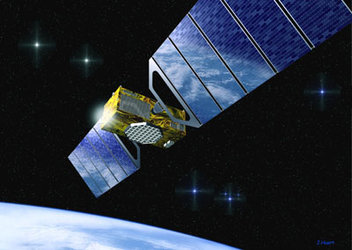
    Hydrogen maser clock
    Hydrogen maser clock

    Early in this phase, an experimental satellite will also be launched, to secure the Galileo frequency filings, to characterize the orbits to be used by the in-orbit validation satellites and to test some of the critical technologies, such as the atomic clocks.
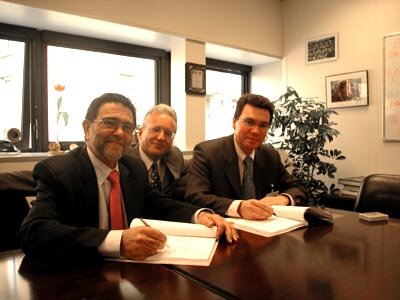
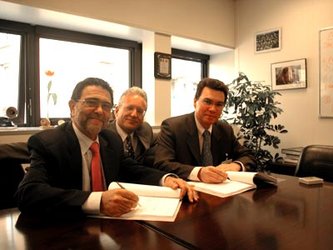
    Galileo System Test Bed (GSTB) launch contract signed
    Galileo System Test Bed (GSTB) launch contract is signed

    The experimental satellite will be launched before the end of 2005. The in-orbit validation will take place before 2007.
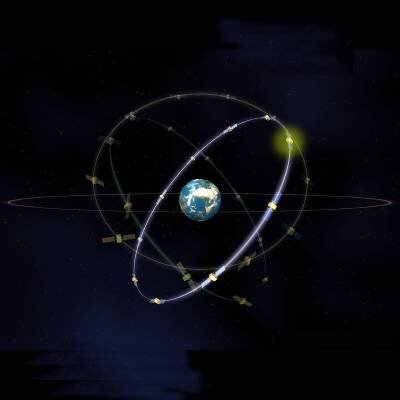
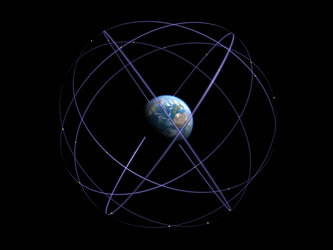
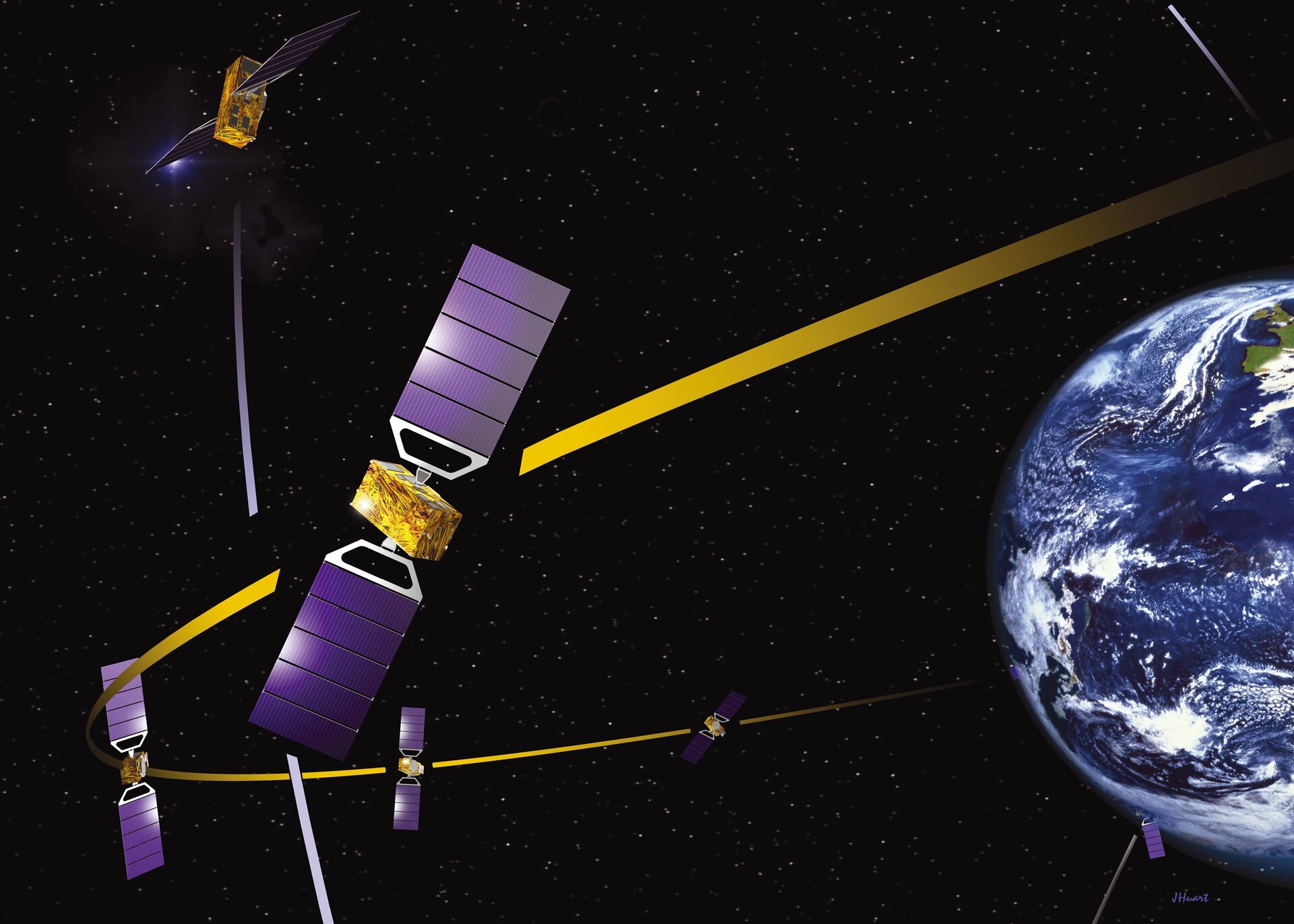
    Galileo constellation
    Galileo constellation

    The Development and In-Orbit Validation phase will be followed by the Full Deployment phase which will cover the manufacturing and launch of the remaining satellites and the completion of the ground segment. Once all satellites have been fully deployed, the operation will initiate with the complete constellation of 27 operational satellites and three in reserve, all stationed on three circular Medium Earth Orbits (MEOs) at an altitude of 23 222 km and with an inclination of 56º to the equator. To support this there will be an extensive network of ground stations, and local and regional service centres.

    For its part the Galileo Joint Undertaking, created jointly by the European Commission and ESA, started the process for choosing the concessionaire, the future “Galileo Operating Company” which will take charge of the final deployment then the operations.

    Galileo: a global dimension in international cooperation

    In parallel to these technical steps the political aspects of this programme are evolving with the agreement dealt between the European Union and the United States. This agreement was signed in June 2004 at the EU-US summit in Dublin. This allows to truly envisage the compatibility and interoperability of Galileo and GPS for the benefit of everyone. Galileo with GPS, not forgetting the Russian system GLONASS, should become the world standard for satellite navigation. This underlines the global dimension of Galileo with agreements with other countries like China, India, Canada, Israel either signed or under discussion.

    All phases of Galileo are advancing in the same direction for the implementation of a system that will revolutionize our daily lives in various sectors, offering Europeans, and indeed the world at large, an accurate and secured means of satellite positioning.

    Rate this

    Views

    Share

    • Currently 0 out of 5 Stars.
    • 1
    • 2
    • 3
    • 4
    • 5
    Rating: 0/5 (0 votes cast)

    Thank you for rating!

    You have already rated this page, you can only rate it once!

    Your rating has been changed, thanks for rating!

    27
    Tweet
    • Related news
    • Industry invited to Galileo kick-off meeting
      • ESA Navigation Applications Development Facilities to support new projects
        • First prototype of Galileo ground segment
          • Contract signed for launch of two experimental Galileo satellites
            • ESA welcomes setting-up of Galileo Joint Undertaking
            • Related links
            • Galileo Joint Undertaking (GJU)
            • Galileo website (European Commission)
            • CENC
            • Glonass
            • More about...
              • What is Galileo?
                • Why Europe needs Galileo
                  • Who's involved in Galileo?
                    • Galileo technology developments
                    • Galileo videos
                    • Click to start video
                      Europe shows the way - Windows media player
                    • Click to start video
                      Europe shows the way - Windows media player
                    • Click to start video
                      Europe shows the way - Quick time
                    • Click to start video
                      Europe shows the way - Quick time

    Connect with us

    • RSS
    • Youtube
    • Twitter
    • Flickr
    • G+
    • Facebook
    • Livestream
    • Subscribe
    • App Store
    • LATEST ARTICLES
    • · ESA astronaut Timothy Peake set fo…
    • · Space drives e-mobility
    • · Proba-V opens its eyes
    • · First new Galileo satellite arrive…
    • · Next destination: space
    • FAQ

    • Jobs at ESA

    • Site Map

    • Contacts

    • Terms and conditions