• → European Space Agency

      • Space for Europe
      • Space News
      • Space in Images
      • Space in Videos
    • About Us

      • Welcome to ESA
      • DG's News and Views
      • For Member State Delegations
      • Business with ESA
      • ESA Exhibitions
      • ESA Publications
      • Careers at ESA
    • Our Activities

      • Space News
      • Observing the Earth
      • Human Spaceflight
      • Launchers
      • Navigation
      • Space Science
      • Space Engineering
      • Operations
      • Technology
      • Telecommunications & Integrated Applications
    • For Public

    • For Media

    • For Educators

    • For Kids

    • ESA

    • Navigation

    • EGNOS

    • Galileo

    • Evolution

    • About satellite navigation
    • Resources
    • Development Facilities
    • Navipedia
    • Multimedia
    • Galileo's In-Orbit Validation phase - 2012 video
    • Galileo - Europe leads the way 3D video
    • Image gallery
    • Video gallery
    • Documents
    • Galileo factsheet (PDF)
    • Galileo IOV factsheet (PDF)
    • Galileo FOC factsheet (PDF)
    • GNSS Evolution factsheet (PDF)
    • Galileo IOV brochure (PDF)
    • Galileo IOV brochures in French and German (PDF)
    • Archives
    • News archive
    • Navigation projects
    • Services
    • Subscribe

    ESA > Our Activities > Navigation

    Inauguration of Galileo in-orbit test facilities in Redu

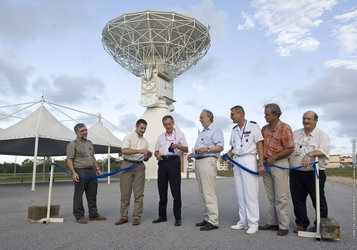
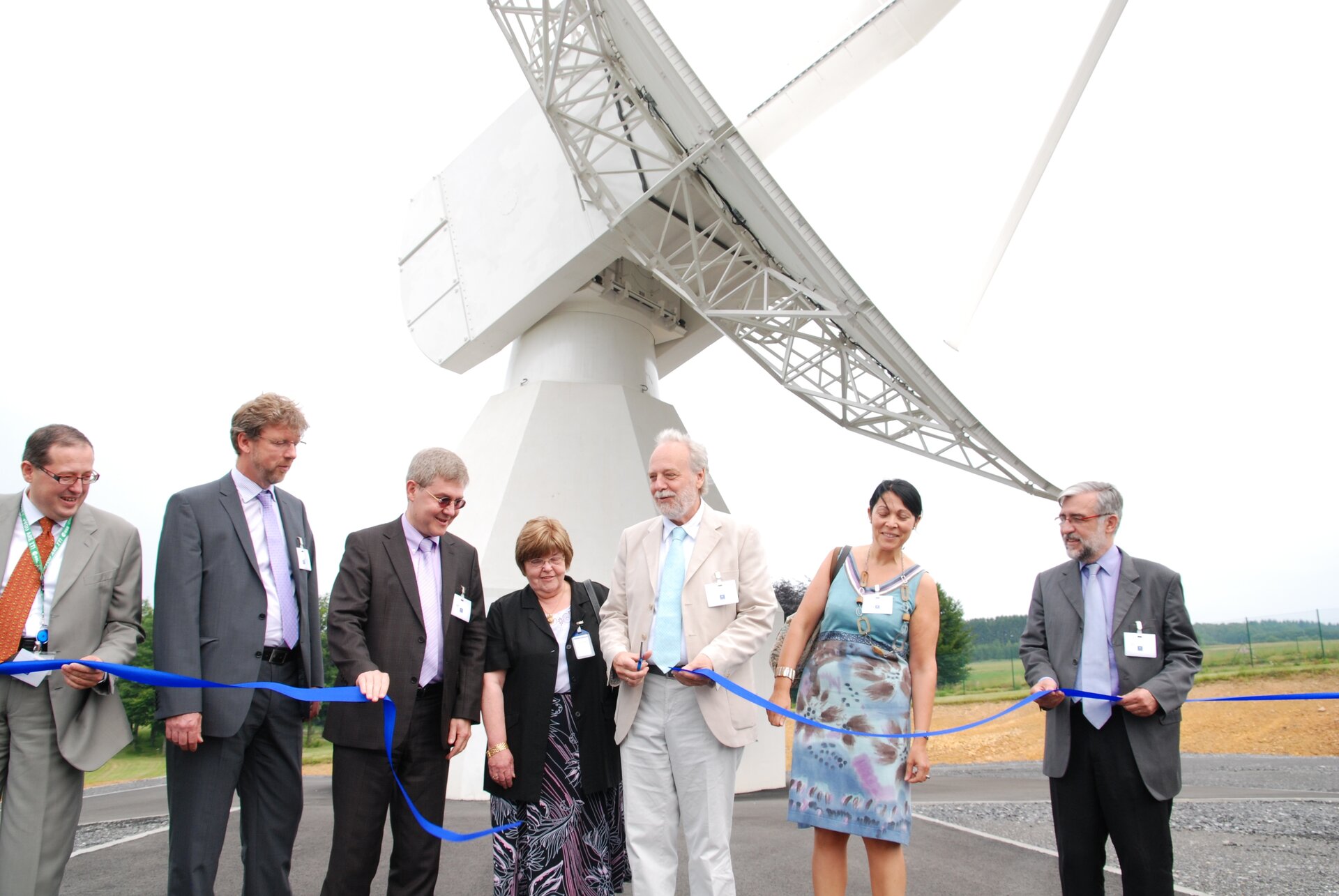
    Inauguration ceremony
     
    30 June 2010

    Yesterday ESA’s Redu centre in Belgium inaugurated its in-orbit testing facilities for Galileo. This is an important milestone for the in-orbit validation of the satellite navigation system, which is a joint project of the EU and ESA.

    As part of the Galileo programme, the infrastructure at Redu has been expanded to host Galileo’s satellite in-orbit testing facilities and a Galileo sensor station.
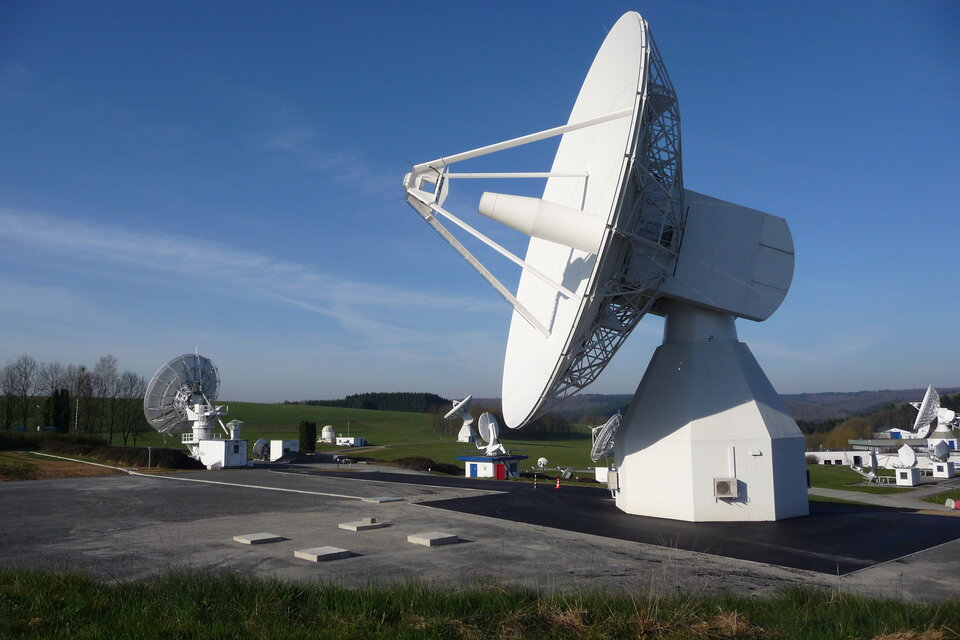
    Galileo IOT L-band antenna at Redu
    L-band antenna

    The main purpose of the testing facilities is to verify the performance of the payloads on the four Galileo In-Orbit Validation (IOV) satellites. The testing involves measuring radio frequency and baseband parameters for the navigation L-band downlink and the C-band uplink.
     
    The inauguration is an important milestone for Galileo’s in-orbit validation. The first two IOV satellites are scheduled for launch in mid-2011 atop a Soyuz rocket from Europe’s Spaceport in French Guiana.
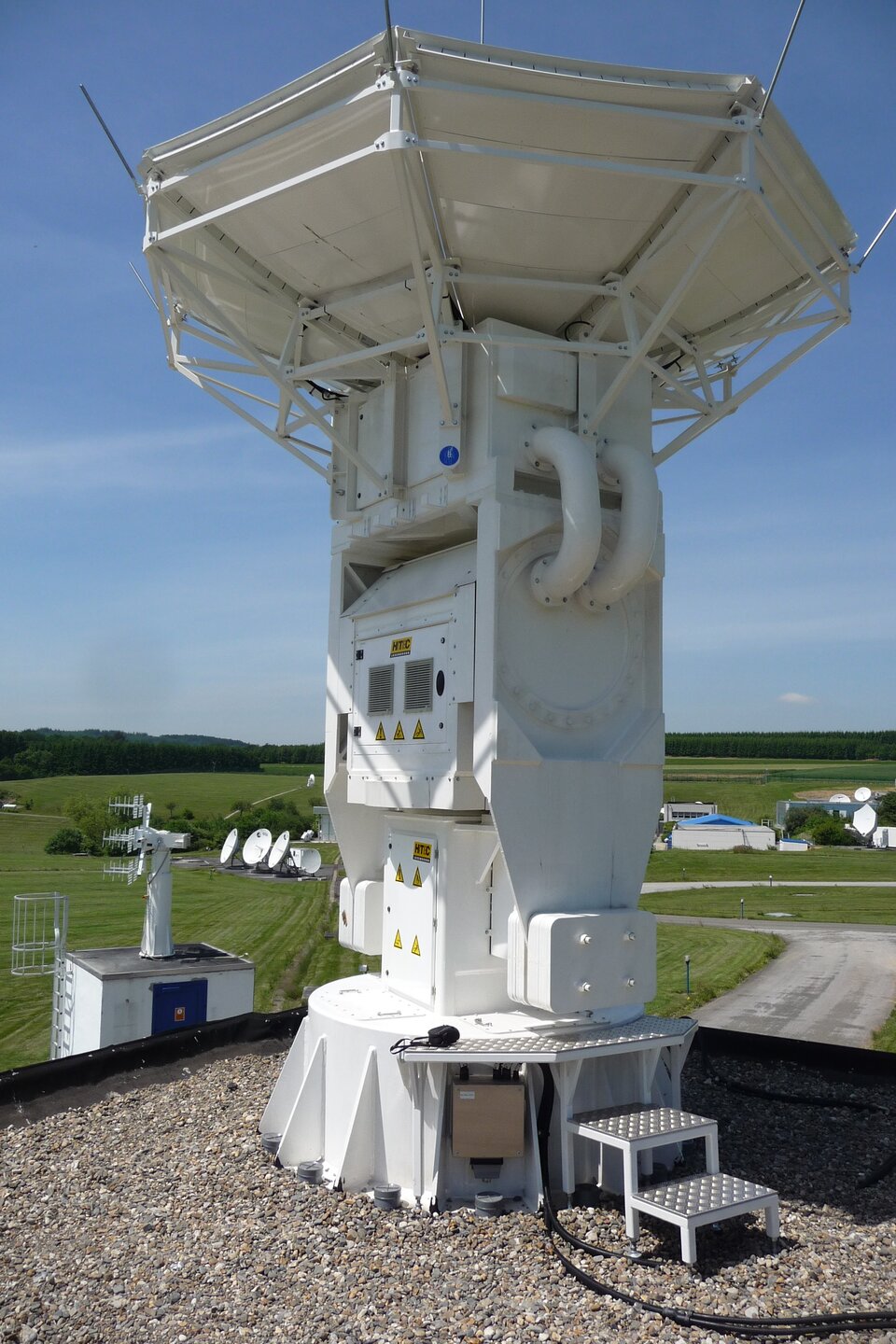

    Galileo IOT C-band antenna at Redu
    C-band antenna

    The Galileo ground segment for the in-orbit validation phase will comprise 18 sensor stations, five uplink stations, two telemetry, tracking and command stations, and two Galileo control centres. The control centres will be situated at Fucino, in Italy, and Oberpfaffenhofen, in Germany.
     
    “Galileo is coming. Another important part of Europe’s global navigation satellite system is now ready. We are progressing steadily,” said René Oosterlinck, ESA’s Director of the Galileo Programme and Navigation-related Activities.

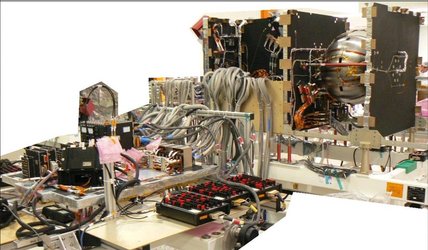
    Galileo IOT UHF antenna at Redu
    UHF antenna

    Rate this

    Views

    Share

    • Currently 0 out of 5 Stars.
    • 1
    • 2
    • 3
    • 4
    • 5
    Rating: 0/5 (0 votes cast)

    Thank you for rating!

    You have already rated this page, you can only rate it once!

    Your rating has been changed, thanks for rating!

    31
    facebook
    twitter
    reddit
    google plus
    digg
    tumbler
    digg
    blogger
    myspace
    • Lees ook
      • All four IOV platforms for the first time together
        • Inauguration of site of Galileo station at Kourou
          • Galileo IOV launch services contract signed
          • Meer op internet
          • Galileo website (European Commission)
          • European GNSS Agency

    Connect with us

    • RSS
    • Youtube
    • Twitter
    • Flickr
    • Google Buzz
    • Subscribe
    • App Store
    • LATEST ARTICLES
    • · CryoSat hits land
    • · Ariane 5 completes seven launches …
    • · Measuring skull pressure without t…
    • · Malargüe station inauguration
    • · The solar wind is swirly
    • FAQ

    • Jobs at ESA

    • Site Map

    • Contacts

    • Terms and conditions