• → European Space Agency

      • Space for Europe
      • Space News
      • Space in Images
      • Space in Videos
    • About Us

      • Welcome to ESA
      • DG's News and Views
      • For Member State Delegations
      • Business with ESA
      • ESA Exhibitions
      • ESA Publications
      • Careers at ESA
    • Our Activities

      • Space News
      • Observing the Earth
      • Human Spaceflight
      • Launchers
      • Navigation
      • Space Science
      • Space Engineering
      • Operations
      • Technology
      • Telecommunications & Integrated Applications
    • For Public

    • For Media

    • For Educators

    • For Kids

    • ESA

    • Navigation

    • EGNOS

    • Galileo

    • Evolution

    • About satellite navigation
    • Europe's satellite navigation services
    • Resources
    • Development Facilities
    • Navipedia
    • Multimedia
    • Galileo's In-Orbit Validation phase - 2012 video
    • Galileo - Europe leads the way 3D video
    • Image gallery
    • Video gallery
    • Documents
    • Galileo factsheet (PDF)
    • Galileo IOV factsheet (PDF)
    • Galileo FOC factsheet (PDF)
    • GNSS Evolution factsheet (PDF)
    • Galileo IOV brochure (PDF)
    • Galileo IOV brochures in French and German (PDF)
    • Archives
    • News archive
    • Navigation projects
    • Services
    • Subscribe

    ESA > Our Activities > Navigation

    Mission accomplished, GIOVE-B heads into deserved retirement

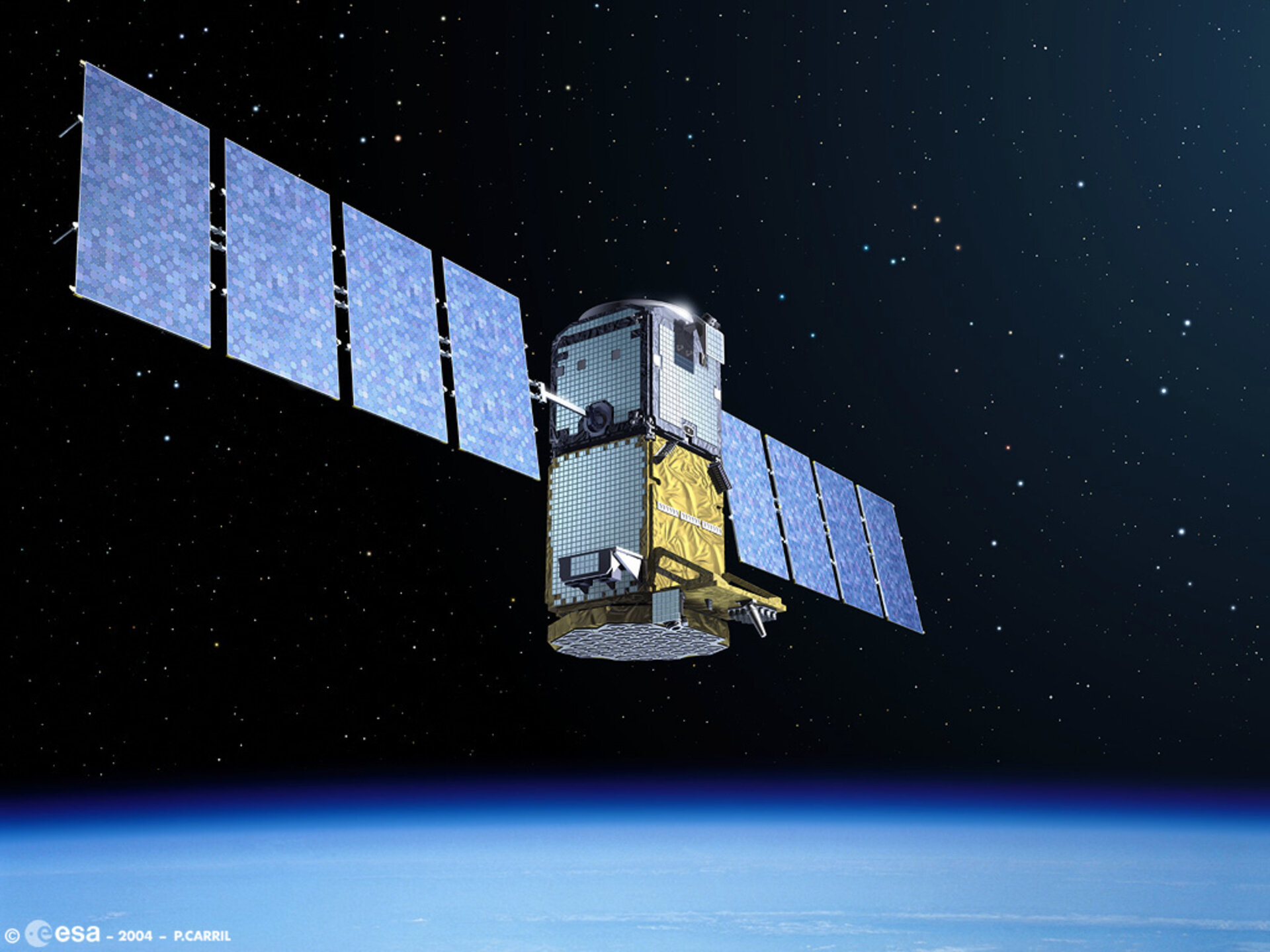
    GIOVE-B in orbit
    24 July 2012

    ESA’s GIOVE-B experimental navigation satellite is gradually raising its orbit as it prepares for well-earned retirement at the end of its four-year mission paving the way for Europe’s Galileo constellation.

    On Tuesday, an initial thruster firing raised GIOVE-B’s orbit by about 30 km. This will be followed by others in the next three weeks so that by mid-August the satellite will be in a graveyard orbit some 600 km above its original 23 222 km orbit.

    The second ‘Galileo In-Orbit Validation Experiment’ mission, launched on 27 April 2008, GIOVE-B carries both types of atomic clocks being used by the Galileo system: a rubidium clock, accurate to three seconds in one million years, and a passive hydrogen maser – the first clock of its kind flown in space – accurate to one second in three million years.

    It is also fitted with an antenna to illuminate Earth with its test signal, linked to a signal generation unit able to produce the kind of complex modulated signals required for the interoperation of Galileo with the US GPS system.

    Passive hydrogen maser
    Passive hydrogen maser

    GIOVE-B also carries ESA’s advanced Standard Radiation Monitor to survey the radiation environment in this orbit.

    After more than four years of service, GIOVE-B’s payload was turned off on Monday, in preparation for the following day’s thruster firing.

    “GIOVE-B, like its predecessor GIOVE-A, performed excellent work testing Galileo hardware, securing Europe’s rights to the radio frequencies set aside for Galileo and gathering data on medium-Earth orbit conditions,” said Valter Alpe, managing the GIOVE satellites for ESA.

    “Its signal, in combination with its ground element, also served to prove the Galileo system will work as planned.
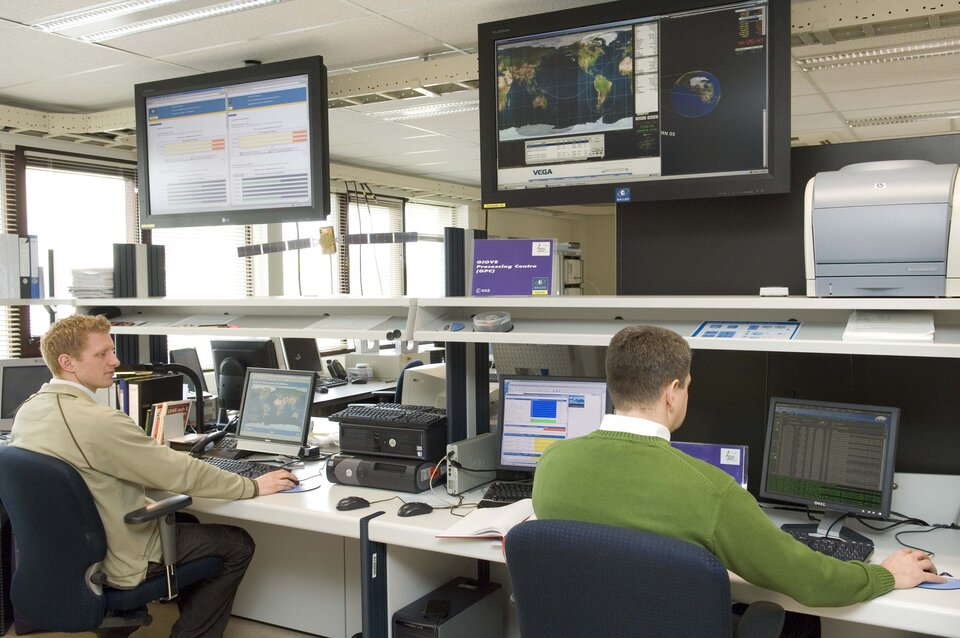

    GIOVE signal processing equipment
    GIOVE Processing Centre

    “But now that the first Galileo satellites have joined them in orbit – with the first two launched together on 21 October 2011, and a second pair due this autumn – and have proven to be operating extremely well – there is no longer any role left for these experimental satellites.”

    GIOVE-A was launched on 28 December 2005 and rose into a graveyard orbit in August 2009, with its mission completed at the end of June this year.

    Both satellites comfortably exceeded their design lives of 27 months.

    Rate this

    Views

    Share

    • Currently 0 out of 5 Stars.
    • 1
    • 2
    • 3
    • 4
    • 5
    Rating: 0/5 (0 votes cast)

    Thank you for rating!

    You have already rated this page, you can only rate it once!

    Your rating has been changed, thanks for rating!

    172
    Tweet
    • Galileo
      Galileo
      Galileo
    • More information
      • How the Galileo atomic clocks work
      • Galileo - the atomic clock - WM player
      • Galileo - the atomic clock - QT player
      • Related news
        • Mission accomplished for Galileo's pathfinder GIOVE-A
          • How GIOVE’s signals show way for Galileo
            • Galileo pathfinder GIOVE-A achieves five years in orbit
              • GIOVE-A laser ranging campaign successful
                • First Galileo satellite on orbit to demonstrate key technologies
                  • First Galileo signals transmitted by GIOVE-A
                    • GIOVE A transmits loud and clear

    Connect with us

    • RSS
    • Youtube
    • Twitter
    • Flickr
    • G+
    • Facebook
    • Livestream
    • Subscribe
    • App Store
    • LATEST ARTICLES
    • · Proba-V opens its eyes
    • · First new Galileo satellite arrive…
    • · Next destination: space
    • · Leak repaired on International Spa…
    • · After Chelyabinsk: European expert…
    • FAQ

    • Jobs at ESA

    • Site Map

    • Contacts

    • Terms and conditions