• → European Space Agency

      • Space for Europe
      • Space News
      • Space in Images
      • Space in Videos
    • About Us

      • Welcome to ESA
      • DG's News and Views
      • For Member State Delegations
      • Business with ESA
      • ESA Exhibitions
      • ESA Publications
      • Careers at ESA
    • Our Activities

      • Space News
      • Observing the Earth
      • Human Spaceflight
      • Launchers
      • Navigation
      • Space Science
      • Space Engineering
      • Operations
      • Technology
      • Telecommunications & Integrated Applications
    • For Public

    • For Media

    • For Educators

    • For Kids

    • ESA

    • Home

    • Galileo IOV at a glance
    • Overview
    • Objectives
    • About Galileo
    • How satellite navigation works
    • Europe's satellite navigation services
    • First steps
    • Galileo’s clocks
    • Satellite anatomy
    • Galileo on the ground
    • Galileo partners
    • About Soyuz
    • Soyuz launcher
    • Soyuz launch site
    • After launch
    • Early operations
    • In-orbit testing
    • Next steps
    • Multimedia
    • Galileo launch campaign photos on Flickr
    • Galileo's In-Orbit Validation phase - 2012 video
    • Galileo IOV 2011 video
    • Galileo IOV images
    • Galileo IOV animations
    • Galileo - Europe leads the way 3D video
    • Documents
    • Galileo factsheet (PDF)
    • Galileo IOV factsheet (PDF)
    • Galileo FOC factsheet (PDF)
    • GNSS Evolution factsheet (PDF)
    • Galileo IOV brochure (PDF)
    • Galileo IOV brochures in French and German (PDF)

    ESA > Our Activities > Navigation > The future - Galileo > Galileo IOV Launch

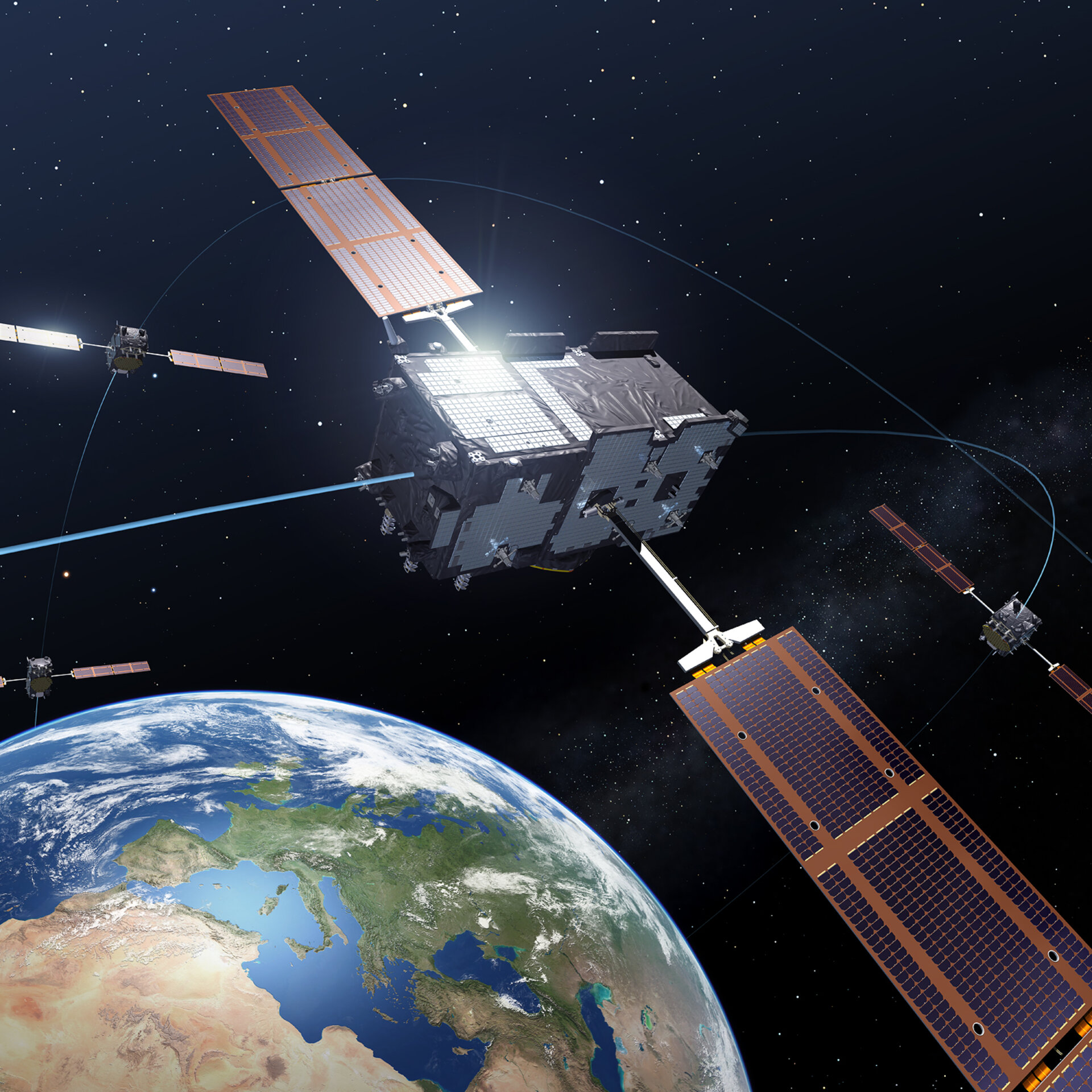
    First two Galileo IOV satellites

    Overview

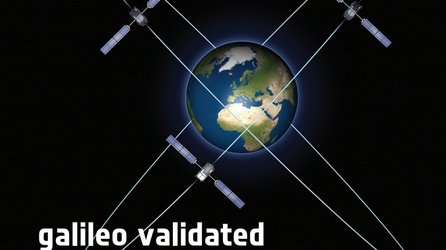
    The first orbital elements of Europe’s global satellite navigation system are in place. On 21 October 2011 a Soyuz rocket from French Guiana launched two satellites, with two more following on 12 October 2012: these four Galileo In-Orbit Validation (IOV) satellites currently in orbit represent the operational nucleus of the full 30-satellite constellation.

    Fully representative of the others that will follow them into orbit, these first four IOV satellites will prove that the satellites and ground segment meet many of Galileo’s requirements and will validate the system’s design in advance of completing and launching the rest of the constellation.

    Galileo IOV facts and figures

    First launch: 21 October 2011
    Second launch: 12 October 2012
    Launch vehicle: Soyuz ST-B launcher with Fregat-MT upper stage
    Launch site: Guiana Space Centre, French Guiana
    Launch mass: 700 kg
    Size (with solar wings stowed): 3.02 x 1.58 x 1.59 m
    Size (with solar wings deployed): 2.74 x 14.5 x 1.59 m
    Navigation payload: Two Passive Hydrogen Maser atomic clocks; two Rubidium atomic clocks; Clock monitoring and control unit; Navigation signal generator unit; L-band antenna for navigation signal transmission, C-band antenna for uplink signal detection, two S-band antennas for telemetry and telecommands; Search and rescue antenna
    Available power: 1420 watts (sunlight) / 1355 watts (in eclipse)
    Orbit: Medium-Earth orbit, 23 222 km
    Orbital inclination: 56°
    Operational lifetime: more than 12 years
    Satellite control centre: CNES in Toulouse, France with the support of ESOC in Darmstadt, Germany for Launch and Early Operations Phase (LEOP), satellite control transferring to Oberpfaffenhofen Galileo Control Centre in Germany while Redu in Belgium performs the In-Orbit Test campaign
    Navigation control centre: Fucino Galileo Control Centre in Italy

    Last update: 7 December 2012

    Rate this

    Views

    Share

    • Currently 0 out of 5 Stars.
    • 1
    • 2
    • 3
    • 4
    • 5
    Rating: 0/5 (0 votes cast)

    Thank you for rating!

    You have already rated this page, you can only rate it once!

    Your rating has been changed, thanks for rating!

    109
    facebook
    twitter
    reddit
    google plus
    digg
    tumbler
    digg
    blogger
    myspace
    • Navigation
    • Galileo
      Galileo
      Galileo
    • Galileo Tour
      Galileo Tour
      Galileo Tour
    • Related links
    • EC Galileo website
    • European GNSS Agency

    Connect with us

    • RSS
    • Youtube
    • Twitter
    • Flickr
    • Google Buzz
    • Subscribe
    • App Store
    • LATEST ARTICLES
    • · CryoSat hits land
    • · Ariane 5 completes seven launches …
    • · Measuring skull pressure without t…
    • · Malargüe station inauguration
    • · The solar wind is swirly
    • FAQ

    • Jobs at ESA

    • Site Map

    • Contacts

    • Terms and conditions