• → European Space Agency

      • Space for Europe
      • Space News
      • Space in Images
      • Space in Videos
    • About Us

      • Welcome to ESA
      • DG's News and Views
      • For Member State Delegations
      • Business with ESA
      • ESA Exhibitions
      • ESA Publications
      • Careers at ESA
    • Our Activities

      • Space News
      • Observing the Earth
      • Human Spaceflight
      • Launchers
      • Navigation
      • Space Science
      • Space Engineering
      • Operations
      • Technology
      • Telecommunications & Integrated Applications
    • For Public

    • For Media

      • Media
      • ESA TV
      • Videos for professionals
      • Photos
    • For Educators

    • For Kids

    • ESA

    • Navigation

    • EGNOS

    • Galileo

    • Evolution

    • About Galileo
    • Why Europe needs Galileo
    • Galileo partners
    • Galileo : a constellation of 30 navigation satellites
    • Galileo on the ground
    • Satellite anatomy
    • Galileo’s clocks
    • Next steps
    • Documentation
    • Galileo's In-Orbit Validation phase - 2012 video
    • Open service signal - specifications
    • Galileo factsheet (PDF)
    • Galileo IOV factsheet (PDF)
    • Galileo FOC factsheet (PDF)
    • Technology developments archive
    • GSTB-V1 Technology Developments
    • Galileo technology developments
    • Subscription
    • Subscribe
    • Europe's satellite navigation services

    ESA > Our Activities > Navigation > The future - Galileo

    What is Galileo?

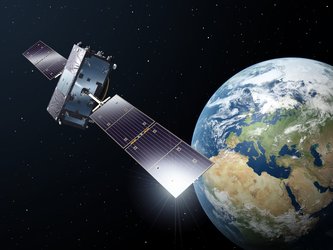
    Galileo is Europe’s own global navigation satellite system, providing a highly accurate, guaranteed global positioning service under civilian control. It is inter-operable with GPS and Glonass, the US and Russian global satellite navigation systems.

    By offering dual frequencies as standard, Galileo will deliver real-time positioning accuracy down to the metre range. It will guarantee availability of the service under all but the most extreme circumstances and will inform users within seconds of any satellite failure, making it suitable for safety-critical applications such as guiding cars, running trains and landing aircraft.

    On 21 October 2011 came the first two of four operational satellites designed to validate the Galileo concept in both space and on Earth. Two more followed on 12 October 2012. This In-Orbit Validation (IOV) phase is now being followed by additional satellite launches to reach Initial Operational Capability (IOC) by mid-decade.

    Galileo services will come with quality and integrity guarantees which marks the key difference of this first complete civil positioning system from the military systems that have come before.

    A range of services will be extended as the system is built up from IOC to reach the Full Operational Capability (FOC) by this decade’s end.

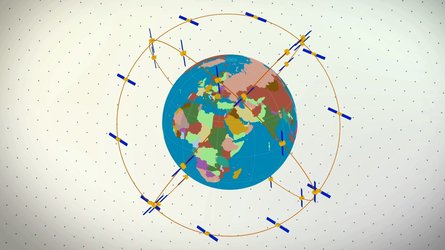
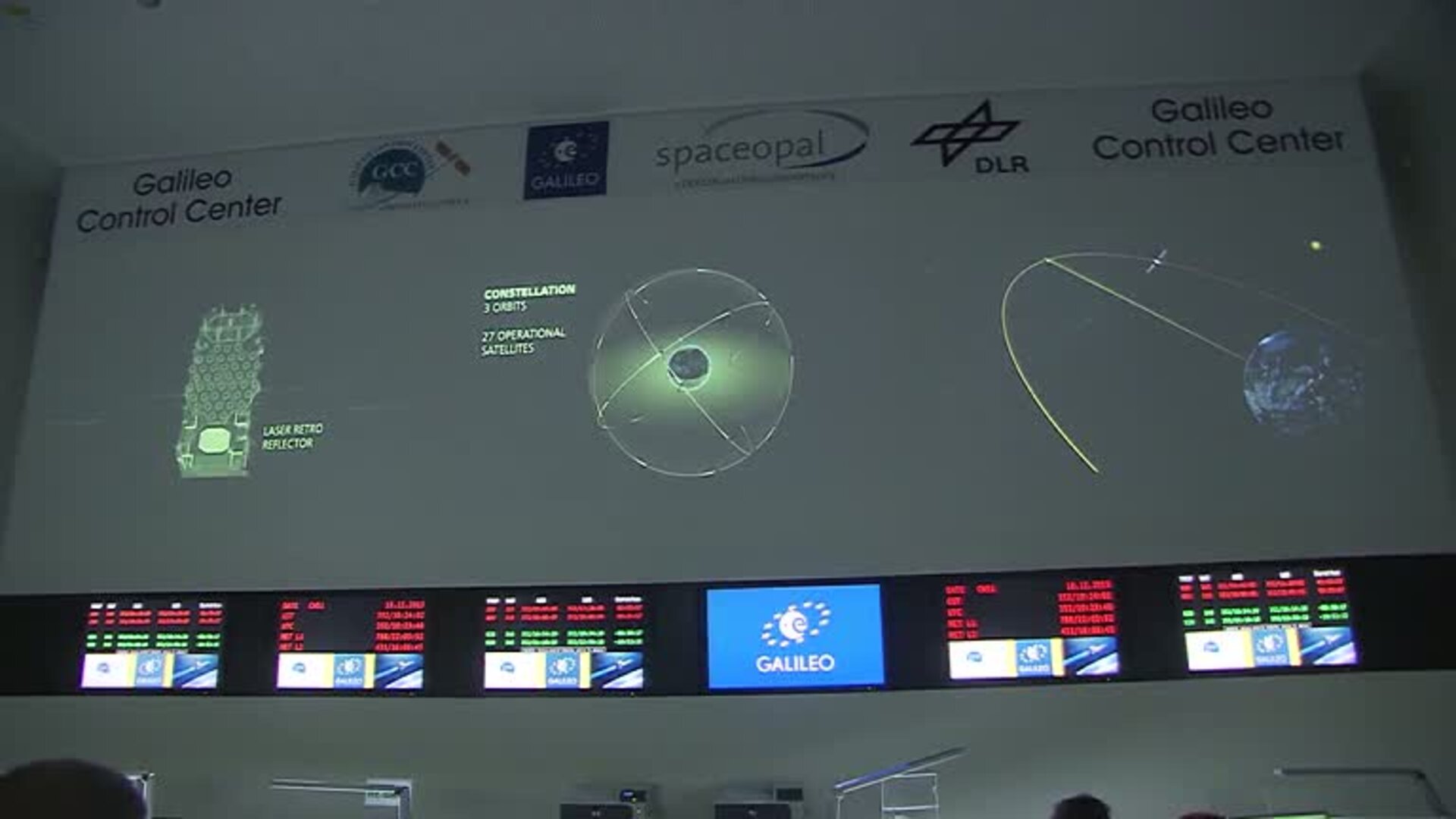
    The fully deployed Galileo system consists of 30 satellites (27 operational + 3 active spares), positioned in three circular Medium Earth Orbit (MEO) planes at 23 222 km altitude above the Earth, and at an inclination of the orbital planes of 56 degrees to the equator.

    The four operational satellites launched so far - the basic minimum for satellite navigation in principle - serve to validate the Galileo concept with both segments: space and related ground infrastructure. 

    At this stage, The Open Service, Search and Rescue and Public Regulated Service will be available with initial performances. Then as the constellation is built-up beyond that, new services will be tested and made available to reach Full Operational Capability (FOC).

    Once this is achieved, the Galileo navigation signals will provide good coverage even at latitudes up to 75 degrees north, which corresponds to Norway's North Cape - the most northerly tip of Europe - and beyond. The large number of satellites together with the carefully-optimised constellation design, plus the availability of the three active spare satellites, will ensure that the loss of one satellite has no discernible effect on the user.

    Two Galileo Control Centres (GCCs) have been implemented on European ground to provide for the control of the satellites and to perform the navigation mission management. The data provided by a global network of Galileo Sensor Stations (GSSs) will be sent to the Galileo Control Centres through a redundant communications network. The GCCs will use the data from the Sensor Stations to compute the integrity information and to synchronise the time signal of all satellites with the ground station clocks. The exchange of the data between the Control Centres and the satellites will be performed through up-link stations.

    As a further feature, Galileo is providing a global Search and Rescue (SAR) function, based on the operational Cospas-Sarsat system. To do so, satellites are being equipped with a transponder, which is able to transfer the distress signals from the user transmitters to regional rescue co-ordination centres, which will then initiate the rescue operation.

    At the same time, the system will send a response signal to the user, informing him that his situation has been detected and that help is on the way. This latter feature is new and is considered a major upgrade compared to the existing system, which does not provide feedback to the user.

    Experimental satellites GIOVE-A and GIOVE-B were launched in 2005 and 2008 respectively, serving to test critical Galileo technologies, while also the securing of the Galileo frequencies within the International Telecommunications Union.

    Over the course of the test period, scientific instruments also measured various aspects of the space environment around the orbital plane, in particular the level of radiation, which is greater than in low Earth or geostationary orbits.

    The four operational Galileo satellites launched in 2011 and 2012 built upon this effort to become the operational nucleus of the full Galileo constellation.


    Last update: 14 January 2013

    Rate this

    Views

    Share

    • Currently 4 out of 5 Stars.
    • 1
    • 2
    • 3
    • 4
    • 5
    Rating: 3.89/5 (46 votes cast)

    Thank you for rating!

    You have already rated this page, you can only rate it once!

    Your rating has been changed, thanks for rating!

    40489
    Tweet
    • Galileo IOV launch website
    • Related links
    • Galileo website (European Commission)
    • European GNSS Agency
    • CENC
    • Glonass

    Connect with us

    • RSS
    • Youtube
    • Twitter
    • Flickr
    • G+
    • Facebook
    • Livestream
    • Subscribe
    • App Store
    • LATEST ARTICLES
    • · Earth Explorers take centre stage …
    • · The fast winds of Venus are gettin…
    • · ExoMars 2016 set to complete const…
    • · Herschel ends operations as orbiti…
    • · Europe’s largest spaceship reache…
    • FAQ

    • Jobs at ESA

    • Site Map

    • Contacts

    • Terms and conditions