• → European Space Agency

      • Space for Europe
      • Space News
      • Space in Images
      • Space in Videos
    • About Us

      • Welcome to ESA
      • DG's News and Views
      • For Member State Delegations
      • Business with ESA
      • ESA Exhibitions
      • ESA Publications
      • Careers at ESA
    • Our Activities

      • Space News
      • Observing the Earth
      • Human Spaceflight
      • Launchers
      • Navigation
      • Space Science
      • Space Engineering
      • Operations
      • Technology
      • Telecommunications & Integrated Applications
    • For Public

    • For Media

      • Media
      • ESA TV
      • Videos for professionals
      • Photos
    • For Educators

    • For Kids

    • ESA

    • Navigation

    • EGNOS

    • Galileo

    • Evolution

    • About satellite navigation
    • Europe's satellite navigation services
    • Resources
    • Development Facilities
    • Navipedia
    • Multimedia
    • Galileo's In-Orbit Validation phase - 2012 video
    • Galileo - Europe leads the way 3D video
    • Image gallery
    • Video gallery
    • Documents
    • Galileo factsheet (PDF)
    • Galileo IOV factsheet (PDF)
    • Galileo FOC factsheet (PDF)
    • GNSS Evolution factsheet (PDF)
    • Galileo IOV brochure (PDF)
    • Galileo IOV brochures in French and German (PDF)
    • Archives
    • News archive
    • Navigation projects
    • Services
    • Subscribe

    ESA > Our Activities > Navigation

    Two years in space for GIOVE-B

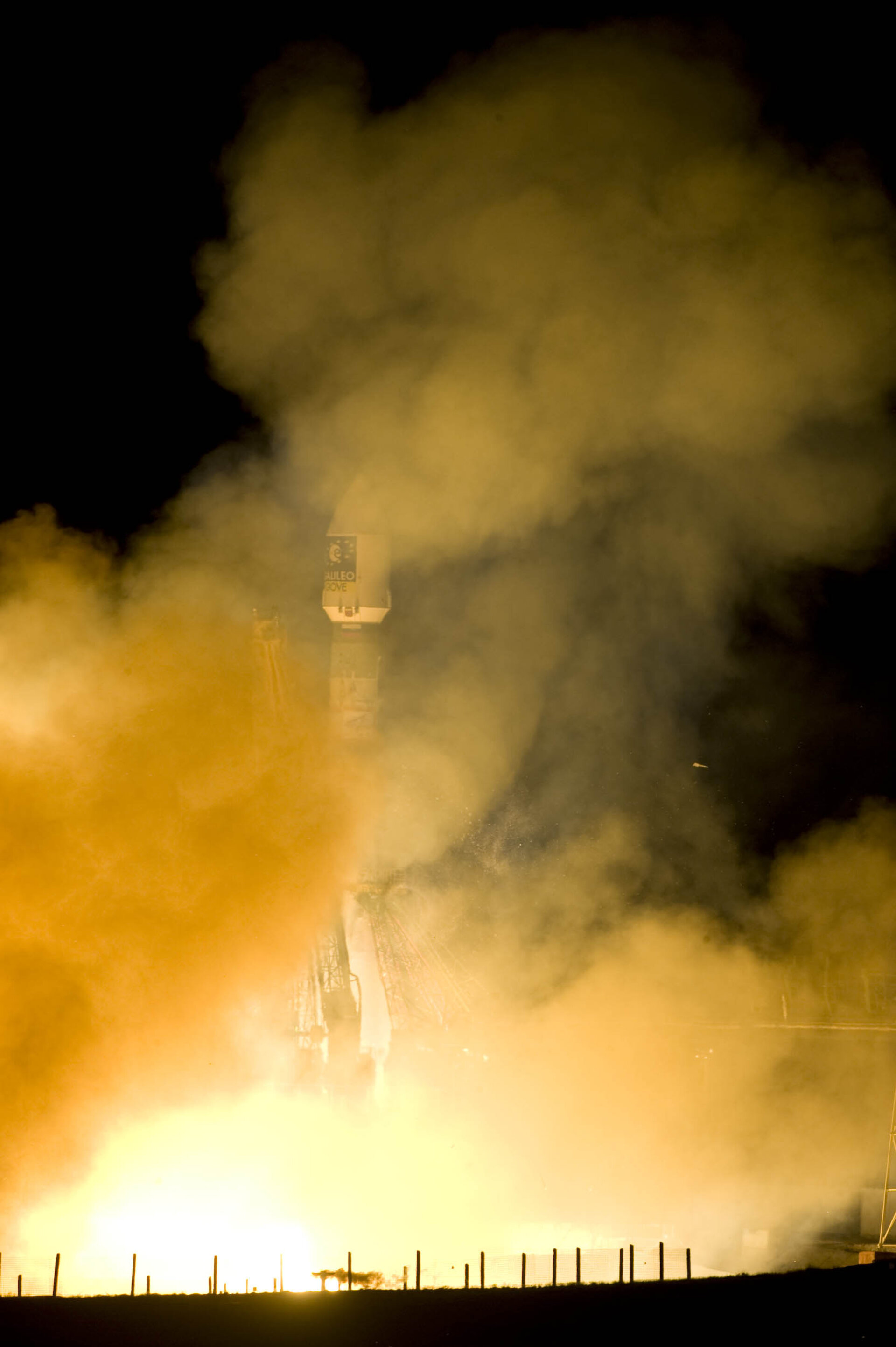
    Soyuz-Fregat launch vehicle lifts off
    27 April 2010

    Today, ESA celebrates the completion of GIOVE-B’s second year in orbit. The satellite was launched from Baikonur Cosmodrome on 27 April 2008 to help validate the technologies developed for the Galileo navigation constellation.

    After two years in space, the second ‘Galileo In-Orbit Validation Element’ satellite is still in perfect condition and its experimental equipment has delivered important results.

    Flown for the first time on a navigation satellite, the passive hydrogen maser clock has demonstrated its reliability by operating continuously for more than 400 days. The GIOVE-B maser clock has shown that it is the most stable clock ever flown in space and the technology best suited to navigation services.


    GIOVE-B carries a navigation signal generator that was designed to meet the specification for the Galileo signal that will be available to the public. The results of this experiment were fully consistent with expectations, achieving improved accuracy for users.

    The good health of GIOVE-B will allow it to provide further data, acquired either via telemetry at the Ground Control Centre in Fucino, Italy, or from the navigation signals received by a worldwide network of sensor stations. These signals are analysed at the GIOVE Processing Centre hosted in the Navigation Laboratory at ESA’s European Space Research and Technology Centre (ESTEC) in Noordwijk, the Netherlands.

    GIOVE-B was built by a consortium led by EADS Astrium GmbH and is operated by Telespazio SpA. It was launched using services procured by Starsem on a Soyuz launcher.

    Rate this

    Views

    Share

    • Currently 0 out of 5 Stars.
    • 1
    • 2
    • 3
    • 4
    • 5
    Rating: 0/5 (0 votes cast)

    Thank you for rating!

    You have already rated this page, you can only rate it once!

    Your rating has been changed, thanks for rating!

    10
    Tweet
    • Related links
    • Galileo website (European Commission)
    • European GNSS Agency

    Connect with us

    • RSS
    • Youtube
    • Twitter
    • Flickr
    • G+
    • Facebook
    • Livestream
    • Subscribe
    • App Store
    • LATEST ARTICLES
    • · Rare merger reveals secrets of gal…
    • · Watching for hazards: ESA opens as…
    • · ESA astronaut Timothy Peake set fo…
    • · Space drives e-mobility
    • · Proba-V opens its eyes
    • FAQ

    • Jobs at ESA

    • Site Map

    • Contacts

    • Terms and conditions