• → European Space Agency

      • Space for Europe
      • Space News
      • Space in Images
      • Space in Videos
    • About Us

      • Welcome to ESA
      • DG's News and Views
      • For Member State Delegations
      • Business with ESA
      • ESA Exhibitions
      • ESA Publications
      • Careers at ESA
    • Our Activities

      • Space News
      • Observing the Earth
      • Human Spaceflight
      • Launchers
      • Navigation
      • Space Science
      • Space Engineering
      • Operations
      • Technology
      • Telecommunications & Integrated Applications
    • For Public

    • For Media

    • For Educators

    • For Kids

    • ESA

    • Navigation

    • EGNOS

    • Galileo

    • Evolution

    • About satellite navigation
    • Europe's satellite navigation services
    • Resources
    • Development Facilities
    • Navipedia
    • Multimedia
    • Galileo's In-Orbit Validation phase - 2012 video
    • Galileo - Europe leads the way 3D video
    • Image gallery
    • Video gallery
    • Documents
    • Galileo factsheet (PDF)
    • Galileo IOV factsheet (PDF)
    • Galileo FOC factsheet (PDF)
    • GNSS Evolution factsheet (PDF)
    • Galileo IOV brochure (PDF)
    • Galileo IOV brochures in French and German (PDF)
    • Archives
    • News archive
    • Navigation projects
    • Services
    • Subscribe

    ESA > Our Activities > Navigation

    Two years in space for Galileo satellite

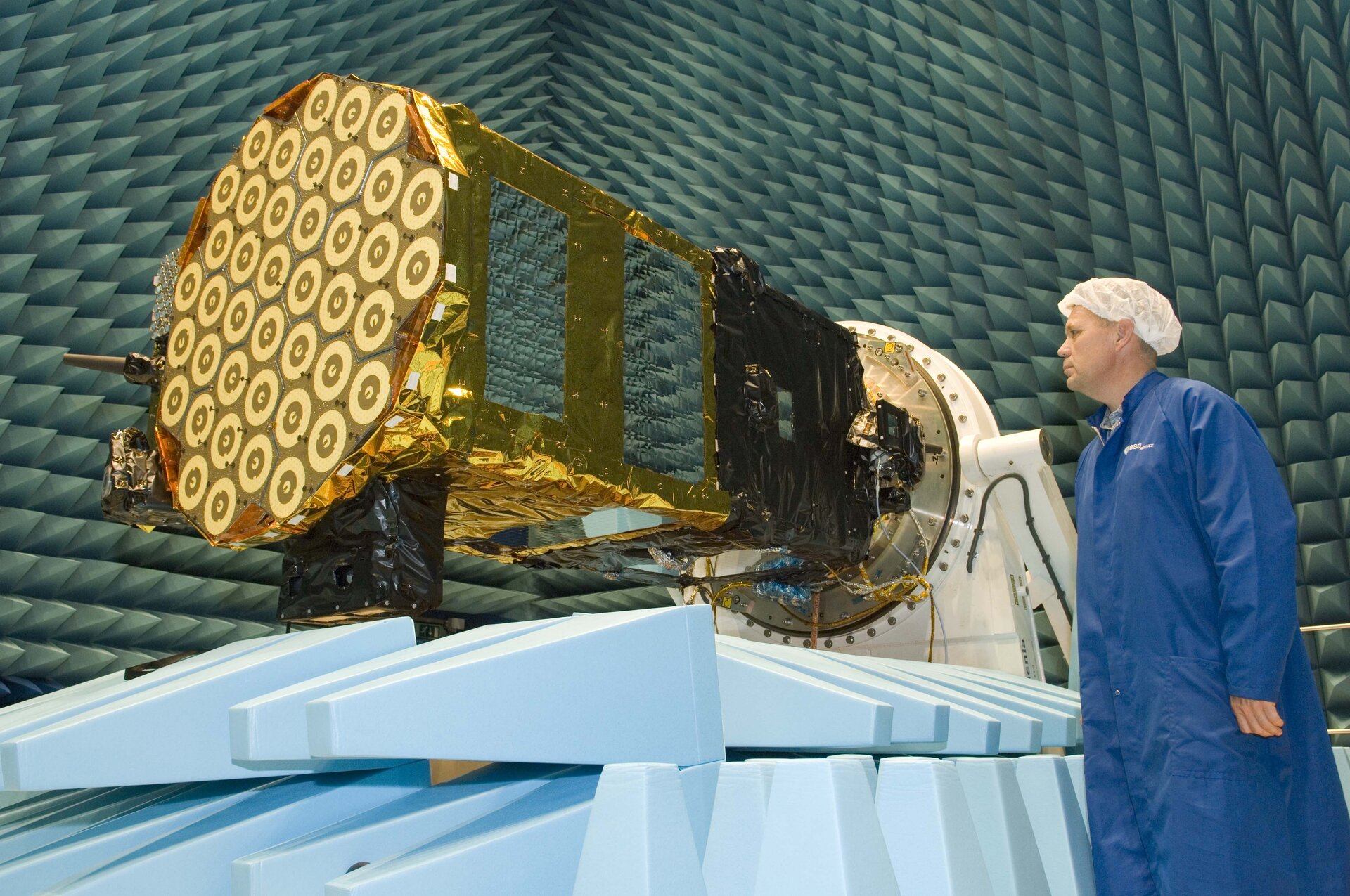
    GIOVE-B in ESA's test facilty at ESTEC, in The Netherlands, in preparation for its launch in April 2008.
    18 December 2007

    On 28 December, it will be two years since GIOVE-A - the first Galileo satellite - was launched by a Soyuz rocket from Baikonur, in Kazakhstan. This satellite demonstrates the progress Europe has made in setting up its own navigation system.

    Since January 2006, Galileo signals have been broadcast by GIOVE-A, and received all around the globe. At ESA's research and technology centre in the Netherlands, a laboratory is checking both the instruments on board the spacecraft that generate the signals and the receivers on the ground. This testing and calibration has allowed the specialists to confirm the success of the mission, which is a good sign for the rest of the programme.
     
    The next step is well under way, with GIOVE-B - the second experimental satellite - finishing its preparations for launch in ESA's test facilities. This second Galileo satellite will embark the most accurate atomic clock ever flown in space, which will contribute to the quality of the performance of the Galileo system.

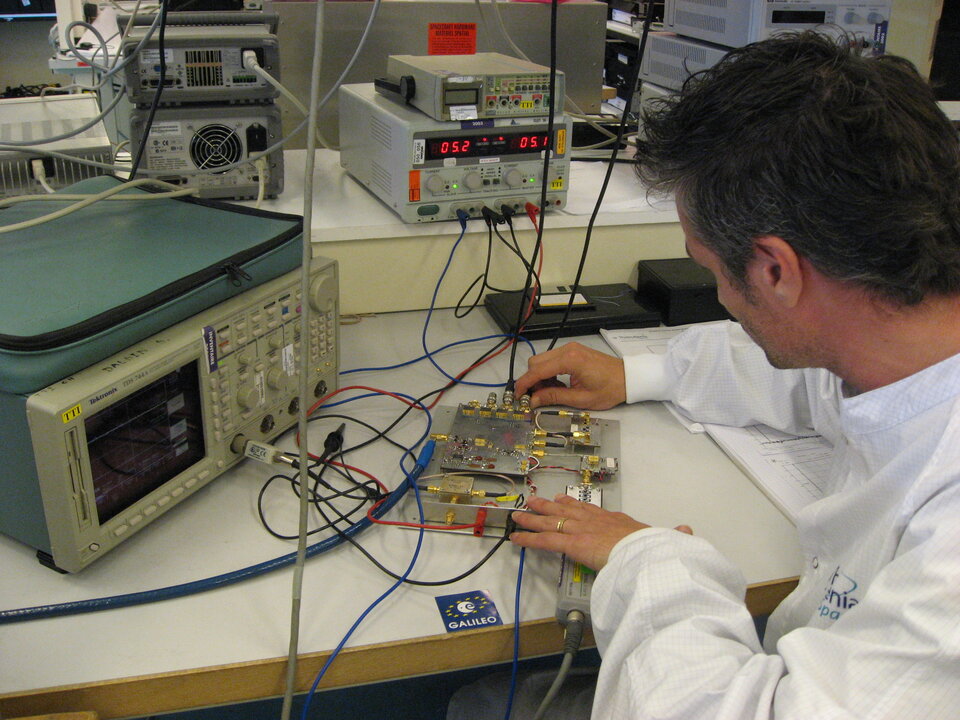
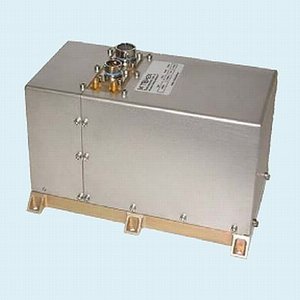
    Galileo IOV satellite subsystem under test
    Galileo IOV satellite subsystem under test

    After GIOVE-B, the validation in orbit will be completed with the launch of four further satellites - the minimum required to obtain a satellite navigation position measurement. These satellites are currently being built at locations across Europe, for launch from the end of 2009.
     
    To reach operational status, Galileo needs a constellation of 30 satellites and an associated network of ground stations spread all around the globe. This phase has just been confirmed with the decisions taken by the European Union, which has agreed on a financing package of € 3.4 billion Euros and proposed to entrust ESA with the full deployment of Galileo by 2013.
     
    While waiting for Galileo, another positioning system is in its pre-operational phase in Europe. EGNOS, the European Geostationary Navigation Overlay System, is a network of ground stations that improves GPS signals and retransmits them via geostationary satellites. EGNOS allows position determination accurate to within two metres. Originally designed to improve air traffic safety, EGNOS is accessible to all and paves the way for Galileo.
     
    With these steps, the European Commission and ESA are progressively setting up a civilian system able to offer guidance and help worldwide.

    Rate this

    Views

    Share

    • Currently 0 out of 5 Stars.
    • 1
    • 2
    • 3
    • 4
    • 5
    Rating: 0/5 (0 votes cast)

    Thank you for rating!

    You have already rated this page, you can only rate it once!

    Your rating has been changed, thanks for rating!

    33
    Tweet
    • Other languages
    • Article en Français:
      Deux ans pour le premier satellite Galileo dans l'espace
    • Related news
      • Science and Galileo - working together
        • GIOVE-A test campaign completed
          • Agreement between the ESA and the GNSS Supervisory Authority
            • Galileo rubidium clocks – a year of in-orbit experience
            • Related links
            • Galileo website (European Commission)
            • European GNSS Agency
            • Thales Alenia Space
            • GIOVE video
            • GIOVE (English) - QT player
            • GIOVE (English) - WM player

    Connect with us

    • RSS
    • Youtube
    • Twitter
    • Flickr
    • G+
    • Facebook
    • Livestream
    • Subscribe
    • App Store
    • LATEST ARTICLES
    • · Proba-V opens its eyes
    • · First new Galileo satellite arrive…
    • · Next destination: space
    • · Leak repaired on International Spa…
    • · After Chelyabinsk: European expert…
    • FAQ

    • Jobs at ESA

    • Site Map

    • Contacts

    • Terms and conditions