• → European Space Agency

      • Space for Europe
      • Space News
      • Space in Images
      • Space in Videos
    • About Us

      • Welcome to ESA
      • DG's News and Views
      • For Member State Delegations
      • Business with ESA
      • ESA Exhibitions
      • ESA Publications
      • Careers at ESA
    • Our Activities

      • Space News
      • Observing the Earth
      • Human Spaceflight
      • Launchers
      • Navigation
      • Space Science
      • Space Engineering
      • Operations
      • Technology
      • Telecommunications & Integrated Applications
    • For Public

    • For Media

    • For Educators

    • For Kids

    • ESA

    • Observing the Earth

    • Understanding Our Planet

    • Securing Our Environment

    • Benefiting Our Economy

    • About benefiting our economy
    • Space & Practical Benefits

      • Natural resources exploitation

        • Overview
        • Hydropower & reservoir management
        • Oil, gas and mineral exploration
        • Guiding fishing fleets
        • Renewable energy development
      • Land use efficiency

        • Overview
        • Agricultural forecasting
        • Forest management
        • Urban monitoring
      • Supporting transport routing

        • Overview
        • Optimising shipping routes
        • Navigation through sea ice
        • Road & rail corridor planning
      • Weather forecasting

        • Overview
        • Developing Europe's weather satellites
        • Metocean for offshore activities
    • Space & Sustainable Development

      • Economic development

        • Overview
      • Social development

        • Overview
      • Environment

        • Overview
    • About Observing the Earth

      • How does Earth Observation work?
      • How to get Earth observation data
      • Integrating Earth Observation in your job
      • Earth Observation users speak
    • Opportunities with us

      • Education & training
      • International cooperation
      • Milestones & announcements
    • Multimedia

      • Image Gallery
      • Video Gallery
      • Online resources
      • RSS feeds

    ESA > Our Activities > Observing the Earth > Benefiting Our Economy

    Environment

    Overview

    Thanks to the 1992 Earth Summit and other United Nations initiatives, the topic of the environment now plays a much larger part in the global political agenda. No person, country or region exists in a vacuum. Science makes clear that harmful changes to the environment will eventually impact us all.

    Various initiatives are being undertaken at the national, regional and global level to encourage co-operation and monitor action on environmental issues.

    Major issues of environmental degradation are being confronted including global warming, the thinning of the ozone layer, sea level rises, desertification and water and air quality.

    Informing decision makers

    Scientists need as much information as possible about these and other topics if they are to provide policy makers with the information needed to make informed decisions on environmental policy.

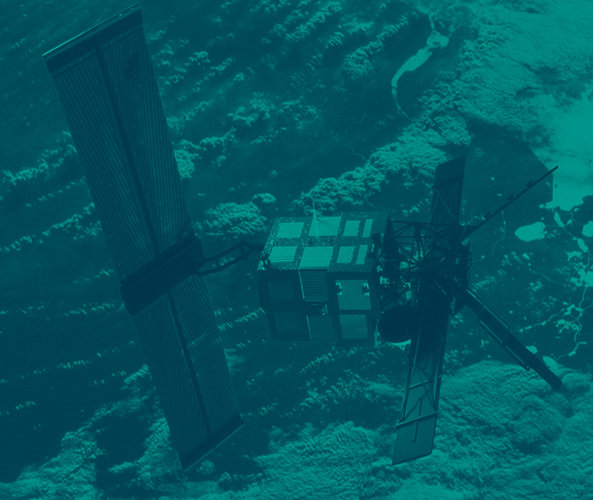
    Long-term monitoring of our planet from space helps assess the environmental effects of human activities on a systematic basis, and provides an extensive time series of data for the projection of current environmental trends into the future.

    Supporting international treaties

    Earth Observation also provides an objective means for governments and international bodies to assess whether parties to environmental agreements are fulfilling their obligations.

    As part of its contribution to the Global Monitoring for Environment and Security (GMES) initative with the European Commission, ESA is developing space-based services to monitor international agreements on marine pollution, wetlands conservation, fighting desertification and reducing carbon emissions.

    Environmental change has the potential to cause more frequent extreme weather events and natural disasters. As a founder member of the International Charter on Space and Major Disasters, ESA offers its satellite capabilities to civil protection authorities preparing for or responding to such events.
    Last update: 3 September 2009

    Rate this

    Views

    Share

    • Currently 0 out of 5 Stars.
    • 1
    • 2
    • 3
    • 4
    • 5
    Rating: 0/5 (0 votes cast)

    Thank you for rating!

    You have already rated this page, you can only rate it once!

    Your rating has been changed, thanks for rating!

    10
    facebook
    twitter
    reddit
    google plus
    digg
    tumbler
    digg
    blogger
    myspace
    • Related news
      • ESA proposes Johannesburg follow-up, hands over CEOS chair
        • Summit endorses role of space
          • CEOS chairman addresses Johannesburg Summit
            • ESA in Johannesburg
            • Related missions
            • ERS overview
            • Envisat overview
            • MSG overview
            • MetOp overview
            • In depth
              • Statement to WSSD Summit
              • TIGER Initiative
              • Earth Observation Market Development (EOMD)
              • Related links
              • IGOS
              • CEOS WSSD site

    Connect with us

    • RSS
    • Youtube
    • Twitter
    • Flickr
    • Google Buzz
    • Subscribe
    • App Store
    • LATEST ARTICLES
    • · CryoSat hits land
    • · Ariane 5 completes seven launches …
    • · Measuring skull pressure without t…
    • · Malargüe station inauguration
    • · The solar wind is swirly
    • FAQ

    • Jobs at ESA

    • Site Map

    • Contacts

    • Terms and conditions