ESA meets increasing demand for Earth observation data
Earth observation satellite data have never been in more demand than today as missions have demonstrated their ability to enable better understanding and improved management of the Earth and its environment.
ESA is meeting this demand by providing additional data, serving large science programmes, enlarging network stations and making more data available in near-real time.
Responding to calls from ESA’s Principal Investigators (PI), the agency has released some 20 Announcement of Opportunity (AO) calls over the last decade that allow access to Earth observation (EO) data from ESA’s ERS-1, ERS-2, Envisat, Earth Explorers and Third Party Missions.
As a result, more than 1500 scientific projects for research and applications development have been accepted and are receiving data free of charge.
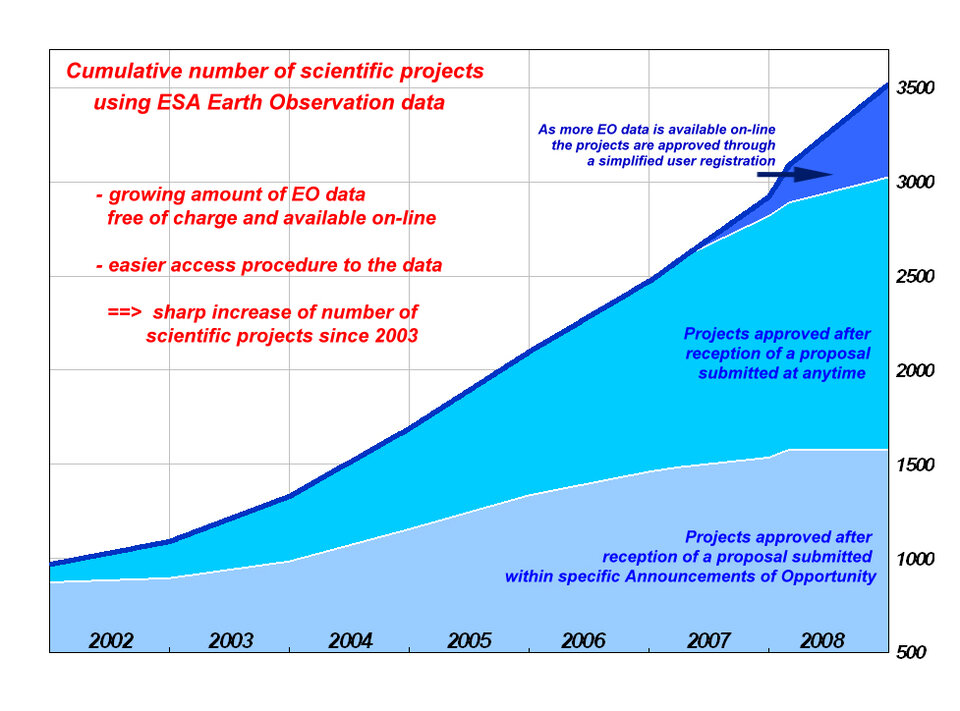
These projects, called Category-1 projects, focus on research and applications development use in support of mission objectives, including research on long-term issues of Earth system science.
Under ESA’s new Data Policy implemented in 2000, PI project proposals are now also accepted on a daily basis and not only in response to an AO. Consequently, some 1300 additional PI-proposed Category-1 projects have been accepted and are also receiving data with small cost of re-production for data not available online.
Since 2007 ESA sped up its access to data available online for Category-1 use by offering a simplified registration procedure to researchers. To date more than 300 users have been authorised to retrieve such data.
Serving large Science Programmes
ESA data also serves very large science programmes, such as the International Polar Year (IPY) 2007-2008 which focuses on the Arctic and Antarctic.
ESA committed to helping scientists collect satellite information, particularly to understand recent and current distributions and variations in snow and ice, during IPY. To this end, ESA issued a dedicated AO in 2006 and by spring 2007 48 selected projects had begun receiving data free of charge.
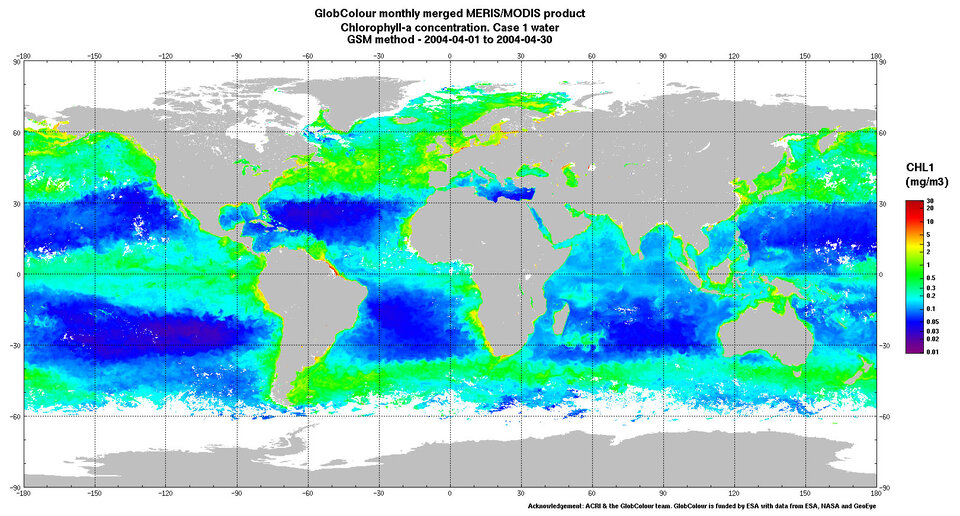
ESA is also making its legacy data available through an extensive EO data portfolio containing current and historical data, dating back 17 years for ERS data and 30 years for some Third Party Mission data. Another large science programme being served is ESA’s GlobColour project, which supports ocean carbon cycle research.
GlobColour has merged 55 terabytes of data from three state-of-the-art instruments aboard different satellites, including MERIS aboard ESA’s Envisat, MODIS aboard NASA’s Aqua and SeaWiFS aboard GeoEye’s Orbview-2, to produce a 10-year dataset of global ocean colour stretching to 2007.
Near-real time data delivery
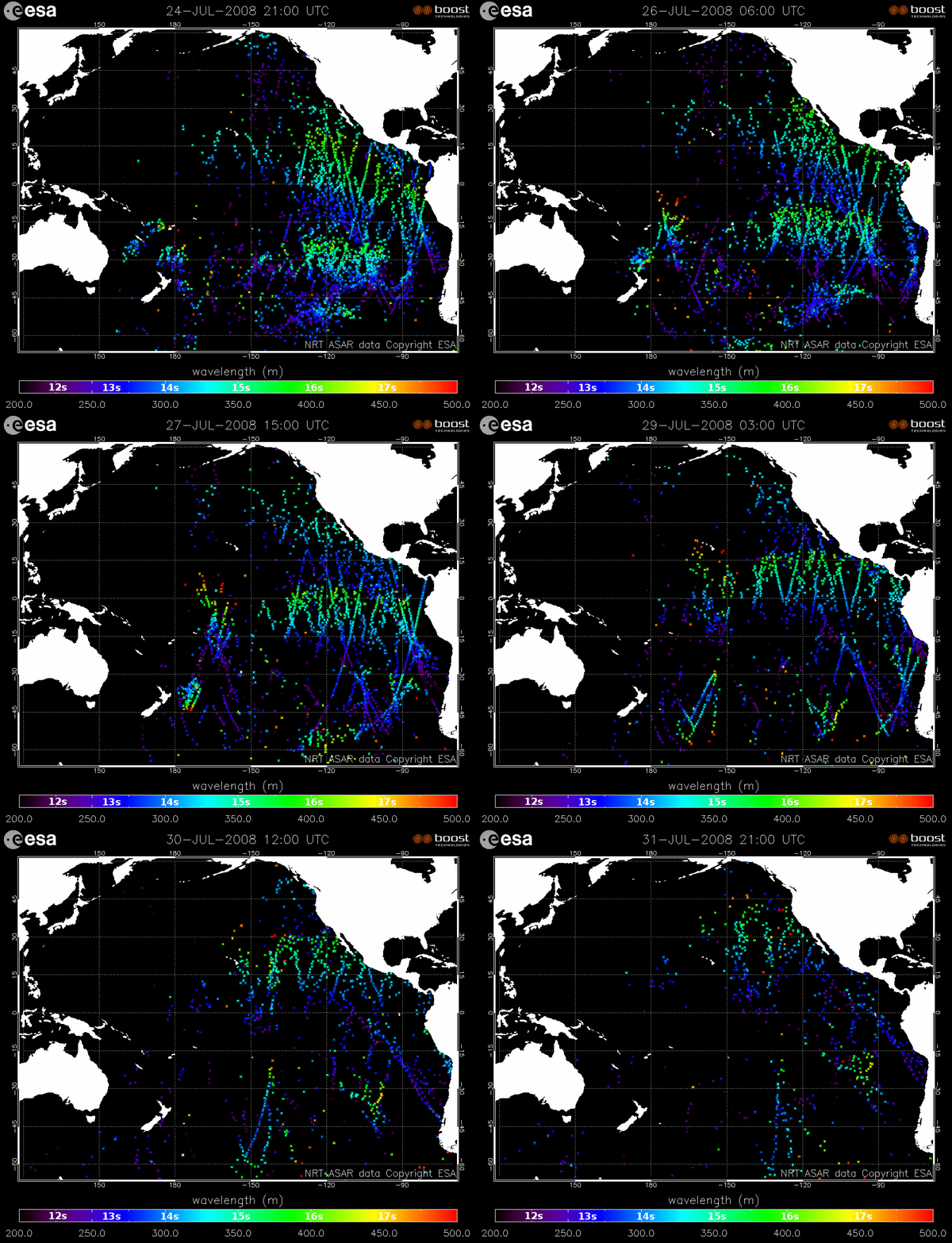
Responding to user demand for services, ESA is generating and delivering some 250 Gigabytes of data products in near-real time to Envisat users.
Moreover the power of computers and the growth in network bandwidths and storage capacities have resulted in users requesting larger volumes of data to be delivered in unprecedented timeframes.
ESA also upgraded its data delivery method to the quicker Data Dissemination System (DDS), which allows users in remote areas to receive near-real time satellite data via a simple satellite dish connection to personal computers.
Expanding receiving stations
As the request for EO data increased, ESA has had to find strategic solutions for transmitting large amounts of data from its satellites to ground stations.
The original four stations supporting the first ERS mission have been gradually expanded. The ground station in Johannesburg is the latest station to be added.
Scientific exchange
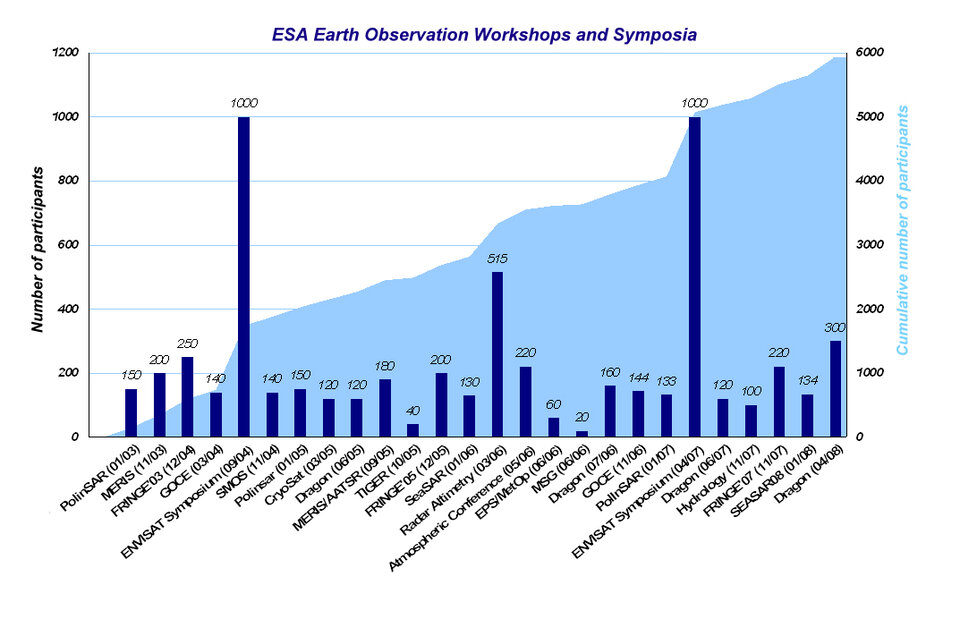
To stimulate a live exchange of experiences and knowledge between researchers, ESA organises dedicated thematic workshops and symposia every year. During these gatherings, ESA collects user feedback and recommendations for new products, new initiatives and input for improved scientific exploitation of the missions.
The thematic workshop proceedings are available as ESA Special Publications and can be searched here: http://earth.esa.int/resources/workshops/.
Every three years, ESA also organises and hosts major multidisciplinary events, such as the 2007 ERS and Envisat Symposia held in Montreux, Switzerland, in which some 1000 EO users attended.
These symposia allow scientists and researchers from around the world to present and review results of ongoing projects using data from ESA’s Envisat, ERS and Third Party Mission satellites.