Introducing Copernicus
Copernicus is the Earth observation component of the European Union’s Space programme. It provides accurate, timely and easily accessible information to improve the management of the environment, understand and mitigate the effects of climate change and ensure civil security.
This initiative is headed by the European Commission (EC) in partnership with the European Space Agency (ESA).
ESA coordinates the delivery of data from upwards of 30 satellites. The EC, acting on behalf of the European Union, is responsible for the overall initiative, setting requirements and managing the services.

Access the video
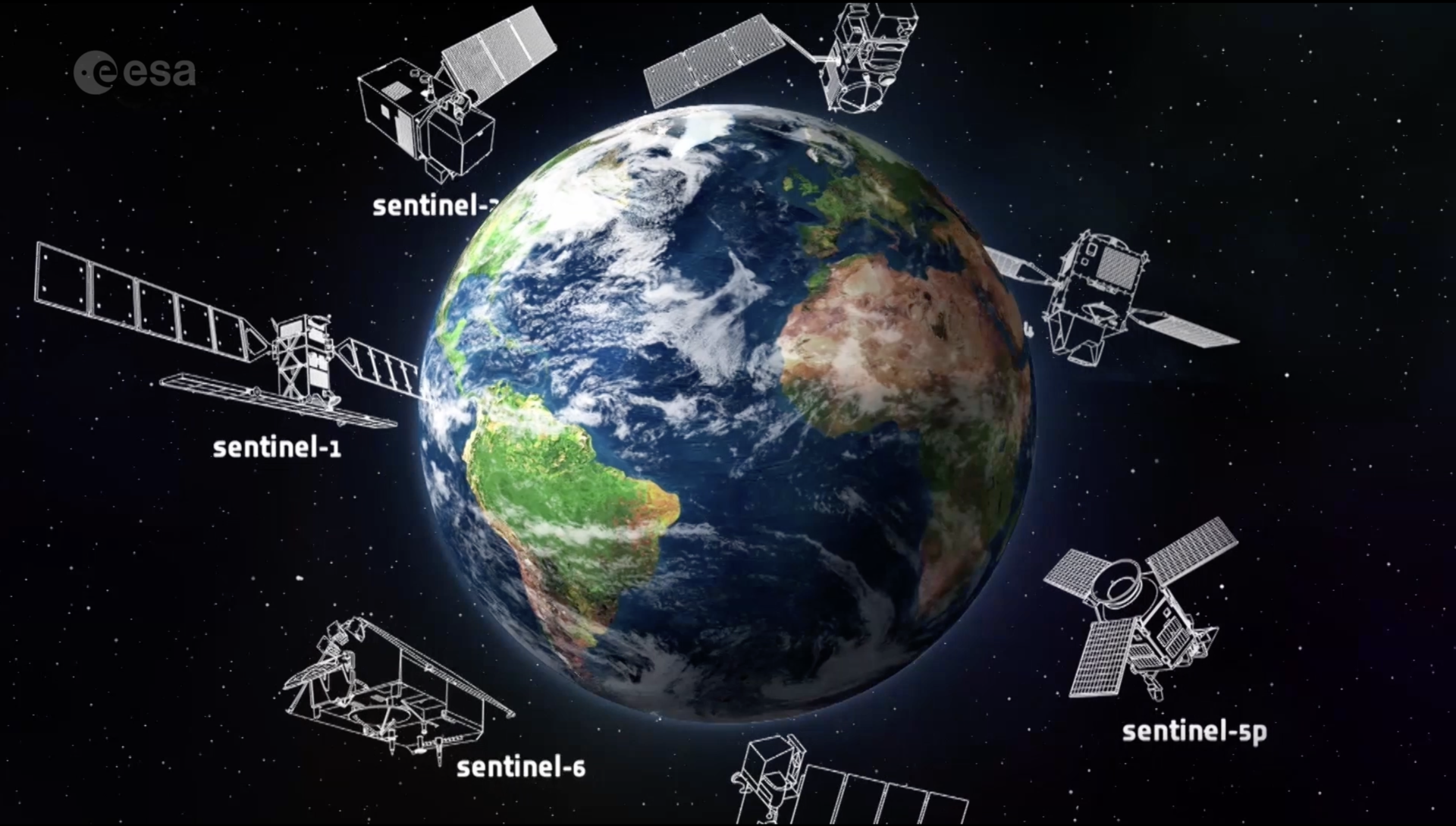
ESA has developed a new family of satellites, called Sentinels, specifically for the operational needs of Copernicus.
At present, three complete two-satellite constellations, Sentinel-1, Sentinel-2 and Sentinel-3, are in orbit plus two additional single satellites, Sentinel-5P and Sentinel-6 Michael Freilich, and two payloads, Sentinel-4 and Sentinel-5, carried on the new generation of meteorological satellites: Meteosat Third Generation (MTG) and MetOp Second Generation (MetOp-SG) respectively. With the end of the mission for the Sentinel-1B satellite, Sentinel-1C joined Sentinel-1A in orbit in December 2024 and restored the Sentinel-1 constellation. Sentinel-2C joined its siblings in orbit in 2024 to ensure the continuous provision of high-resolution data from the mission.
The Sentinels provide a unique set of observations, starting with the all-weather, day and night radar images from the Sentinel-1 mission.
The Sentinel-2 mission is designed to deliver high-resolution optical images mainly for land services.
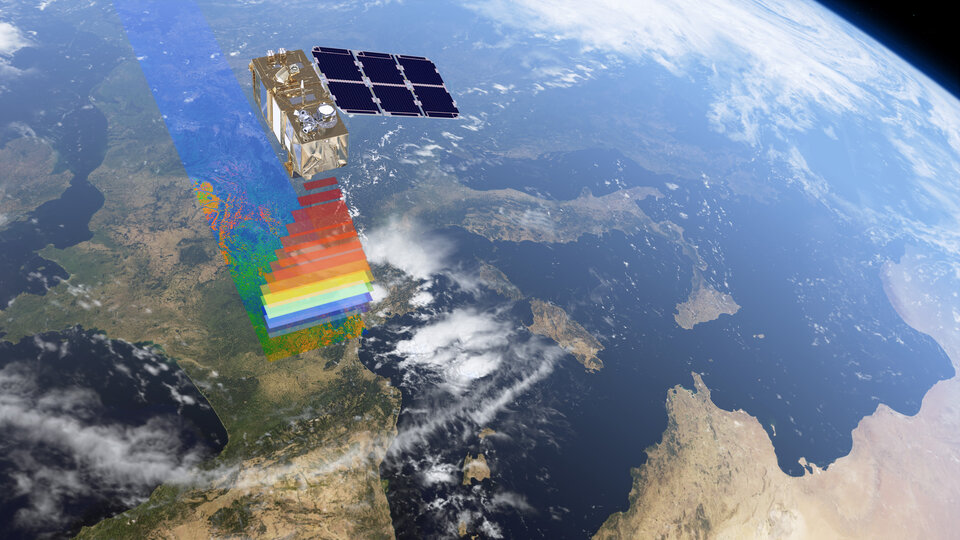
The two Sentinel-3 satellites provide data for services relevant to the ocean and land.
Sentinel-4 and -5 are devoted to provide data for atmospheric composition monitoring from geostationary and polar orbits, respectively.
Sentinel-6 carries a radar altimeter to measure global sea-surface height, primarily for operational oceanography and for climate studies.
In addition, a Sentinel-5 Precursor mission has been developed to reduce data gaps between Envisat, in particular the Sciamachy instrument, and the launch of Sentinel-5. Sentinel-5P was the first Copernicus mission in orbit dedicated to monitoring our atmosphere.
The Space Component is managed by ESA and serves users with satellite data available through the Sentinels and the Copernicus Contributing Missions at national, European and international levels.
The ground segment, facilitating access to Sentinel and Contributing Mission data, completes the Copernicus Space Component.
The Space Component forms the European contribution to the worldwide Global Earth Observation System of Systems (GEOSS).
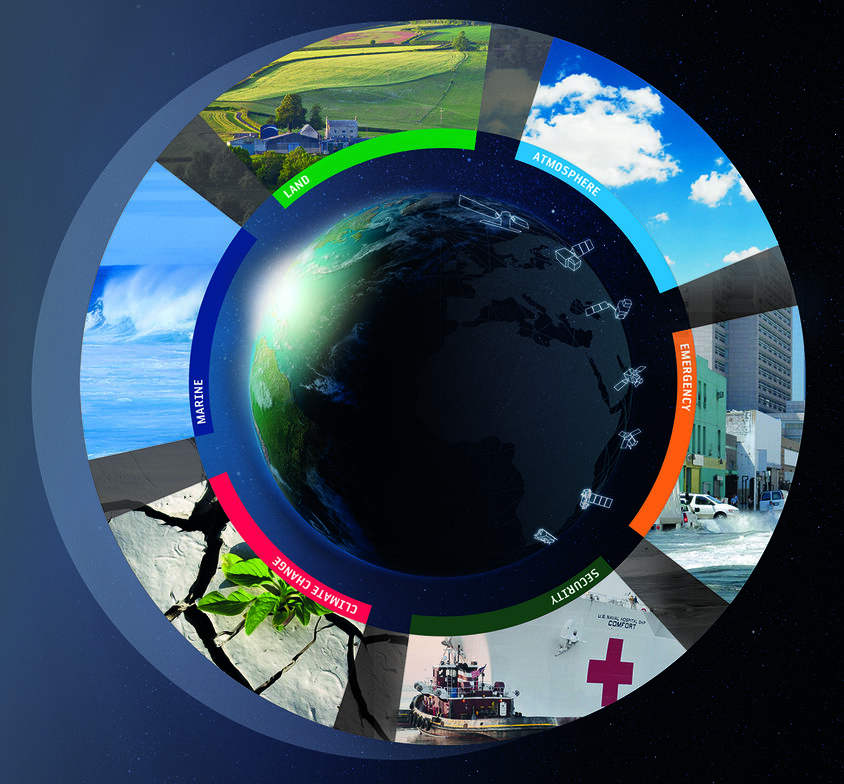
Copernicus provides a unified system through which vast amounts of data are fed into a range of thematic information services designed to benefit the environment, the way we live, humanitarian needs and support effective policy-making for a more sustainable future.
These services fall into six main categories: land management, the marine environment, atmosphere, emergency response, security and climate change.
In essence, Copernicus is set out to help shape the future of our planet for the benefit of all. ESA is contributing by providing a proven framework for the development of operational systems on behalf of the user community, paving the way for investment in future generation systems. ESA is exploiting its 30 years of expertise in space programme development and management to contribute to the success of Copernicus.
Back to Copernicus homepage |