• → European Space Agency

      • Space for Europe
      • Space News
      • Space in Images
      • Space in Videos
    • About Us

      • Welcome to ESA
      • DG's News and Views
      • For Member State Delegations
      • Business with ESA
      • ESA Exhibitions
      • ESA Publications
      • Careers at ESA
    • Our Activities

      • Space News
      • Observing the Earth
      • Human Spaceflight
      • Launchers
      • Navigation
      • Space Science
      • Space Engineering
      • Operations
      • Technology
      • Telecommunications & Integrated Applications
    • For Public

    • For Media

    • For Educators

    • For Kids

    • ESA

    • SMOS

    • Earth Explorers

    • Observing the Earth

    • Living Planet

    • SMOS at a glance
    • An Earth Explorer
    • Mapping soil moisture and ocean salinity
    • Improving our understanding of the water cycle
    • Introducing a novel use of technology
    • Facts and figures
    • About the satellite

      • Platform
      • Instrument
    • About the launch

      • Launch site
      • Launcher
    • SMOS in orbit

      • After liftoff
      • Data
    • Meet the team

      • Achim Hahne, Project Manager
      • Susanne Mecklenburg, Mission Manager
      • Matthias Drusch, Mission Scientist
      • Jordi Font, Co-Lead Investigator
      • Yann Kerr, Co-Lead Investigator
      • Manuel Martin-Neira, Instrument Principal Engineer
      • Guillermo Buenadicha, Payload Operations Engineer
      • Andrés Borges, EADS CASA Espacio Payload Project Manager
      • Roger Jegou, Launch Campaign Manager
      • Norrie Wright, Payload Data Ground Segment Manager
    • Multimedia
    • Image gallery
    • Videos
    • Online resources

    ESA > Our Activities > Observing the Earth > SMOS

    Platform

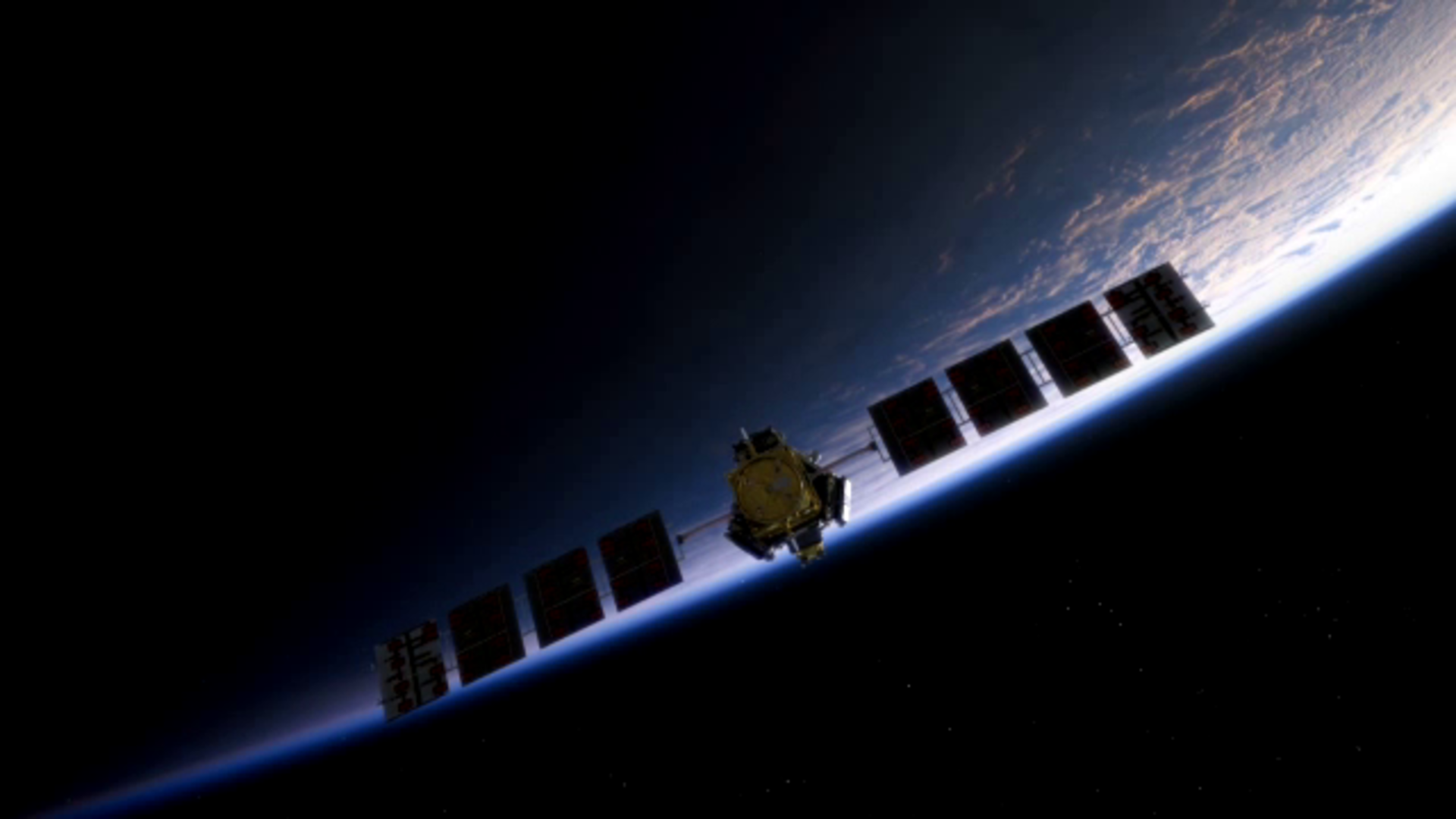
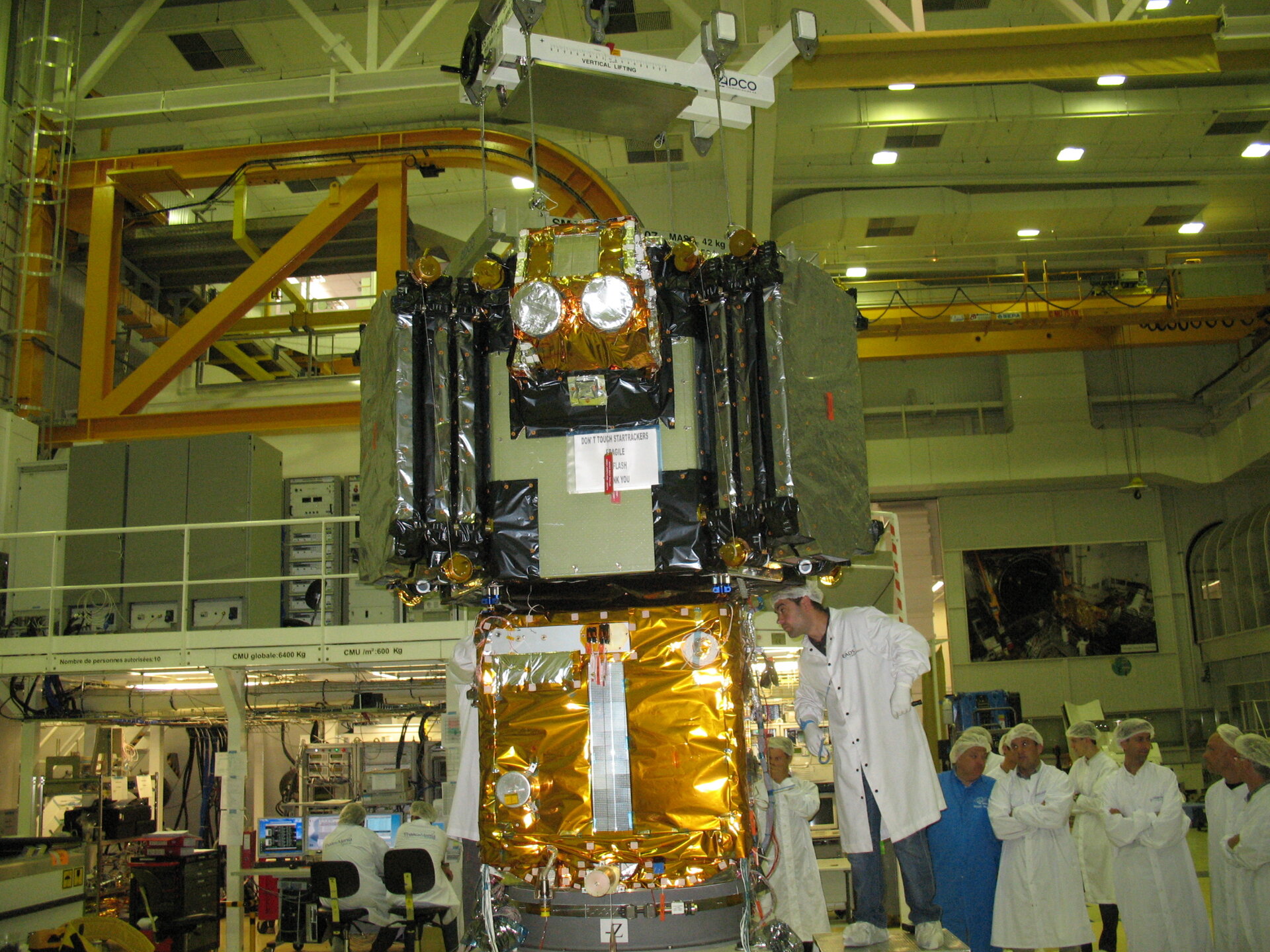
    A satellite platform provides the support on which to mount instruments and the infrastructure for the mission such as power, communications to the ground and navigation. In this case, the SMOS instrument will be carried on a generic platform called ‘Proteus’, which was developed by the French space agency CNES and Thales Alenia Space.

    The platform is small, occupying just one cubic metre and acts as a service module to accommodate all the systems required for the satellite to function. In launch configuration, the overall dimensions, including the SMOS instrument, fit into a cylinder 2.4 m high and 2.3 m in diameter. The satellite weighs a total of 658 kg, where the platform weighs 303 kg (including 28 kg of fuel) and the instrument accounts for 355 kg.

    After launch, when the satellite has separated from the launcher, the platform’s two symmetrical solar arrays are deployed automatically. These arrays are covered with silicon cells to generate power. Each array is made up of four panels, measuring 1.5×0.8 m each. Since the orbit is Sun-synchronous, the solar arrays remain static.

    Proteus uses a GPS receiver for orbit determination and control, which provides satellite position information. It has a hydrazine monopropellant system with four 1-Newton thrusters mounted on the base of the satellite.

    Rate this

    Views

    Share

    • Currently 0 out of 5 Stars.
    • 1
    • 2
    • 3
    • 4
    • 5
    Rating: 0/5 (0 votes cast)

    Thank you for rating!

    You have already rated this page, you can only rate it once!

    Your rating has been changed, thanks for rating!

    69
    facebook
    twitter
    reddit
    google plus
    digg
    tumbler
    digg
    blogger
    myspace
    • In depth
      • Satellite
      • Related links
      • Thales Alenia Space
      • CNES
      • CNES scientific missions

    Connect with us

    • RSS
    • Youtube
    • Twitter
    • Flickr
    • Google Buzz
    • Subscribe
    • App Store
    • LATEST ARTICLES
    • · CryoSat hits land
    • · Ariane 5 completes seven launches …
    • · Measuring skull pressure without t…
    • · Malargüe station inauguration
    • · The solar wind is swirly
    • FAQ

    • Jobs at ESA

    • Site Map

    • Contacts

    • Terms and conditions