• → European Space Agency

      • Space for Europe
      • Space News
      • Space in Images
      • Space in Videos
    • About Us

      • Welcome to ESA
      • DG's News and Views
      • For Member State Delegations
      • Business with ESA
      • ESA Exhibitions
      • ESA Publications
      • Careers at ESA
    • Our Activities

      • Space News
      • Observing the Earth
      • Human Spaceflight
      • Launchers
      • Navigation
      • Space Science
      • Space Engineering
      • Operations
      • Technology
      • Telecommunications & Integrated Applications
    • For Public

    • For Media

    • For Educators

    • For Kids

    • ESA

    • Observing the Earth

    • Understanding Our Planet

    • Securing Our Environment

    • Benefiting Our Economy

    • About securing our environment
    • Space & Environment Intelligence

      • Global Monitoring for Environment & Security

        • Overview
      • International treaties implementation

        • Overview
        • Wetlands convention
        • Combat Desertification convention
        • Kyoto Protocol
      • Safeguarding World Heritage sites

        • Overview
        • Gorilla habitats
    • Space & Public Safety

      • Civil protection assistance

        • Overview
        • Fire mapping
        • Earthquake rescue support
        • Flood monitoring
        • Pollution tracking
      • Humanitarian aid support

        • Overview
      • Epidemiology understanding

        • Overview
    • About Observing the Earth

      • How does Earth Observation work?
      • How to get Earth observation data
      • Integrating Earth Observation in your job
      • Earth Observation users speak
    • Opportunities with us

      • Education & training
      • International cooperation
      • Milestones & announcements
    • Multimedia

      • Image Gallery
      • Video Gallery
      • Online resources
      • RSS feeds

    ESA > Our Activities > Observing the Earth > Securing Our Environment

    International Treaties Implementation

    Overview

    The natural world recognises no political boundaries: different countries have to work together to conserve the environment. The international conventions they agree must apply all across Earth in order to be effective.

    Monitoring the implementation and enforcing such planetary-scale treaties represents a considerable challenge – one that it takes Earth Observation resources to meet to the fullest.

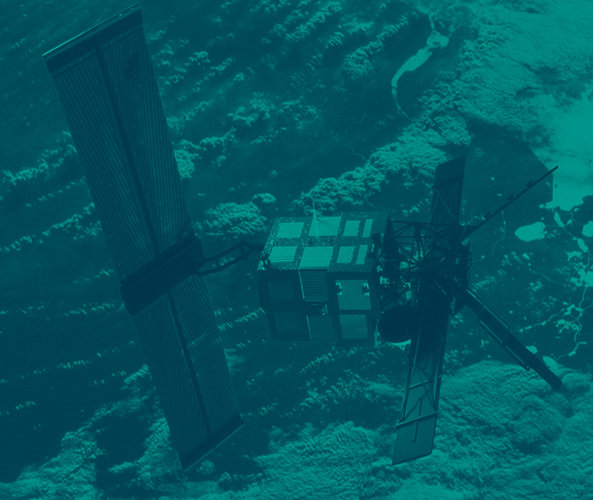
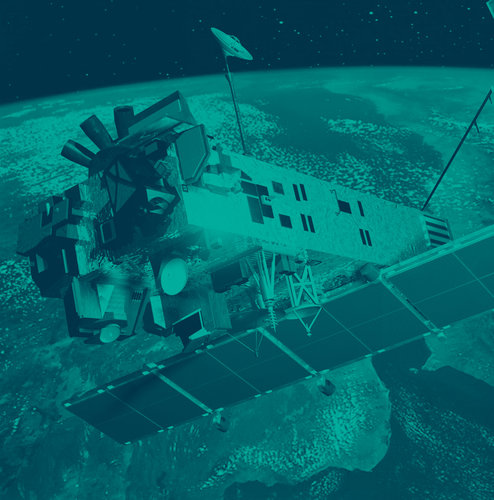
    Satellites yield information-rich views of the Earth on a variety of different scales from the local to the global. At low cost they can supply a consistent set of continuously updated data across the whole planet, including terrain too difficult or inaccessible for ground-based monitoring.


    The information provided by satellites is sound, systematic and rigorous enough to be relied upon – following integration with other data sources – to establish general consensus on the current state of the environment as a basis for further action.

    Satellite data also helps build up a global bank of technical knowledge which can in turn serve to establish efficient environmental modelling systems that can aid the supra-national decision making process in future.

    As a first step to explore how current and future Earth Observation systems may help the implementation of international environmental treaties, ESA set up the Treaty Enforcement Services using Earth Observation (TESEO) initiative in 2001, working with various treaty secretariats to develop satellite-based services to their operational requirements.

    International treaties addressed by TESEO include the 1971 Ramsar Convention on Global Wetlands, the 1992 Kyoto Protocol to the United Nations Framework Convention on Climate Change, and the 1996 United Nations Convention to Combat Desertification. The initiative also aims to increase general awareness of how satellites can help in environmental monitoring.

    TESEO has paved the way for the Global Monitoring for Environment and Security (GMES) joint undertaking with the European Commission.

    GMES is the first structured open dialogue between ESA's Earth Observation Directorate, the European Community, and international communities responsible for defining and implementing global environmental conventions.

    Rate this

    Views

    Share

    • Currently 0 out of 5 Stars.
    • 1
    • 2
    • 3
    • 4
    • 5
    Rating: 0/5 (0 votes cast)

    Thank you for rating!

    You have already rated this page, you can only rate it once!

    Your rating has been changed, thanks for rating!

    35
    facebook
    twitter
    reddit
    google plus
    digg
    tumbler
    digg
    blogger
    myspace
    • Related news
      • Satellites combat degrading lands
      • Special features
      • Satellites vital for environmental agreement
      • Related missions
      • ERS overview
      • Envisat overview
      • In depth
      • Data User Element

    Connect with us

    • RSS
    • Youtube
    • Twitter
    • Flickr
    • Google Buzz
    • Subscribe
    • App Store
    • LATEST ARTICLES
    • · CryoSat hits land
    • · Ariane 5 completes seven launches …
    • · Measuring skull pressure without t…
    • · Malargüe station inauguration
    • · The solar wind is swirly
    • FAQ

    • Jobs at ESA

    • Site Map

    • Contacts

    • Terms and conditions