• → European Space Agency

      • Space for Europe
      • Space News
      • Space in Images
      • Space in Videos
    • About Us

      • Welcome to ESA
      • DG's News and Views
      • For Member State Delegations
      • Business with ESA
      • ESA Exhibitions
      • ESA Publications
      • Careers at ESA
    • Our Activities

      • Space News
      • Observing the Earth
      • Human Spaceflight
      • Launchers
      • Navigation
      • Space Science
      • Space Engineering
      • Operations
      • Technology
      • Telecommunications & Integrated Applications
    • For Public

    • For Media

    • For Educators

    • For Kids

    • ESA

    • Observing the Earth

    • Understanding Our Planet

    • Securing Our Environment

    • Benefiting Our Economy

    • About securing our environment
    • Space & Environment Intelligence

      • Global Monitoring for Environment & Security

        • Overview
      • International treaties implementation

        • Overview
        • Wetlands convention
        • Combat Desertification convention
        • Kyoto Protocol
      • Safeguarding World Heritage sites

        • Overview
        • Gorilla habitats
    • Space & Public Safety

      • Civil protection assistance

        • Overview
        • Fire mapping
        • Earthquake rescue support
        • Flood monitoring
        • Pollution tracking
      • Humanitarian aid support

        • Overview
      • Epidemiology understanding

        • Overview
    • About Observing the Earth

      • How does Earth Observation work?
      • How to get Earth observation data
      • Integrating Earth Observation in your job
      • Earth Observation users speak
    • Opportunities with us

      • Education & training
      • International cooperation
      • Milestones & announcements
    • Multimedia

      • Image Gallery
      • Video Gallery
      • Online resources
      • RSS feeds

    ESA > Our Activities > Observing the Earth > Securing Our Environment

    Humanitarian Aid Support

    Overview

    The work done by humanitarian aid and development workers across the globe often summons them to uncharted territory. The regions of the world most vulnerable to natural disasters or crisis situations also tend to be the poorest, the remotest and the least well mapped.

    The best maps available might well be decades old – this being a time when rapid urbanisation is changing the entire face of the developing world. Aid workers can find themselves planning either short-term emergency interventions or longer-term development programmes within what might as well be geographical blank spots.

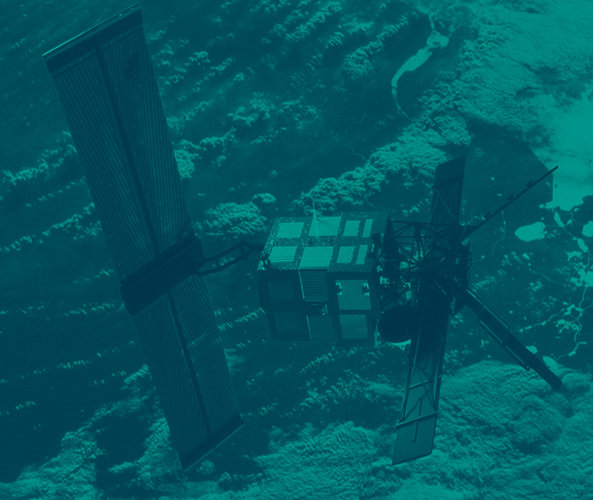
    Earth Observation has the potential to make good this lack of data, yielding satellite imagery with high levels of both spatial and temporal resolution.

    These images can serve as a source of reliable baseline geographical products suitable for operational planning, such as the speedy distribution of emergency food and medicine or deciding emergency evacuation routes for personnel.

    Satellite imagery can also be integrated within standardised geographical information systems (GIS) software, to be supplemented with local knowledge gathered on the ground – such as road conditions, warehouse stocks or the current battlefronts within war zones.

    A number of initiatives are taking place intended to increase the humanitarian and development communities' take-up of Earth Observation products to satisfy their information needs.

    Médecins Sans Frontières (MSF) is in the forefront of international aid groups, operating in more than 80 countries to deliver emergency medical assistance. MSF first employed Earth Observation in Kenya in 1996, studying satellite images of Somali refugee camps in order to estimate the numbers requiring help.

    Currently MSF is the end user of an ESA Data User Programme project called HUMAN, working with Belgian firm Keyobs 365 days a year to turn satellite data into digital or paper maps that can be easily read by operatives on the ground without needing any knowledge of Earth Observation.

    During the summer of 2003 MSF teams used a satellite-derived map of Monrovia to plan aid operations in and around the war-torn capital of the West African state of Liberia.
    Last update: 12 July 2004

    Rate this

    Views

    Share

    • Currently 0 out of 5 Stars.
    • 1
    • 2
    • 3
    • 4
    • 5
    Rating: 0/5 (0 votes cast)

    Thank you for rating!

    You have already rated this page, you can only rate it once!

    Your rating has been changed, thanks for rating!

    9
    facebook
    twitter
    reddit
    google plus
    digg
    tumbler
    digg
    blogger
    myspace
    • Related news
      • Satellites helping aid workers in Honduras
        • Extended cyclone relief efforts aided from space
          • ESA's Epidemio and Respond assist during Angolan Marburg outbreak
            • Darfur aid workers receiving assistance from orbit
            • Related missions
            • ERS overview
            • Envisat overview
            • In depth
            • GMES
            • Data User Element
            • Earth Observation Market Development (EOMD)
            • International Charter on Space and Major Disasters
            • Related links
            • Médecins Sans Frontières
            • Reuters Foundation AlertNet

    Connect with us

    • RSS
    • Youtube
    • Twitter
    • Flickr
    • Google Buzz
    • Subscribe
    • App Store
    • LATEST ARTICLES
    • · CryoSat hits land
    • · Ariane 5 completes seven launches …
    • · Measuring skull pressure without t…
    • · Malargüe station inauguration
    • · The solar wind is swirly
    • FAQ

    • Jobs at ESA

    • Site Map

    • Contacts

    • Terms and conditions