• → European Space Agency

      • Space for Europe
      • Space News
      • Space in Images
      • Space in Videos
    • About Us

      • Welcome to ESA
      • DG's News and Views
      • For Member State Delegations
      • Business with ESA
      • ESA Exhibitions
      • ESA Publications
      • Careers at ESA
    • Our Activities

      • Space News
      • Observing the Earth
      • Human Spaceflight
      • Launchers
      • Navigation
      • Space Science
      • Space Engineering
      • Operations
      • Technology
      • Telecommunications & Integrated Applications
    • For Public

    • For Media

    • For Educators

    • For Kids

    • ESA

    • Observing the Earth

    • Understanding Our Planet

    • Securing Our Environment

    • Benefiting Our Economy

    • About securing our environment
    • Space & Environment Intelligence

      • Global Monitoring for Environment & Security

        • Overview
      • International treaties implementation

        • Overview
        • Wetlands convention
        • Combat Desertification convention
        • Kyoto Protocol
      • Safeguarding World Heritage sites

        • Overview
        • Gorilla habitats
    • Space & Public Safety

      • Civil protection assistance

        • Overview
        • Fire mapping
        • Earthquake rescue support
        • Flood monitoring
        • Pollution tracking
      • Humanitarian aid support

        • Overview
      • Epidemiology understanding

        • Overview
    • About Observing the Earth

      • How does Earth Observation work?
      • How to get Earth observation data
      • Integrating Earth Observation in your job
      • Earth Observation users speak
    • Opportunities with us

      • Education & training
      • International cooperation
      • Milestones & announcements
    • Multimedia

      • Image Gallery
      • Video Gallery
      • Online resources
      • RSS feeds

    ESA > Our Activities > Observing the Earth > Securing Our Environment

    Epidemiology Understanding

    Overview

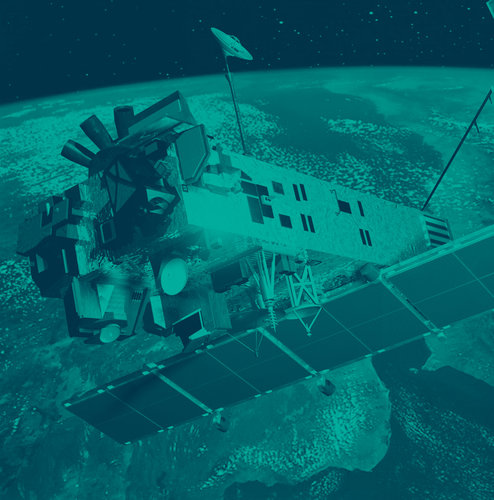
    Data from spacecraft can provide medical as well as environmental intelligence: satellites are beginning to come to the aid of authorities working to prevent the spread of epidemics. The incidence of diseases such as malaria is influenced by local climate variation.

    Satellite data has the potential to help forecast disease outbreaks. For example, increased rainfall and temperature levels lead to upsurges in malaria cases as mosquito numbers rise in response.

    As part of a project called Epidemio, ESA is providing products to the World Health Organisation (WHO) leading a global partnership called Roll Back Malaria, aimed at halving malaria cases by 2010, distributing countermeasures such as bednets.

    They include satellite-derived maps of water bodies as well as digital elevation models and weekly land surface temperature maps. Water mapping is especially useful for malaria risk mapping as mosquitoes begin life as aquatic larvae and adults rarely travel more than two kilometres from their breeding site in their two to three week lifetime.

    This is very important in areas prone to malaria epidemics, where local environmental factors are key influences on the character of outbreaks. In the Sahel region of Africa, for instance, climate and temporary water bodies play a large role in determining the pattern of the malaria season.

    In Niger, ESA assists the locally-based Centre de Recherche Médicale et Sanitaire (CERMES) in this area, who work in turn with the assistance of France’s University of Marne la Vallée. The objective is to better quantify the links between environment and malaria transmission by area.

    Combining this data with climate forecasting makes it possible to determine areas of greatest risk of malaria epidemics and take action accordingly.

    ESA is also assisting the Gabon-based International Centre for Medical Research (CIRMF) in their search for the unknown animal or plant carrier of the deadly Ebola haemorrhagic fever. Detailed vegetation maps of Congo and Gabon are being created with satellite images to help co-ordinate field surveys and look for patterns in the environmental characteristics associated with areas where infected animals are found.

    In the African Sahel, satellites are tracking massive desert dust storms blowing across the region, in order help Niger-based medical researchers studying lethal meningitis epidemics that follow in the dust’s wake.

    The lethal disease is common in the Sahel 'meningitis belt' and irritation to local inhabitants' mucus membranes by dust, coupled with seasonal dryness, may make them more vulnerable to infection from meningitis-causing bacteria.

    Last update: 8 September 2006

    Rate this

    Views

    Share

    • Currently 0 out of 5 Stars.
    • 1
    • 2
    • 3
    • 4
    • 5
    Rating: 0/5 (0 votes cast)

    Thank you for rating!

    You have already rated this page, you can only rate it once!

    Your rating has been changed, thanks for rating!

    10
    facebook
    twitter
    reddit
    google plus
    digg
    tumbler
    digg
    blogger
    myspace
    • Related news
      • Researchers convinced satellites are helpful in tracking epidemics
        • Satellites monitoring dust storms linked to health risk
          • High resolution satellite imagery assists hunt for infectious 'kissing bugs'
            • ESA aids fight against a global killer
            • Special features
            • Mapping epidemics with satellites
            • Related missions
            • ERS overview
            • Envisat overview
            • In depth
            • Data User Element
            • Related links
            • WHO
            • Roll Back Malaria
            • What is Ebola?

    Connect with us

    • RSS
    • Youtube
    • Twitter
    • Flickr
    • Google Buzz
    • Subscribe
    • App Store
    • LATEST ARTICLES
    • · CryoSat hits land
    • · Ariane 5 completes seven launches …
    • · Measuring skull pressure without t…
    • · Malargüe station inauguration
    • · The solar wind is swirly
    • FAQ

    • Jobs at ESA

    • Site Map

    • Contacts

    • Terms and conditions