

ADM-Aeolus reaches milestone as instrument testing begins
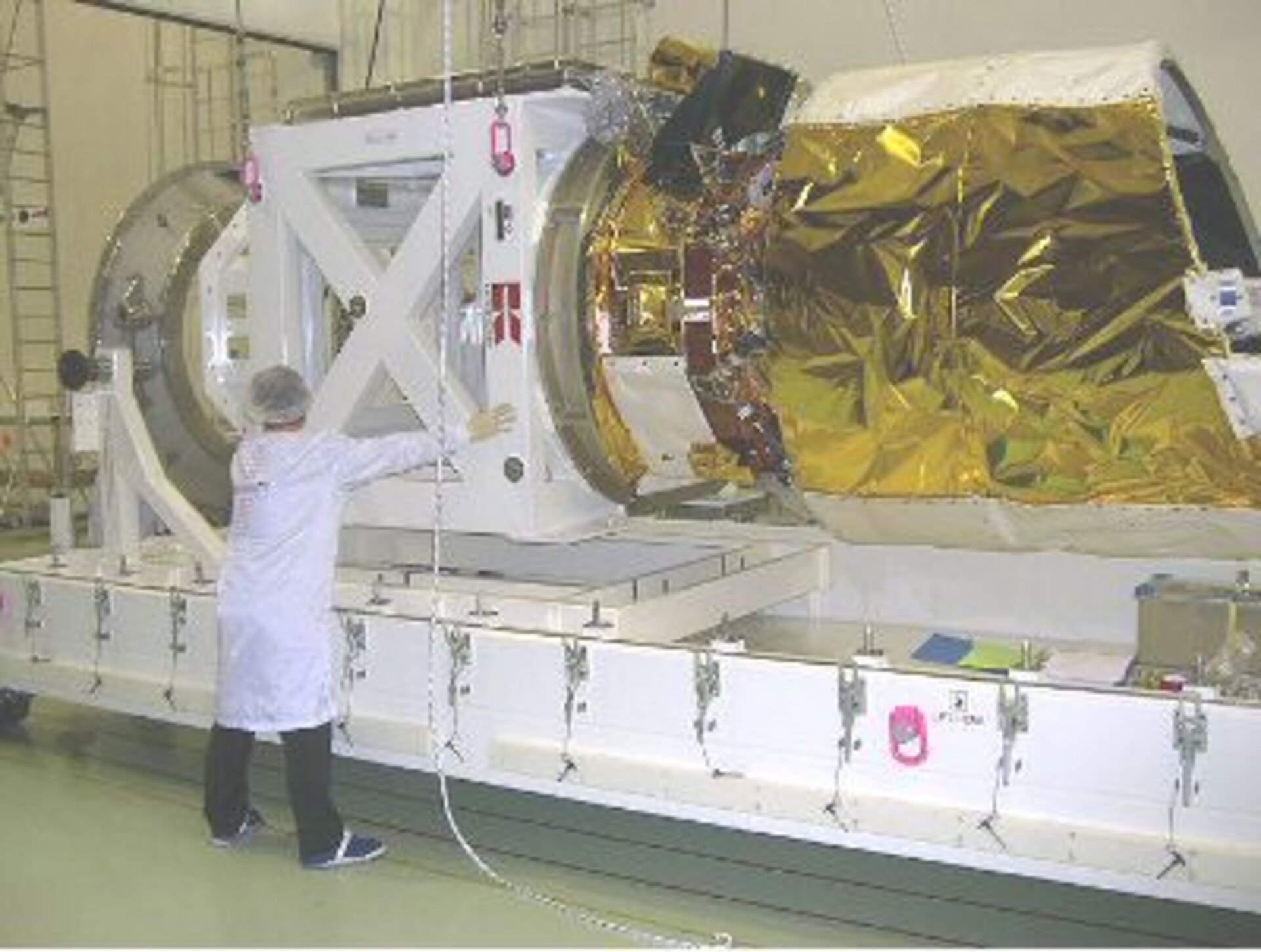
Engineers involved in ESA's wind mission ADM-Aeolus prepare for an exciting period ahead as the structural model of its only instrument is subjected to a stringent period of testing.
The novel Atmospheric Laser Doppler Instrument (ALADIN) forms the heart of the mission and the thermal vacuum tests that are about to start, along with subsequent vibration tests, are a crucial phase in the development of the mission.
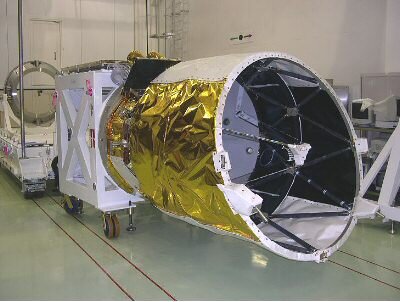
The initial testing is being carried out at the Centre Spatial de Liège (CSL) in Belgium and will focus on exposing the model of ALADIN to the full range of temperatures that the real flight model will experience in space as it orbits the Earth. The structural model is built to the same specifications as ALADIN and actually carries the real telescope hardware. These tests are particularly important to ensure that the focal length of the telescope can be controlled under varying temperatures, and also that the laser cooling system works properly.
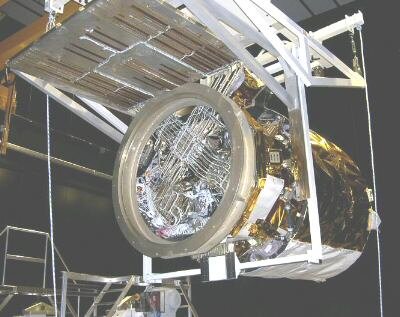
"Although the instrument will experience a wide range of temperatures when it is in orbit we can only ensure that it performs correctly if the optics and laser are kept at a near constant temperature, which is facilitated by a complex system of heaters and coolers. The fluctuations in the thermal environment are caused by the laser, which generates a lot of heat during operation, and also by the nature of being in orbit where the satellite will regularly pass through intense sunlight and through the cold of the Earth's shadow," explains Wolfgang Veith, ESA's ADM-Aeolus Engineering Manager. "The success of the thermal tests will prove that the instrument will be very stable and reliable in orbit under the most extreme thermal conditions. The complexity of the instrument will be matched by the complexity of the test setup which will combine the use of heaters and shrouds cooled down to the temperature of liquid nitrogen – all of which will be carried out in an almost perfect vacuum in one small chamber."
Due for launch in 2007, ADM-Aeolus, often referred to as just 'Aeolus', is the fourth Earth Explorer mission to be developed within ESA's Living Planet Programme. The mission is based on new technology in that the measuring technique depends upon using a Doppler wind lidar – never before been used in space. Although the concept of using a Doppler wind lidar in space goes back more than 20 years it is only recently that the technology has reached the level of sophistication required to meet the challenges of functioning in space.
The innovative ALADIN instrument consists of a powerful laser system to emit short laser pulses through the Earth's atmosphere, a large telescope to collect the so-called 'backscattered light' signal and a very sensitive receiver to analyse the Doppler shift of the signal from layers at different heights in the atmosphere.
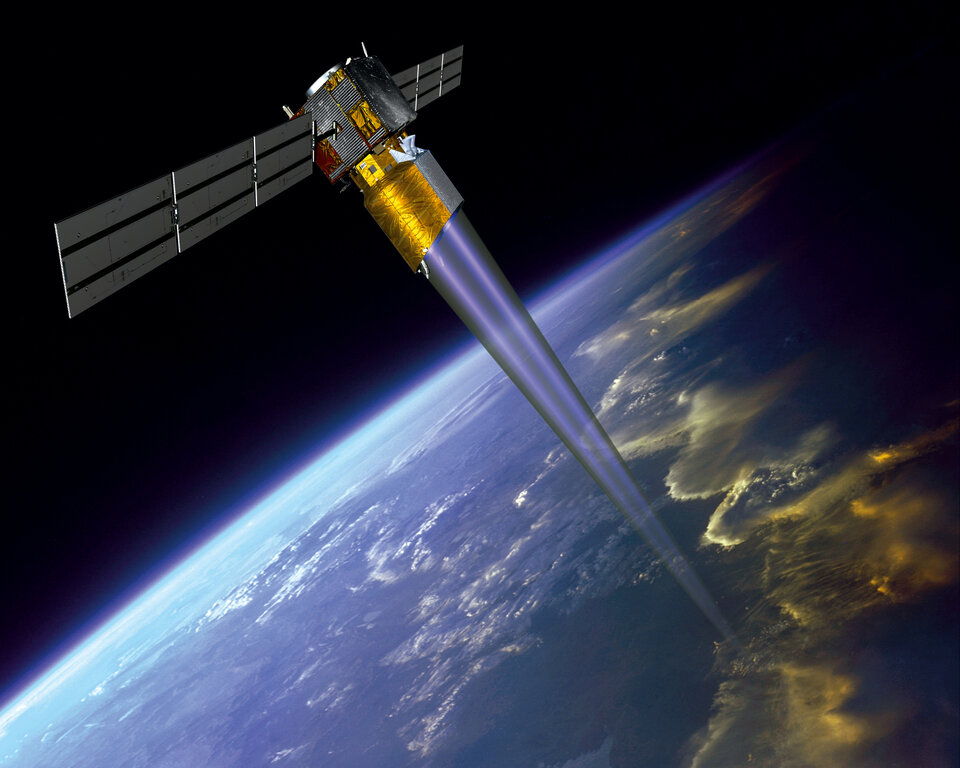
This advance in technology means that Aeolus will be the first-ever satellite to directly observe wind profiles from space on a global scale and as such the mission is expected to result in a breakthrough in weather prediction. The Aeolus wind profiles will find wide application in weather forecasting and climate studies, improving the accuracy of numerical weather forecasting, advancing our understanding of tropical dynamics and processes relevant to climate variability and climate modelling. It is envisaged that Aeolus will be the forerunner of a series of similar operational meteorological satellites in the future.
Once the thermal vacuum tests have been completed, the ALADIN model will be shipped to ESA-ESTEC in the Netherlands where it will be joined with the actual Aeolus platform to undergo a series of vibration tests. These tests will be carried out during June.


