• → European Space Agency

      • Space for Europe
      • Space News
      • Space in Images
      • Space in Videos
    • About Us

      • Welcome to ESA
      • DG's News and Views
      • For Member State Delegations
      • Business with ESA
      • ESA Exhibitions
      • ESA Publications
      • Careers at ESA
    • Our Activities

      • Space News
      • Observing the Earth
      • Human Spaceflight
      • Launchers
      • Navigation
      • Space Science
      • Space Engineering
      • Operations
      • Technology
      • Telecommunications & Integrated Applications
    • For Public

    • For Media

    • For Educators

    • For Kids

    • ESA

    • Observing the Earth

    • Understanding Our Planet

    • Securing Our Environment

    • Benefiting Our Economy

    • About understanding our planet
    • Space and Earth Monitoring

      • Land

        • Overview
        • Rivers & lakes
        • Volcanoes
        • Coastal zones
        • Wetlands & deserts
      • Oceans

        • Overview
        • Wind & waves
        • Ocean colour & algae blooms
        • Sea Surface Temperature
        • El Niño
      • Ice

        • Overview
        • Ice and climate
      • Atmosphere

        • Overview
        • Water vapour & clouds
        • Aerosols
        • Ozone hole
        • Climate change
      • Biosphere

        • Overview
        • Forests
        • Carbon cycle
    • About Observing the Earth

      • How does Earth Observation work?
      • How to get Earth observation data
      • Integrating Earth Observation in your job
      • Earth Observation users speak
    • Opportunities with us

      • Education & training
      • International cooperation
      • Milestones & announcements
    • Multimedia

      • Image Gallery
      • Video Gallery
      • Online resources
      • RSS feeds

    ESA > Our Activities > Observing the Earth > Understanding Our Planet

    Overview

    Ice reaches its grip across a significant portion of the Earth's land and ocean surface. The part of the world where snow and ice is formed is termed the cryosphere. It contains the majority of global freshwater and has a major influence on climate.

    Cryosphere coverage

    Seasonal snow cover extends over a maximum 31% of global land area – almost all of it in the northern hemisphere. A tenth of Earth's land area is covered by glaciers and ice sheets, including the entire continent of Antarctica. A further 24% of the Earth's bare surface contains permafrost, with further regions undergoing seasonal freezing and thawing.

    During the height of winter in each hemisphere, sea ice can cover 14 to 16 million square kilometres of the Arctic Ocean and 17 to 20 million of the Southern Ocean, pulling back to less than half that extent during their respective polar summers.

    A store of freshwater

    Stored within the cryosphere is around 77% of global freshwater – 91% of it found in the Antarctic ice sheet, the remainder within the ice sheet covering Greenland and glaciers found worldwide.

    The cryosphere is both influenced by and has a major influence on climate. And any increase in the melt rate of ice sheets and glaciers has the potential to greatly increase sea level. For this reason, researchers are looking to the cryosphere to get a better idea of the potential scale of climate change.

    Earth Observation provides an effective means of continuously monitoring the entire cryosphere, charting any alterations in response to climate, and looking for warning signs of changes in snow or ice reflectivity (known as 'albedo') along with thinning ice.

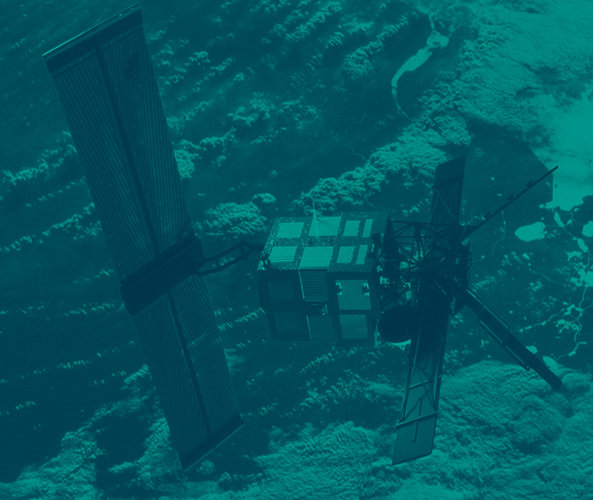
    With Arctic temperatures already at their warmest for the last four centuries, measurements suggest sea ice extent has declined by 10% since the 1960s. The best means of accurately measuring both ice extent and thickness on an ongoing basis is space-based radar and altimetry instruments of the type flown on ESA's ERS, Envisat and CryoSat-2 spacecraft.

    Ice mapping from space

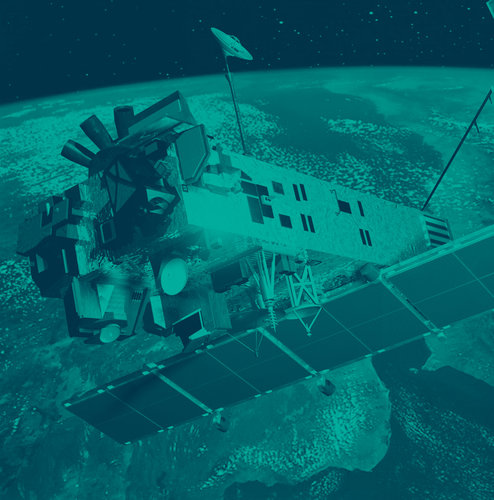
    Envisat’s Advanced Synthetic Aperture Radar (ASAR) instrument was able to simultaneously cover an area of the Arctic four times larger than ERS’s SAR. It could also distinguish between different types of ice, with a variable angled and polarised radar beam that can show whether ice is solid pack-ice or just thin 'pancake' ice.

    Envisat's RA-2 Altimeter was designed to send thousands of radar pulses earthward every second to measure sea ice and glacier thickness. It featured an innovative 'four-wheel-drive' design that enabled it to keep better signal contact during previously difficult transitions between ice, land and open sea.

    CryoSat-2’s main payload is the Synthetic Aperture Interferometric Radar Altimeter (SIRAL) and is able to measure ice-sheet elevation and sea-ice 'freeboard', which is the height of ice protruding from the water. Previous radar altimeters have been optimised for operations over the ocean and land, but SIRAL is the first sensor of its kind designed for ice.
    Rate this

    Views

    Share

    • Currently 4 out of 5 Stars.
    • 1
    • 2
    • 3
    • 4
    • 5
    Rating: 4/5 (1 votes cast)

    Thank you for rating!

    You have already rated this page, you can only rate it once!

    Your rating has been changed, thanks for rating!

    57
    facebook
    twitter
    reddit
    google plus
    digg
    tumbler
    digg
    blogger
    myspace
    • Related news
      • Greenland glacier gives birth to giant iceberg
      • Special features
      • Polar Year
      • Tracking sea ice movements from space
      • Envisat monitoring Antarctica
      • Related missions
      • ERS overview
      • Envisat overview
      • Earth Explorers overview
      • In depth
      • EO Principal Investigator Portal
      • Earthwatching: B-15A

    Connect with us

    • RSS
    • Youtube
    • Twitter
    • Flickr
    • Google Buzz
    • Subscribe
    • App Store
    • LATEST ARTICLES
    • · CryoSat hits land
    • · Ariane 5 completes seven launches …
    • · Measuring skull pressure without t…
    • · Malargüe station inauguration
    • · The solar wind is swirly
    • FAQ

    • Jobs at ESA

    • Site Map

    • Contacts

    • Terms and conditions