Defending the planet against rocky invaders
In May, hundreds of international experts will meet to consider how best to react should planet Earth ever be threatened by a large object. The 2011 Planetary Defence Conference includes top experts from space organisations worldwide.
The 2011 Planetary Defence Conference (PDC2011) is the fourth in a series of global meetings that bring together scientists, space experts, industry, academics and policy-makers to share research results and consider options for a global response should an Earth-impacting threat be discovered.
There are over 400 000 asteroids known in our Solar System; more than 7700 of these are near-Earth objects (NEOs), meaning their orbits come close to that of Earth's.
NEOs could hit our planet and, depending on their size, produce considerable damage. While the chance of a large object striking Earth is very small, it would produce a great deal of destruction. NEOs thus merit active detection and tracking efforts.
Global cooperation vital to assess NEO risk
Within Europe, we have developed world-class capabilities and expertise in observing, discovering and assessing NEOs.
The most recent significant impact occurred in Siberia, Russia, in 1908, when an object estimated at 30–50 m in diameter entered the atmosphere and exploded. The blast levelled more than 2000 sq km of forest.
"Within Europe, we have developed world-class capabilities and expertise in observing, discovering and assessing NEOs," says Detlef Koschny, Head of the NEO Segment at ESA's Space Situational Awareness (SSA) programme office.
"Assessing the risk and developing response strategies cuts across national, geographic, jurisdictional and disciplinary lines, so conferences like PDC2011 are absolutely vital for sharing information."
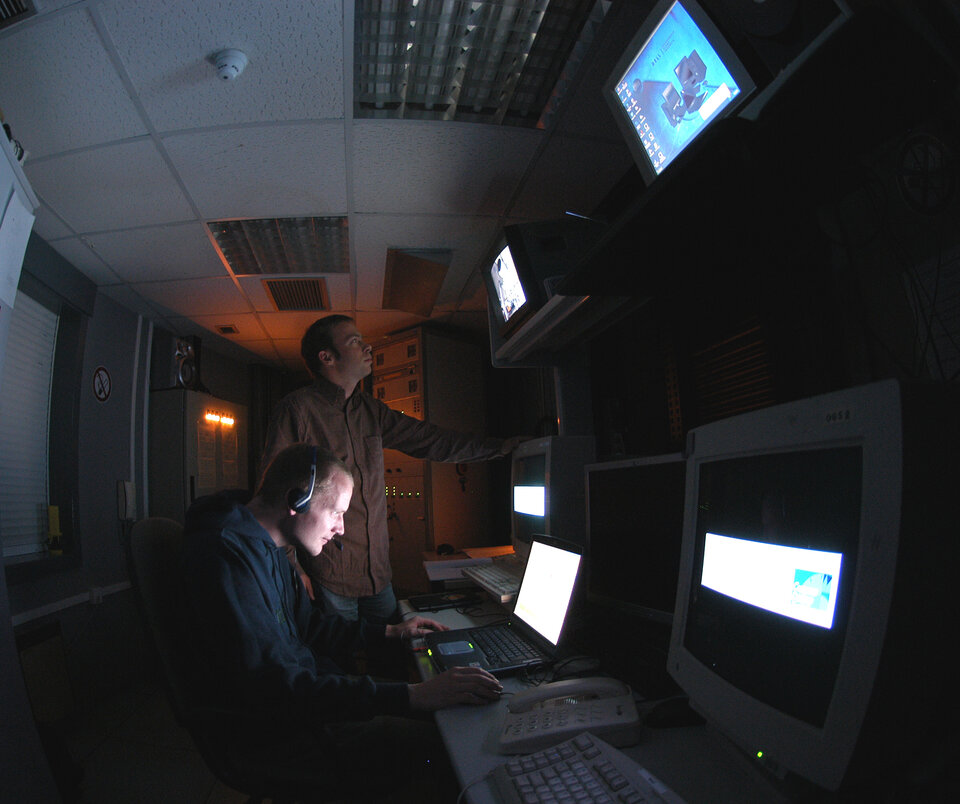
ESA's SSA programme is developing services and infrastructure to enable Europe to observe NEOs, predict their orbits, produce impact warnings and be involved in possible mitigation measures and civil response.
It will also provide services to monitor man-made debris objects in orbit that can pose hazards to satellites and to monitor the effects of space weather phenomena on space and ground assets.
PDC2011, Bucharest
PDC2011 will be held 9–12 May in Bucharest, Romania. The conference is being organised under the auspices of the International Academy of Astronautics. ESA and the Romania Space Agency are among the main sponsors, which include many other organisations, companies and agencies interested in NEOs.
Delegates from a large range of international organisations will attend and present findings, including ESA, NASA, the UN, and the French, German, UK, Japanese and Italian space agencies, as well as the private and public sectors.
The theme for the conference is 'From Threat to Action' and papers will be presented covering: potentially hazardous objects – recent research; discovery and tracking; impacts, effects and education; mission planning and technologies; legal, policy, and political framework for planetary defence.
More information on the conference and details on the venue and registration can be found via the link at top right or via the Congrex website.
Contact for further information
Dr Detlef Koschny
Head, SSA-NEO Segment
detlef.koschny [@] esa.int
Tel. +31 71 565 4828
or
ESA Conference Bureau
P.O. Box 299
2200 AG Noordwijk
The Netherlands
Phone: +31 71 565 5005
email: esa.conference.bureau@esa.int