ESA develops radar to watch for space hazards
As part of ESA's Space Situational Awareness activities, a new radar system will be developed to help safeguard space missions. The radar will detect hazardous objects in Earth orbit and trigger warnings that enable satellite operators to avoid collisions, making spaceflight safer for all.
On 7 July, ESA and Spain's Indra Espacio S.A. signed a contract under which the Spanish company and its European partners will design the future Space Situational Awareness (SSA) surveillance radar and develop a demonstrator radar. The contract is a significant milestone in ESA's SSA Preparatory Programme (SSA-PP).
In the future, the SSA surveillance radar will assist in detecting hazardous objects in low orbits. Early detection of debris is crucial to help warn satellite operators of possible collision risks, enabling avoidance manoeuvres to be made.

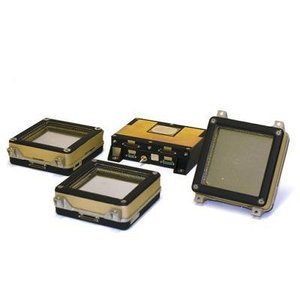
The contract includes the design of the future SSA radar and the design, development and installation of a small-scale phased-array radar demonstrator to validate the full-scale radar.
The contract is valued at €4.7 million and will help Europe's space industry maintain its world-class technical expertise.
Fostering European expertise
In addition to managing the project, Indra Espacio is responsible for the design and development of the radar transmitter. Building the radar receiver will be subcontracted to the Fraunhofer Institute for High Frequency Physics and Radar Techniques, based in Wachtberg, Germany.
"Both organisations have extensive experience in the design and development of cutting-edge technology for space applications and we are very pleased to be working with them at this early stage of the SSA Programme," said Nicolas Bobrinsky, ESA's SSA Programme Manager.
In a parallel contract with the Agency, Indra Espacio are also surveying a suitable site for the radar to be located in an ESA Member State.
Prompt and precise information
The radar will provide prompt and precise information on objects orbiting Earth. Using these data, a wide range of services will be possible, such as warnings of potential collisions between these objects and operational satellites and alerts on when and where debris enters Earth's atmosphere.
The full SSA system will also make use of a number of optical telescopes together with networked data processing centres to enable the system to observe objects in all populated orbital regions.
While radar technology works most efficiently for the surveillance of objects in low and highly elliptical orbits, optical surveillance is better for objects in medium and geostationary orbits.
About Space Situational Awareness
The SSA Preparatory Programme was authorised at the ESA Ministerial Council meeting in November 2008. Under the SSA, ESA is preparing a capability to watch for hazards in space stemming from possible collisions between objects in orbit, harmful space weather and potential strikes by natural objects that cross Earth's orbit.
SSA will, ultimately, enable Europe to detect, predict and assess the risk to life and property due to remnant man-made space objects, reentries, in-orbit explosions and release events, collisions, disruption of missions and satellite-based service capabilities, potential impacts of Near-Earth Objects, and the effects of space weather phenomena on space- and ground-based infrastructure.
The Preparatory Programme is running from 2009 to 2011/12 and is focusing on governance, data policy, technical requirements and the architecture of a future full European SSA capability.
After the foundation of the Preparatory Programme and based on its results, European ministers will decide on a proposal for the full programme to be readied in the period 2012-19.
Contact
Gian Maria Pinna
SSA Ground Segment Manager
GianMaria.Pinna [@] esa.int
Tel. +34 91 81 31 209