• → European Space Agency

      • Space for Europe
      • Space News
      • Space in Images
      • Space in Videos
    • About Us

      • Welcome to ESA
      • DG's News and Views
      • For Member State Delegations
      • Business with ESA
      • ESA Exhibitions
      • ESA Publications
      • Careers at ESA
    • Our Activities

      • Space News
      • Observing the Earth
      • Human Spaceflight
      • Launchers
      • Navigation
      • Space Science
      • Space Engineering
      • Operations
      • Technology
      • Telecommunications & Integrated Applications
    • For Public

    • For Media

      • Media
      • ESA TV
      • Videos for professionals
      • Photos
    • For Educators

    • For Kids

    • ESA

    • Operations

    • Ground Systems Engineering

    • Space Debris

    • SSA

    • Operations
    • Operations home
    • Background
    • About Operations
    • The Right Stuff
    • Multimedia

      • Images
      • Videos
    • SSA programme
    • Space Situational Awareness
    • Teams on ground
    • Ground Systems Engineering
    • EGOS - Ground operation system
    • Missions in space
    • Solar and planetary
    • Astronomy & fundamental physics
    • Earth observation
    • Human spaceflight
    • Technology demonstration
    • Estrack operations
    • Past missions
    • ESA mission history
    • - Find a mission: A...Z
    • Mission control centres
    • ATV Control Centre (ATV-CC)
    • Columbus Control Centre (Col-CC)
    • Ground stations
    • Estrack tracking stations
    • ESTRACK Control Centre
    • - Find a station: A...Z
    • OPS Community
    • Advanced Operations Concepts Office
    • HSO Exchange
    • Knowledge Management at ESA's Operations team

    ESA > Our Activities > Operations

    ESA's comet chaser to fly by Earth

    Rosetta swings by Earth
    23 February 2005

    ESA's comet-chaser Rosetta will make a fly-by of planet Earth on 4 March 2005, and sky watchers should be able to see it with telescopes or binoculars if the sky is clear! Read on for details of ESA's 'Rosetta Up Close' photo contest.

    Rosetta is approaching Earth from an area in the sky between the constellations Leo and Sextans, and should first become visible to large amateur telescopes around 26 February 2005.

    The spacecraft will make its closest approach to Earth at about 23:10 CET and come within 1900 kilometres, at which time it will be over Mexico, having already passed over Europe.

    Watchers in Europe may have best evening view

    On the evening of the closest approach, sky watchers in Europe will be favourably placed to follow this event using smaller telescopes or binoculars. Unfortunately, Rosetta is not expected to become visible to the naked eye from Europe as it will still be about 10 000 kilometres away until it disappears below the horizon.

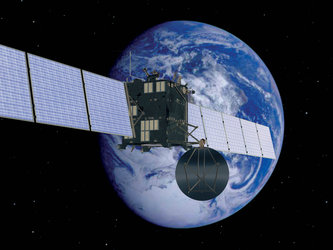
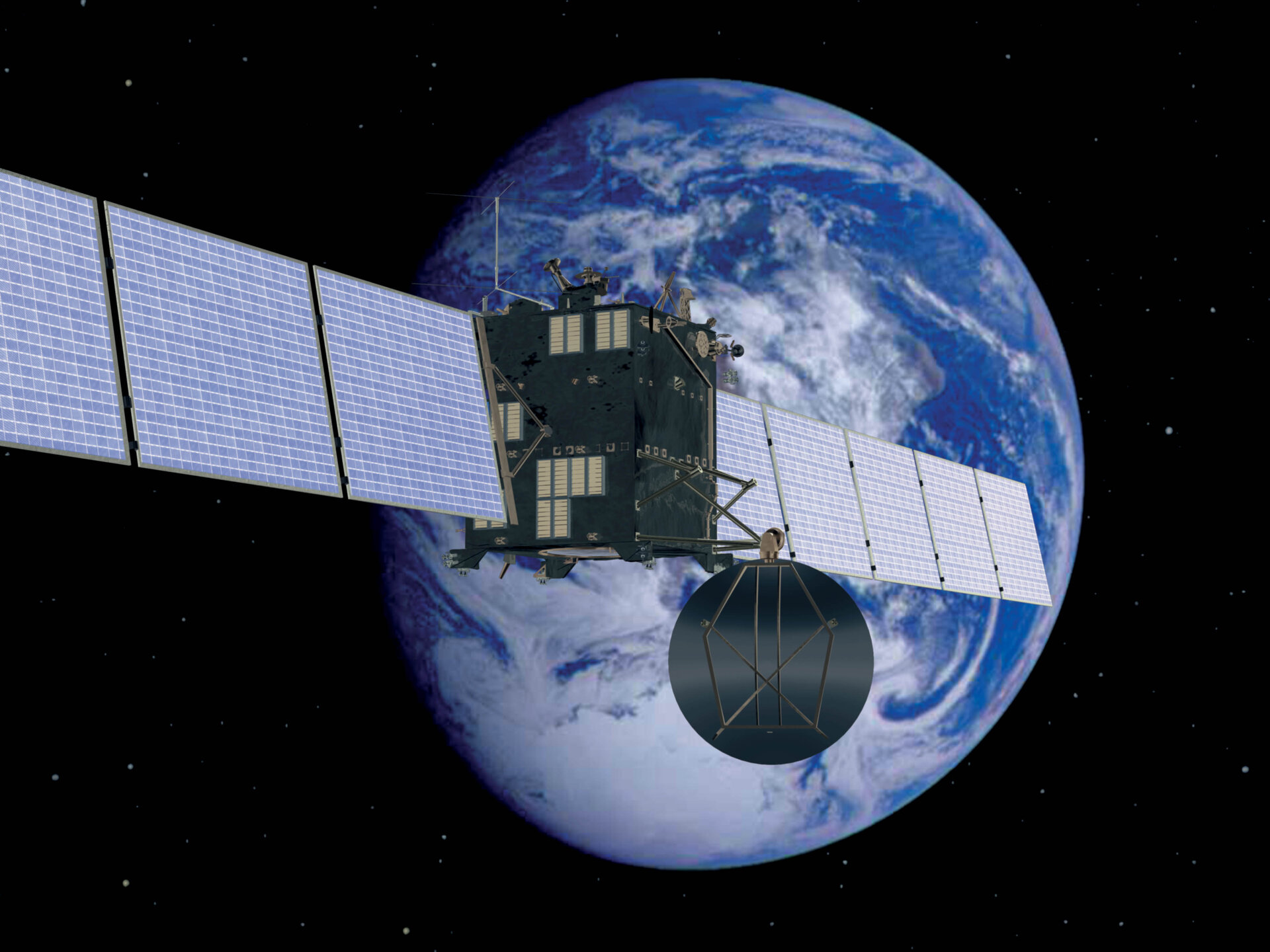
    However, amateur astronomers using video or photo-imaging in conjunction with a telescope should have a great viewing opportunity — weather permitting. They may even be able to see Rosetta's solar panels, which extend over 32 metres; the high-gain antenna may also be distinguishable.


    After sunset on 4 March, it will appear to travel from south east to south west, moving from the constellation Sextans towards the setting Sun, crossing the complete sky. It will move faster as it heads west, disappearing below the horizon around 23:00 CET. As seen from Europe it will only reach a 'magnitude' of about +8 or +9 on the brightness scale used by astronomers. This is dimmer than a typical faint star and not readily apparent to the eye.

    Rosetta swings between Earth and Mars

    This fly-by manoeuvre will swing the three-tonne Rosetta spacecraft around our planet and out towards Mars, where it will make a fly-by on 26 February 2007, only to come back again to Earth. Fly-bys are necessary to accelerate the spacecraft, using planetary gravity, such that the orbital velocity of the target comet can eventually be matched.

    This is the first of four planet fly-bys (three times with Earth, once with Mars) that Rosetta will carry out in its long journey to its target, Comet 67P/Churyumov-Gerasimenko. Rosetta will reach the comet in 2014, enter into orbit and deliver a lander, Philae, onto the surface.

    Moon to serve as 'dummy' asteroid

    A number of activities are planned during the current fly-by. A few hours before the closest approach the spacecraft will be pointed towards the Moon and the remote sensing and several other instruments will be switched on for calibration purposes.

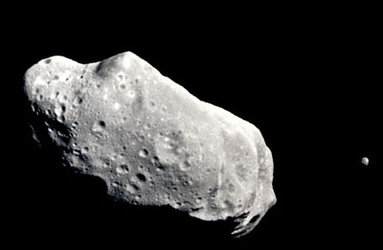
    After this fly-by, one of the two Navigation Cameras will be switched on to test Rosetta's ability to track asteroids using the Moon as a 'dummy' asteroid. Rosetta is scheduled to fly past two asteroids, Steins in September 2008 and Lutetia in July 2010, during which this tracking mode will be used to keep the spacecraft instruments centred on target.

    'Rosetta Up Close' photo contest

    Sky watchers everywhere are invited to submit their photos of Rosetta passing Earth to ESA's 'Rosetta Up Close' photo contest. Details of the contest, rules, prizes and submission procedures will be posted shortly on the ESA web site.

    Rate this

    Views

    Share

    • Currently 0 out of 5 Stars.
    • 1
    • 2
    • 3
    • 4
    • 5
    Rating: 0/5 (0 votes cast)

    Thank you for rating!

    You have already rated this page, you can only rate it once!

    Your rating has been changed, thanks for rating!

    63
    Tweet
    • Europe's comet chaser
    • ESA's comet chaser
    • More about...
      • Rosetta factsheet
      • Fly-by trajectory details & finder charts
      • Related articles
        • ESA's comet chaser to fly by Earth
          • Viewing Rosetta fly-by: audiocast with Detlef Koschny
            • New destination for Rosetta, Europe's comet chaser
              • Landing on a cosmic iceberg
                • Life of a comet
                  • Asteroids: The discovery of asteroids
                  • Related links
                  • Arianespace
                  • Astrium
                  • DLR

    Connect with us

    • RSS
    • Youtube
    • Twitter
    • Flickr
    • G+
    • Facebook
    • Livestream
    • Subscribe
    • App Store
    • ESA Operations Twitter

    Follow ESA operations

    • LATEST ARTICLES
    • · Rare merger reveals secrets of gal…
    • · Watching for hazards: ESA opens as…
    • · ESA astronaut Timothy Peake set fo…
    • · Space drives e-mobility
    • · Proba-V opens its eyes
    • FAQ

    • Jobs at ESA

    • Site Map

    • Contacts

    • Terms and conditions