Asteroid 2012 DA14 had a close approach with Earth at 1925 UTC on February 15 2013 at about 0.09 LD (Lunar Distances = ~384,000 kilometers) or 0.0002 AU (1 AU = ~150 million kilometers).
Asteroid 2012DA14 streaking across the night sky. This is a combined image made from 7 individual shots at an exposure time of 0.5 seconds each. Images were taken consecutively every 3.5 sec. The asteroid was moving from the south (bottom of frame) to the north (top).
The instrument used was the University of Athens Observatory 0.40m f/8 Cassegrain reflector with a SBIG ST-10XME CCD camera and a f/6.3 focal reducer, resulting in a 25x17 arcminutes field of view.
The image is centered at equatorial coordinates: RA: 12h 18m 55s, DEC: +20d 50m 04s
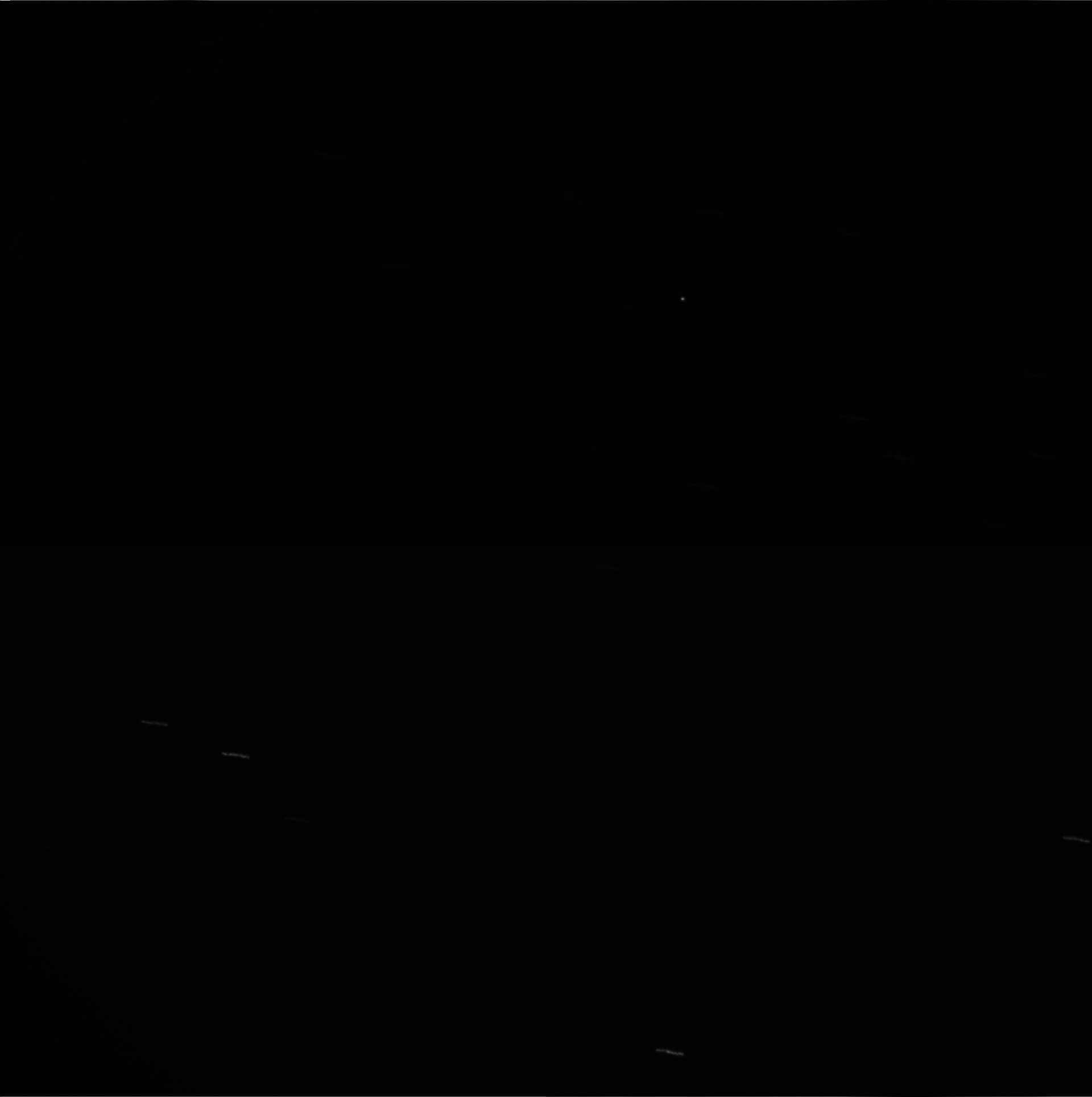
This is a combined image overlapping two 15 second exposures, taken at 20:22:44 UT (long trail on the right) 20:49:24 UT (short trail on the left) respectively. North is up and the asteroid was moving from south (bottom) towards north (top).
The instrument used was the University of Athens Observatory 0.40m f/8 Cassegrain reflector with a SBIG ST-10XME CCD camera and a f/6.3 focal reducer, resulting in a 25x17 arcminutes field of view.
The two images were taken at different equatorial coordinates, thus the background is the superposition of two stellar fields. Note that the two exposures have the same duration, but the trail has different length, as a consequence of the variation of the projected angular velocity of the asteroid during flyby.
This is a single 15 second exposure of asteroid 2012DA14, taken at 20:22:44 UTC. North is up and the asteroid was moving from south (bottom) towards north (top).
The instrument used was the University of Athens Observatory 0.40m f/8 Cassegrain reflector with a SBIG ST-10XME CCD camera and a f/6.3 focal reducer, resulting in a 25x17 arcminutes field of view.
The image is centered at equatorial coordinates: RA: 12h 21m 18s, DEC: +30d 41m 16s
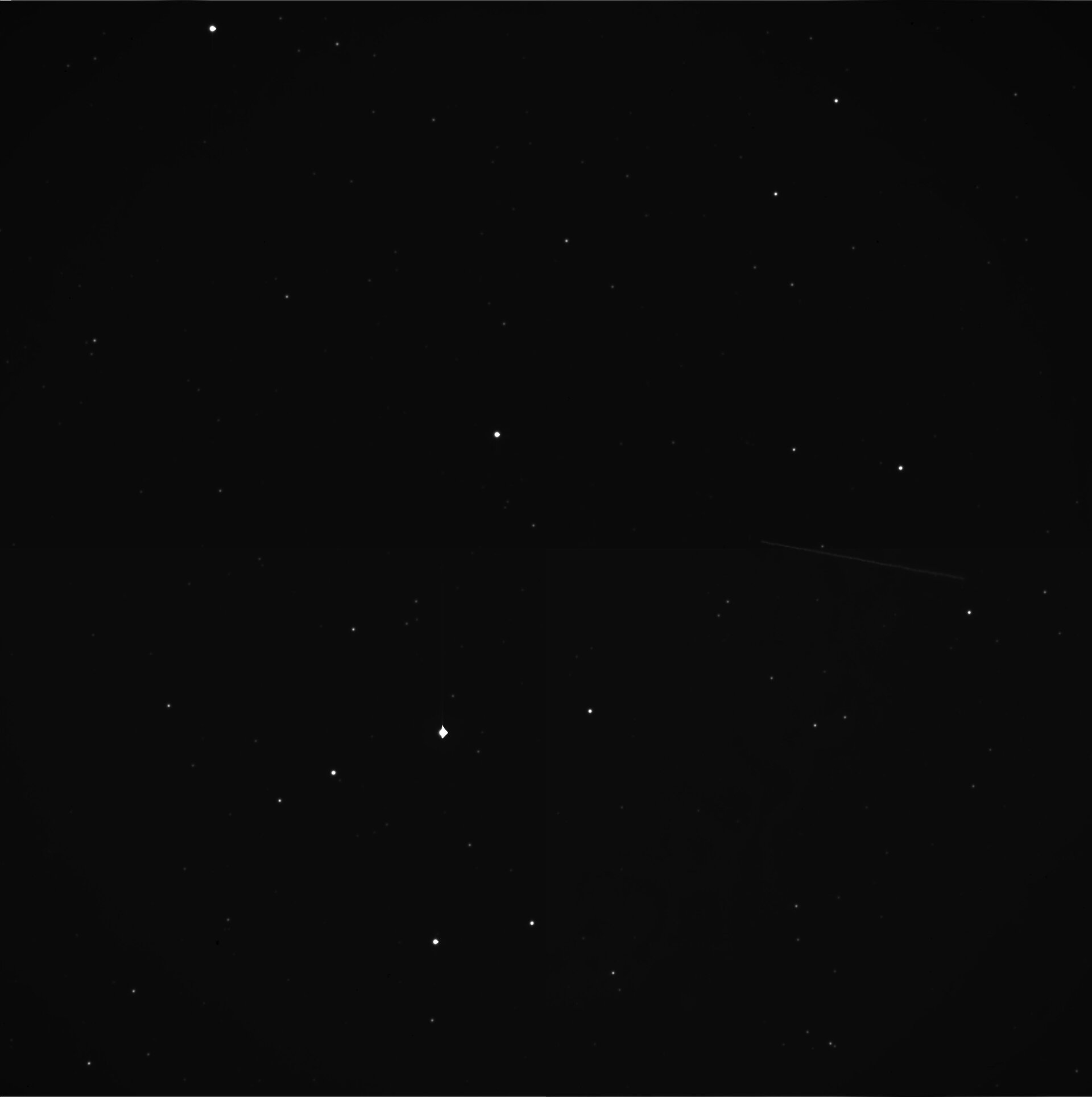
This is a single 15 second exposure of asteroid 2012DA14, taken at 20:49:24 UTC. North is up and the asteroid was moving from south (bottom) towards north (top).
The instrument used was the University of Athens Observatory 0.40m f/8 Cassegrain reflector with a SBIG ST-10XME CCD camera and a f/6.3 focal reducer, resulting in a 25x17 arcminutes field of view.
The image is centered at equatorial coordinates: RA: 12h 25m 53s, DEC: +31d 13m 06s
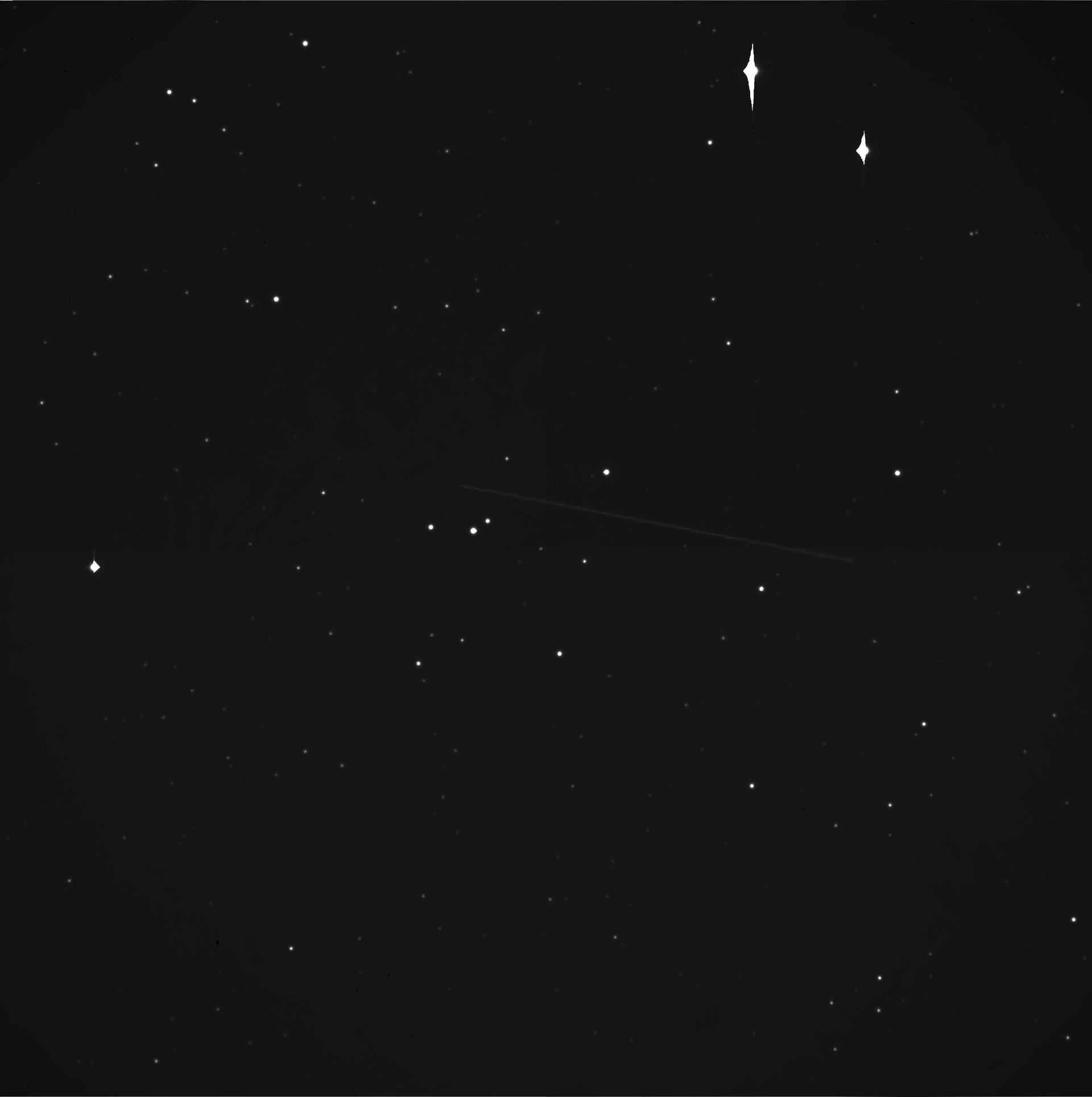
Farewell to a rocky visitor: asteroid 2012DA14 (the near-horizontal streak in the image) seen departing Earth around 23:45 CET after making closest approach at 20:27 CET on 15 February 2013. This image was acquired at ESA's Optical Ground Station (OGS) located on Tenerife, Spain.
![[5/7] Farewell to a visitor](/var/esa/storage/images/esa_multimedia/images/2013/02/farewell_to_a_visitor/12530255-1-eng-GB/Farewell_to_a_visitor_latestnews.jpg)
![[6/7] 2012DA14 spotted](/var/esa/storage/images/esa_multimedia/images/2013/02/2012da14_spotted/12532272-1-eng-GB/2012DA14_spotted_latestnews.jpg)
![[7/7] Asteroid 2012DA14 captured](/var/esa/storage/images/esa_multimedia/images/2013/02/asteroid_2012da14_captured/12532302-1-eng-GB/Asteroid_2012DA14_captured_latestnews.jpg)
Rate this
Views
Share
- Currently 0 out of 5 Stars.
- 1
- 2
- 3
- 4
- 5
Rating: 0/5 (0 votes cast)Thank you for rating!
You have already rated this page, you can only rate it once!
Your rating has been changed, thanks for rating!