• → European Space Agency

      • Space for Europe
      • Space News
      • Space in Images
      • Space in Videos
    • About Us

      • Welcome to ESA
      • DG's News and Views
      • For Member State Delegations
      • Business with ESA
      • ESA Exhibitions
      • ESA Publications
      • Careers at ESA
    • Our Activities

      • Space News
      • Observing the Earth
      • Human Spaceflight
      • Launchers
      • Navigation
      • Space Science
      • Space Engineering
      • Operations
      • Technology
      • Telecommunications & Integrated Applications
    • For Public

    • For Media

    • For Educators

    • For Kids

    • ESA

    • Operations

    • Ground Systems Engineering

    • Space Debris

    • SSA

    • Background
    • About Operations
    • The Right Stuff
    • Multimedia

      • Images
      • Videos
    • SSA programme
    • Space Situational Awareness
    • Teams on ground
    • Ground Systems Engineering
    • EGOS - Ground operation system
    • Missions in space
    • Solar and planetary
    • Astronomy & fundamental physics
    • Earth observation
    • Human spaceflight
    • Technology demonstration
    • Past missions
    • ESA mission history
    • - Find a mission: A...Z
    • Mission control centres
    • ATV Control Centre (ATV-CC)
    • Columbus Control Centre (Col-CC)
    • Ground stations
    • ESTRACK tracking stations
    • ESTRACK Control Centre
    • - Find a station: A...Z
    • OPS Community
    • Advanced Mission Concepts & Technologies Office
    • HSO Exchange
    • Knowledge Management at ESA's Operations team

    ESA > Our Activities > Operations

    Large solar flares generate geomagnetic storm

    Solar flare seen by Proba-2
    8 March 2012

    A pair of unusually large solar flares early yesterday generated a Coronal Mass Ejection that will reach Earth around mid-day today. It will likely cause at least a strong geomagnetic storm that could affect satellites in space and trigger auroral displays.

    The effects at ground level are expected to be limited, but there is a good chance for some excellent auroral displays in the north.

    The extra-large two solar flares occurred at 23:24 GMT on 6 March and 00:14 GMT yesterday, throwing off a huge cloud of magnetised plasma from the Sun's atmosphere – the corona – into interplanetary space.

    These Coronal Mass Ejections (CMEs) often occur in association with a solar flare.

    Dramatic events spotted by ESA and NASA missions

    These dramatic events were detected by the ESA/NASA SOHO and NASA SDO spaceborne solar observatories. Together with other space organisations, ESA experts are closely monitoring the storm.

    The two flares followed an earlier flare, which occurred on 04:05 GMT on 5 March.


    Solar flare seen by SOHO

    All three came from a new active region on the Sun that was first detected on 2 March.

    The plasma cloud left the Sun at an estimated 2300 km/s – unusually fast.

    However, the angle combined with deceleration from the background solar wind means that it is expected to arrive some hours later than this initial estimated speed alone would indicate.

    Satellites to experience increased effects

    In addition, a strong stream of high-energy protons has been generated. This 'storm' of subatomic particles was created by the shock wave ahead of the CME.

    "It is therefore likely that satellites orbiting Earth will experience increased radiation levels today as a result," says Juha-Pekka Luntama, Head of Space Weather in ESA’s Space Situational Awareness office.
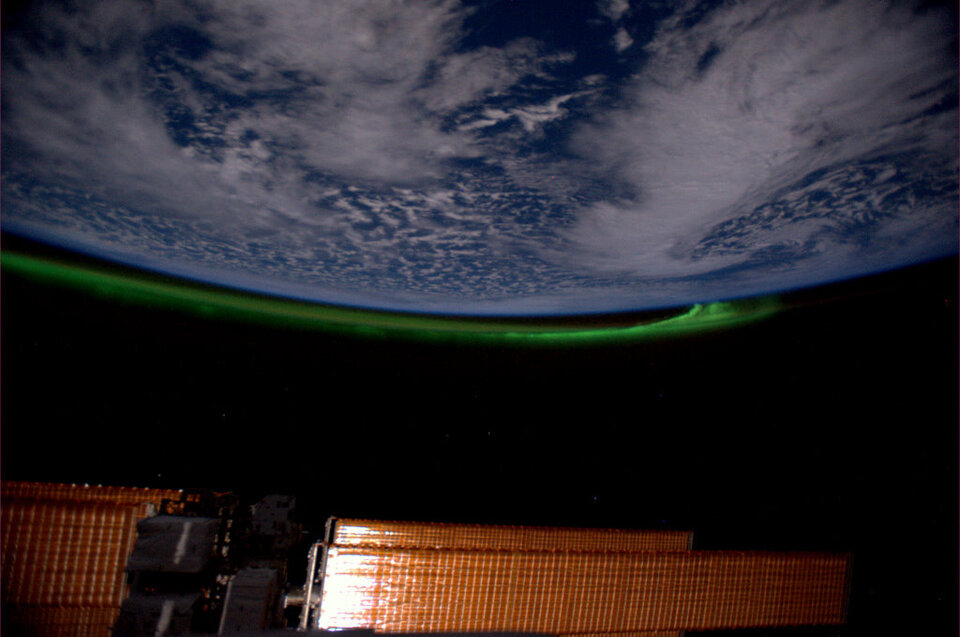
    Aurora Borealis

    "Space radiation levels are expected to remain high throughout 8 March and possibly for one to two days longer."

    "In addition, the arrival of the geomagnetic storm could affect systems including GPS navigation satellite signals and satellite communications."

    ESA spacecraft already affected

    The Venus Express spacecraft, now orbiting Venus and much closer to the Sun than Earth, was affected by the radiation on 7 March.
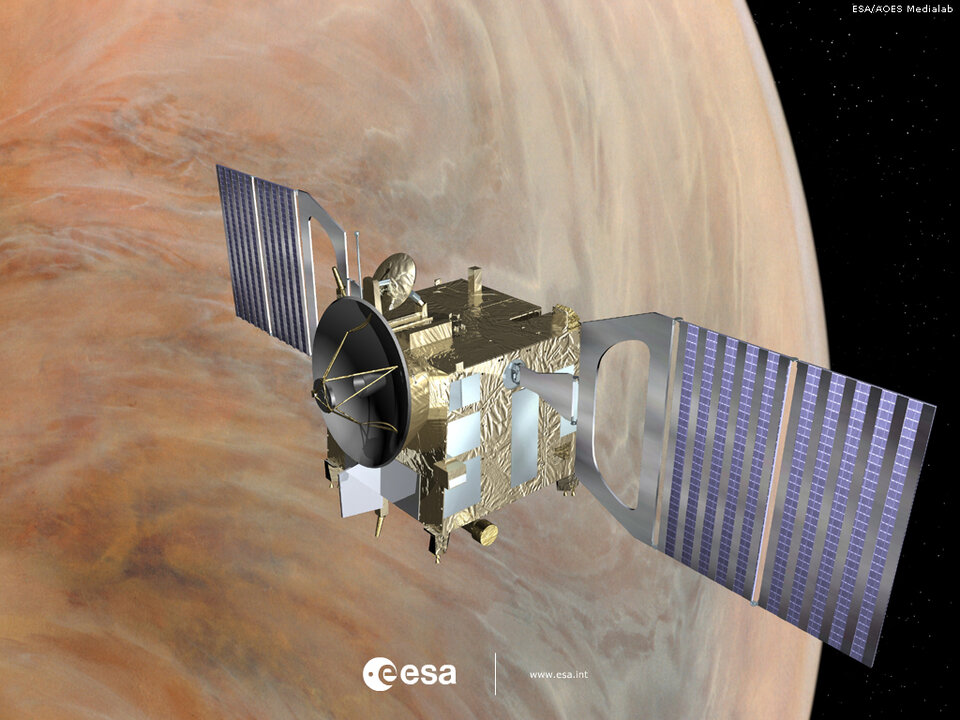
    Venus Express

    The startracker cameras that help Venus Express measure its position and orientation in space were ‘blinded’ starting at 01:41 GMT.

    "The Mission Control Team has taken the startrackers out of service and is maintaining the spacecraft's attitude using gyroscopes until the solar effects fade," says Octavio Camino, Venus Express Spacecraft Operations Manager at ESA’s European Space Operations Centre in Darmstadt, Germany.

    Alexi Glover, an ESA space weather scientist, says that the solar region causing the current activity has a complex magnetic configuration and is now close to the centre of the Sun's disc.

    "So there is a good chance of more large events in the coming days," she notes.

    More information

    Media contacts plus extended information on Europe, space weather and Space Situational Awareness.

    Rate this

    Views

    Share

    • Currently 5 out of 5 Stars.
    • 1
    • 2
    • 3
    • 4
    • 5
    Rating: 5/5 (1 votes cast)

    Thank you for rating!

    You have already rated this page, you can only rate it once!

    Your rating has been changed, thanks for rating!

    319
    facebook
    twitter
    reddit
    google plus
    digg
    tumbler
    digg
    blogger
    myspace
      • Large solar flares generate geomagnetic storm - more information
        • Large solar flares generate geomagnetic storm
        • The Sun now
          The Sun now
          The Sun now
        • ESA/NASA SOHO homepage
        • Proba
        • Space Situational Awareness

    Connect with us

    • RSS
    • Youtube
    • Twitter
    • Flickr
    • Google Buzz
    • Subscribe
    • App Store
    • ESA Operations Twitter

    Follow ESA operations

    • LATEST ARTICLES
    • · CryoSat hits land
    • · Ariane 5 completes seven launches …
    • · Measuring skull pressure without t…
    • · Malargüe station inauguration
    • · The solar wind is swirly
    • FAQ

    • Jobs at ESA

    • Site Map

    • Contacts

    • Terms and conditions