• → European Space Agency

      • Space for Europe
      • Space News
      • Space in Images
      • Space in Videos
    • About Us

      • Welcome to ESA
      • DG's News and Views
      • For Member State Delegations
      • Business with ESA
      • ESA Exhibitions
      • ESA Publications
      • Careers at ESA
    • Our Activities

      • Space News
      • Observing the Earth
      • Human Spaceflight
      • Launchers
      • Navigation
      • Space Science
      • Space Engineering
      • Operations
      • Technology
      • Telecommunications & Integrated Applications
    • For Public

    • For Media

    • For Educators

    • For Kids

    • ESA

    • Operations

    • Ground Systems Engineering

    • Space Debris

    • SSA

    • Operations
    • Operations home
    • Background
    • About Operations
    • The Right Stuff
    • Multimedia

      • Images
      • Videos
    • SSA programme
    • Space Situational Awareness
    • Teams on ground
    • Ground Systems Engineering
    • EGOS - Ground operation system
    • Missions in space
    • Solar and planetary
    • Astronomy & fundamental physics
    • Earth observation
    • Human spaceflight
    • Technology demonstration
    • Estrack operations
    • Past missions
    • ESA mission history
    • - Find a mission: A...Z
    • Mission control centres
    • ATV Control Centre (ATV-CC)
    • Columbus Control Centre (Col-CC)
    • Ground stations
    • Estrack tracking stations
    • ESTRACK Control Centre
    • - Find a station: A...Z
    • OPS Community
    • Advanced Operations Concepts Office
    • HSO Exchange
    • Knowledge Management at ESA's Operations team

    ESA > Our Activities > Operations

    Lowering of ERS-2 orbit continues

    ERS-2 satellite
    28 July 2011

    The orbit of ESA’s retired ERS-2 observation satellite is being lowered to reduce the risk of collision with other satellites or space debris. The goal is to leave it well below most operating polar satellites by the end of August.

    The first in a series of thruster firings, each lasting about 300 seconds, was commanded by the mission control team at ESA’s European Space Operations Centre in Germany on 6 July to lower the orbit of the Agency’s veteran satellite.

    The burns have since lowered the satellite from its initial 785 km-high orbit to about 700 km.

    Engineers are closely monitoring the manoeuvres via ESA’s ground station in Kourou, French Guiana, and the Malindi station in Kenya.

    “We achieved our first 700 km target altitude on 27 July,” said Frank Diekmann, the ERS-2 operations manager.

    “Between now and the end of August, ERS-2 will be brought down to about 570 km, where the risk of collision with other satellites or space debris is drastically reduced.”

    The last phase, called ‘passivation’, will begin late in August or early September. During this phase, a number of long burns will deplete remaining fuel and, finally, the batteries will be disconnected and the transmitters switched off.

    Reentry of the satellite into Earth’s atmosphere is projected to occur within 25 years. Continued tracking will allow prediction of the reentry time and path.
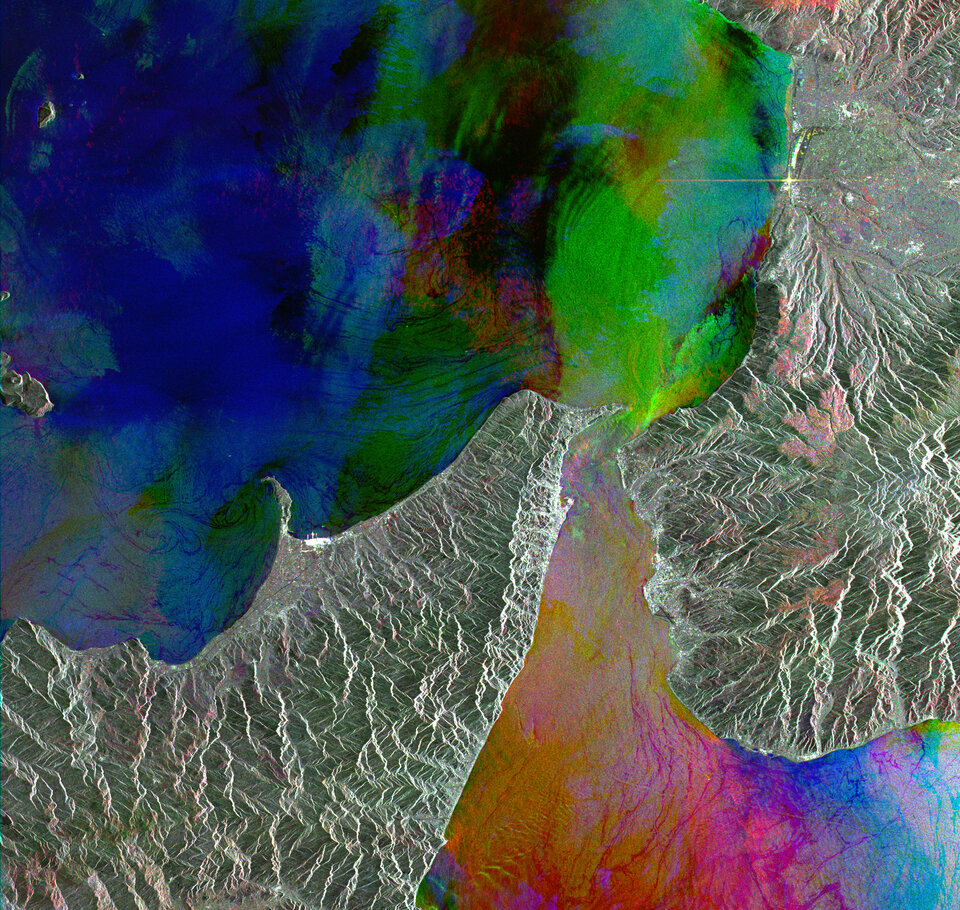
    The Strait of Messina, Italy
    ERS-2 radar view of Strait of Messina

    ERS-2 was launched in 1995, four years after ERS-1, the first European Remote Sensing satellite.

    With 20 years of continuous measurements, the two missions paved the way for the development of many new Earth observation techniques in the areas of atmosphere, land, ocean and ice monitoring.

    ERS-2 also carried the first European high-precision instrument to measure stratospheric ozone concentrations. It was crucial for observing the evolution of annual ozone depletion over Antarctica.

    ERS-2 travelled 3.8 billion km during its lifetime, providing data for thousands of scientists and projects.

    Rate this

    Views

    Share

    • Currently 0 out of 5 Stars.
    • 1
    • 2
    • 3
    • 4
    • 5
    Rating: 0/5 (0 votes cast)

    Thank you for rating!

    You have already rated this page, you can only rate it once!

    Your rating has been changed, thanks for rating!

    114
    Tweet
    • Related news
      • Satellite’s final images focus on changing glaciers
        • Pioneering ERS environment satellite retires
          • Veteran ERS satellite provides new insight into Greenland's plumbing
          • Related missions
            • ERS overview
            • Operations

    Connect with us

    • RSS
    • Youtube
    • Twitter
    • Flickr
    • G+
    • Facebook
    • Livestream
    • Subscribe
    • App Store
    • ESA Operations Twitter

    Follow ESA operations

    • LATEST ARTICLES
    • · Proba-V opens its eyes
    • · First new Galileo satellite arrive…
    • · Next destination: space
    • · Leak repaired on International Spa…
    • · After Chelyabinsk: European expert…
    • FAQ

    • Jobs at ESA

    • Site Map

    • Contacts

    • Terms and conditions