• → European Space Agency

      • Space for Europe
      • Space News
      • Space in Images
      • Space in Videos
    • About Us

      • Welcome to ESA
      • DG's News and Views
      • For Member State Delegations
      • Business with ESA
      • ESA Exhibitions
      • ESA Publications
      • Careers at ESA
    • Our Activities

      • Space News
      • Observing the Earth
      • Human Spaceflight
      • Launchers
      • Navigation
      • Space Science
      • Space Engineering
      • Operations
      • Technology
      • Telecommunications & Integrated Applications
    • For Public

    • For Media

    • For Educators

    • For Kids

    • ESA

    • Operations

    • Ground Systems Engineering

    • Space Debris

    • SSA

    • Operations
    • Operations home
    • Background
    • About Operations
    • The Right Stuff
    • Multimedia

      • Images
      • Videos
    • SSA programme
    • Space Situational Awareness
    • Teams on ground
    • Ground Systems Engineering
    • EGOS - Ground operation system
    • Missions in space
    • Solar and planetary
    • Astronomy & fundamental physics
    • Earth observation
    • Human spaceflight
    • Technology demonstration
    • Estrack operations
    • Past missions
    • ESA mission history
    • - Find a mission: A...Z
    • Mission control centres
    • ATV Control Centre (ATV-CC)
    • Columbus Control Centre (Col-CC)
    • Ground stations
    • Estrack tracking stations
    • ESTRACK Control Centre
    • - Find a station: A...Z
    • OPS Community
    • Advanced Operations Concepts Office
    • HSO Exchange
    • Knowledge Management at ESA's Operations team

    ESA > Our Activities > Operations

    Russia asteroid impact: ESA update and assessment

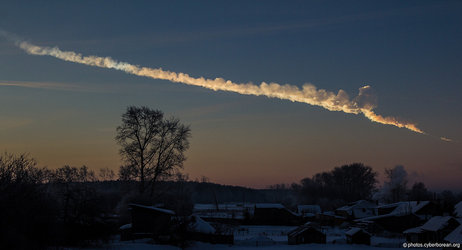
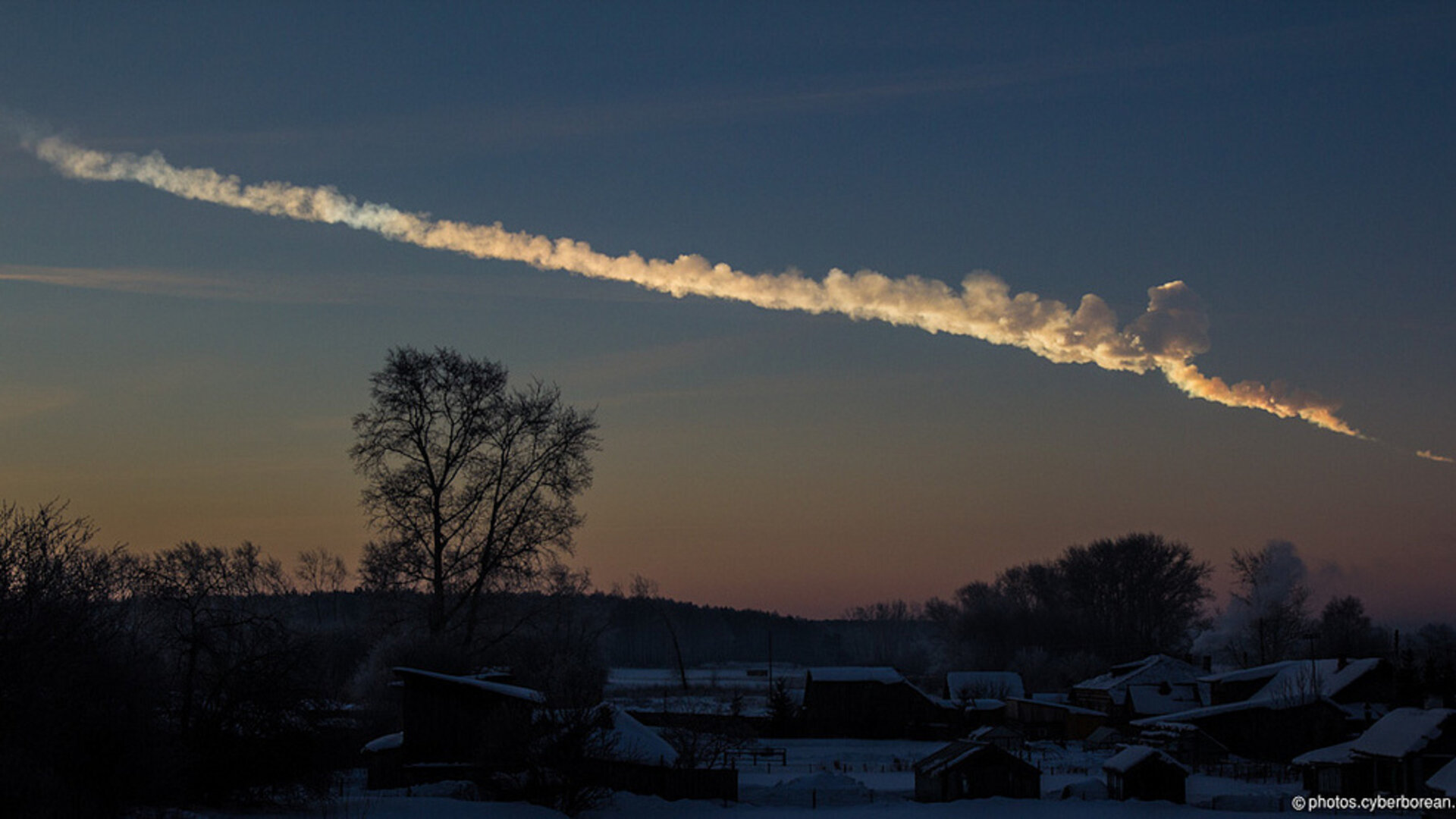
    Asteroid trace over Chelyabinsk, Russia, on 15 February 2013
    Asteroid trace over Chelyabinsk, Russia, on 15 February 2013
    19 February 2013

    The first firm details of the 15 February asteroid impact in Russia, the largest in more than a century, are becoming clear. ESA is carefully assessing the information as crucial input for developing the Agency’s asteroid-hunting effort.

    At 03:20 GMT on 15 February, a natural object entered the atmosphere and disintegrated in the skies over Chelyabinsk, Russia.

    Extensive video records indicate a northeast to southwest path at a shallow angle of 20° above the horizontal. The entry speed is estimated at around 18 km/s – more than 64 000 km/h.

    According to calculations by Peter Brown at the University of Western Ontario, Canada, drawing on extremely low-frequency sound waves detected by a global network, the object is estimated to have been about 17 m across with a mass of 7000–10 000 tonnes when it hit atmosphere.

    It exploded with a force of nearly 500 kilotons of TNT – some 30 times the energy released by the Hiroshima atomic bomb – around 15–20 km above the ground.

    With our current understanding of near-Earth objects, events of this magnitude are expected once every several of tens to 100 years.

    Questions and answers with ESA's near-Earth object team

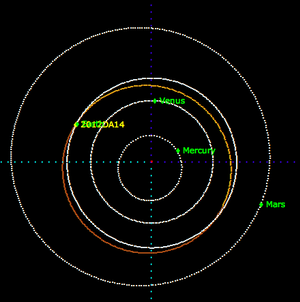
    Orbit around Sun
    Orbit around Sun

    Nicolas Bobrinsky, Head of ESA’s Space Situational Awareness (SSA) programme, and Detlef Koschny, responsible for the programme’s Near-Earth Object activity, responded to questions about the event.

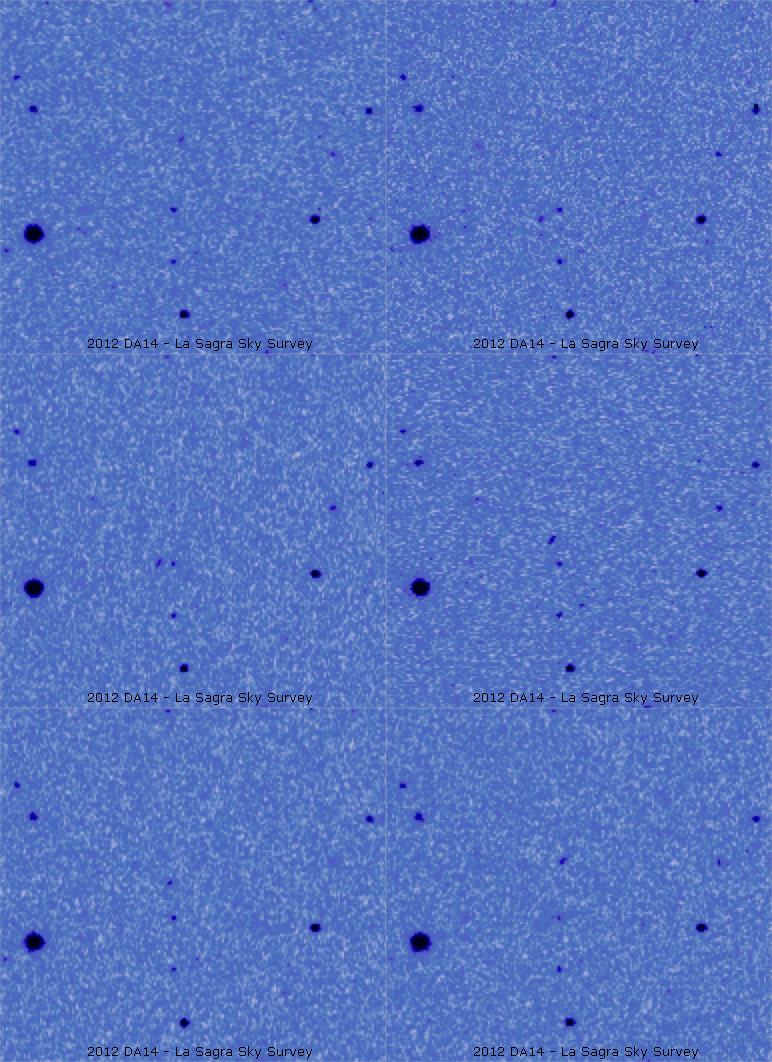
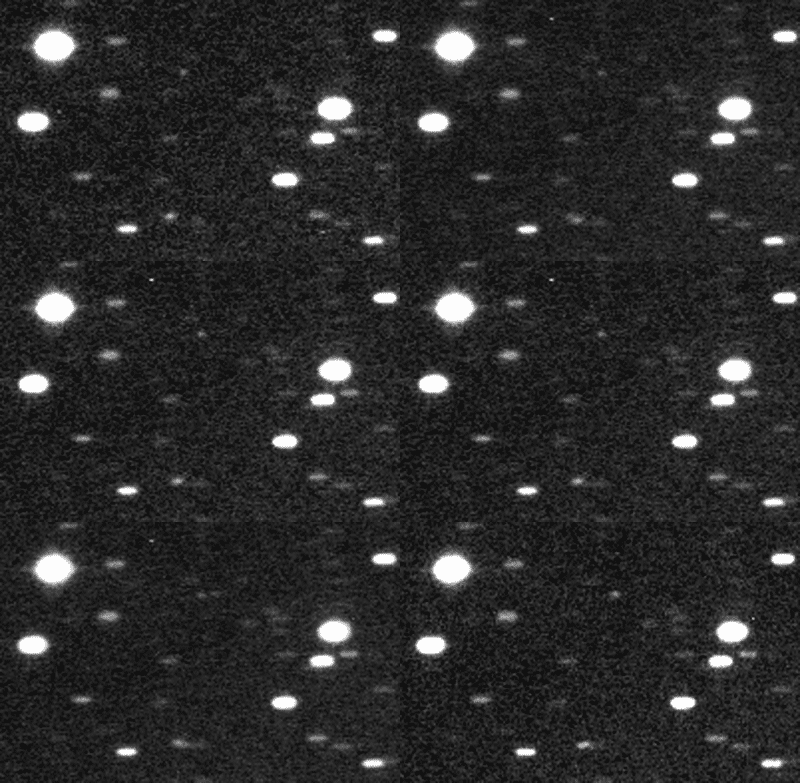
    Was this event related to the predicted flyby of asteroid 2012 DA14, which passed Earth at 19:27 GMT that same day at just 28 000 km?

    DVK: The trajectory, the location of entry into the atmosphere and the large time separation between the two events indicate that the Russian object was unrelated to 2012 DA14.

    What caused the damage on the ground? Did pieces hit people or buildings?
    DVK: Many media reported that an airburst caused window breakage and some structural damage in downtown Chelaybinsk. Normally, some damage begins to occur at around five times normal air pressure at sea level. Widespread window damage is expected around 10–20 times this value.

    As the explosion and fireball progressed along a shallow trajectory, the cylindrical blast wave would have propagated directly to the ground and would have been intense.

    The terminal part of the explosion probably likely occurred almost directly over Chelyabinsk. This was perhaps the single greatest contributor to the blast damage.

    We are waiting for confirmation from the Russian authorities that pieces of the object – bits of meteorite – have been found in the region. We’re unaware of any media reports of anyone or any structure being hit by any debris from the object itself.


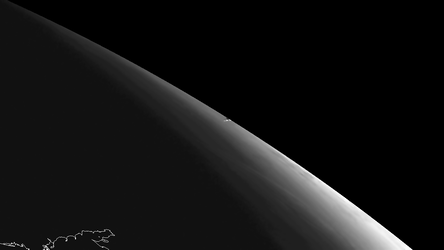
    Approximate final trajectory - Chelyabinsk impactor
    Final trajectory

    Have there been similar events in the past?
    DVK: Yes. Perhaps the most famous recent one is the 1908 Tunguska event, in which a large meteoroid or comet fragment, thought to be in the order of 40 m in size, exploded at an altitude of 5–10 km. It’s the largest in recorded history, although many, many larger impacts are known from geological history.

    On 12 February 1947, the Sikhote-Alin event in the former Soviet Union involved an iron object, which meant that much of its 10 kilotons TNT of energy was deposited in the ground rather than in the air like last week.

    On 8 October 2009, a body generated an atmospheric fireball blast similar to last week's event over an island region of Indonesia. Its energy was about 5 kilotons.

    What are the risks of a similar event happening in the future?
    DVK: Near-Earth Objects (NEOs) are asteroids or comets with sizes ranging from metres to tens of kilometres that orbit the Sun and with orbits that come close to Earth’s.

    Currently, there are over 600 000 asteroids known in our Solar System; more than 9000 of these are NEOs. Once an object is discovered, its orbit can be calculated and an individual risk profile developed for that object. ESA maintains a public list of these via http://neo.ssa.esa.int/web/guest/risk-page.

    How is ESA's SSA team receiving information?
    DVK: Like NASA and other national space agencies, ESA maintains close contact with government-level technical and scientific information-sharing bodies. The information is also discussed within government-level bodies. We also work closely with NEO teams at NASA and European national space agencies.

    What is a possible scenario for an asteroid warning?
    DVK: A very good example is the case of 2008 TC3, an 80-tonne, 2–5 m object that hit the desert in Sudan on 7 October 2008. It was very small and was spotted by chance only 20 hours before it hit. Initial, rough observations gave a possible impact zone over 2000 km long. Within hours, this had been refined to an area of just the Sudan desert.

    In a similar case in the future, civil authorities would be able to tell the population in the narrowed-down area to stay away from windows, glass or other structures and stay indoors. The risk that an airburst and resulting over-pressure would cause personal injury by fractured glass or a flimsy structure would be significantly reduced.

    This article continues

    Quick summary

    On 15 February, a large fireball was reported over Chelyabinsk, Russia. 

    • Time of impact: 03:20:26 GMT
    • Location: 55° 10' N, 61° 25' E
    • Entry angle: 20º above horizontalº
    • Entry speed: below 20 km/s
    • Trajectory: northeast to southwest
    • Asteroid diameter before entry: about 17 m
    • Kinetic energy: 500 kt TNT equivalent, corresponding to 30 times the energy of the Hiroshima bomb
    • Explosion altitude: 15–25 km

     These results are preliminary and could be updated as new information is confirmed.
    Rate this

    Views

    Share

    • Currently 4 out of 5 Stars.
    • 1
    • 2
    • 3
    • 4
    • 5
    Rating: 4.09/5 (92 votes cast)

    Thank you for rating!

    You have already rated this page, you can only rate it once!

    Your rating has been changed, thanks for rating!

    23909
    Tweet

    Related articles

    Chelyabinsk asteroid vapour trail seen by Meteosat

    Russian asteroid strike15 February 2013

    Chelyabinsk asteroid vapour trail seen by Meteosat

    Russian asteroid strike15 February 2013 A space rock a few metres across exploded in Earth’s atmosphere above the city of Chelyabinsk, Russia today at about 03:15 GMT. The numerous injuries and significant damage remind us that what happens in space can affect us all. 

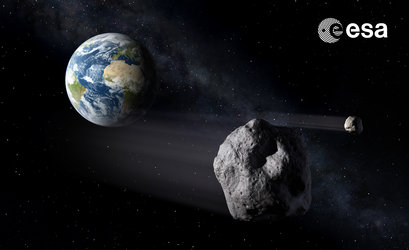
    Artist's impression of NEO asteroids passing Earth ESA SSA

    Stranger in the night: space rock to make close Earth flyby07 February 2013

    Artist's impression of NEO asteroids passing Earth ESA SSA

    Stranger in the night: space rock to make close Earth flyby07 February 2013 A little-known asteroid will skim past Earth on 15 February, passing just 28 000 km from our planet. The 50 m-diameter chunk of space rock was discovered last year by ESA-sponsored amateur astronomers in Spain.

    Asteroid deflection mission seeks smashing ideas 15 January 2013

    Asteroid deflection mission seeks smashing ideas 15 January 2013 A space rock several hundred metres across is heading towards our planet and the last-ditch attempt to avert a disaster – an untested mission to deflect it – fails. This fictional scene of films and novels could well be a reality one day. But what can...

    Near-miss asteroid will return next year15 March 2012

    Near-miss asteroid will return next year15 March 2012 When it whizzes past Earth in 2013, a newly discovered asteroid is going to miss our planet – but not by much. The 50 m space rock is expected to come closer than many satellites, highlighting the growing need to keep watch on hazards from above.

    NEO found by amateur skywatchers as part of ESA's SSA programme

    Amateur skywatchers help space hazards team12 October 2011

    NEO found by amateur skywatchers as part of ESA's SSA programme

    Amateur skywatchers help space hazards team12 October 2011 For the first time, observations coordinated by ESA's space hazards team have found an asteroid that comes close enough to Earth to pose an impact threat. The space rock was found by amateur astronomers, highlighting the value of 'crowd-sourcing' to s...

      • Russia asteroid impact: ESA update and assessment
        • Russia asteroid impact: ESA update and assessment - continuation
        • Space Situational Awareness
          • Russian asteroid strike
            • Stranger in the night: space rock to make close Earth flyby
              • Spotting an ancient asteroid
              • SSA NEO Data Centre
              • More information
              • Centre for Planetary Science and Exploration
              • Infrasound monitoring
              • UNCOPUOS
              • UNCOPUOS - 2013 session - presentations

    Connect with us

    • RSS
    • Youtube
    • Twitter
    • Flickr
    • G+
    • Facebook
    • Livestream
    • Subscribe
    • App Store
    • ESA Operations Twitter

    Follow ESA operations

    • LATEST ARTICLES
    • · Proba-V opens its eyes
    • · First new Galileo satellite arrive…
    • · Next destination: space
    • · Leak repaired on International Spa…
    • · After Chelyabinsk: European expert…
    • FAQ

    • Jobs at ESA

    • Site Map

    • Contacts

    • Terms and conditions