• → European Space Agency

      • Space for Europe
      • Space News
      • Space in Images
      • Space in Videos
    • About Us

      • Welcome to ESA
      • DG's News and Views
      • For Member State Delegations
      • Business with ESA
      • ESA Exhibitions
      • ESA Publications
      • Careers at ESA
    • Our Activities

      • Space News
      • Observing the Earth
      • Human Spaceflight
      • Launchers
      • Navigation
      • Space Science
      • Space Engineering
      • Operations
      • Technology
      • Telecommunications & Integrated Applications
    • For Public

    • For Media

      • Media
      • ESA TV
      • Videos for professionals
      • Photos
    • For Educators

    • For Kids

    • ESA

    • Space Engineering

    • What we do
    • Directorate of Technical and Quality Management (TEC)
    • Electrical
    • Electrical engineering
    • Control Systems
    • Data Systems
    • Radio Frequency Payload Systems
    • Electromagnetics and Space Environment
    • Power and Energy Conversion
    • Mechanical
    • Mechanical engineering
    • Thermal Control
    • Structures and Mechanisms
    • Mechatronics and Optics, incl. robotics and life support
    • Propulsion and Aerothermodynamics
    • Systems
    • Systems and software engineering
    • Software Systems
    • Systems Engineering, incl. cost engineering
    • Technology programmes
    • Product Assurance
    • Product Assurance
    • Flight Safety
    • Dependability
    • Quality Management and Assurance
    • Materials and Processes
    • Electronic Components
    • Software Product Assurance
    • Standards
    • Requirements and standards
    • European Cooperation for Space Standardization (ECSS)
    • European Space Components Coordination (ESCC)
    • Services
    • ESA calendar of events
    • Subscribe

    ESA > Our Activities > Space Engineering

    Atmospheric entry workshop set for Switzerland

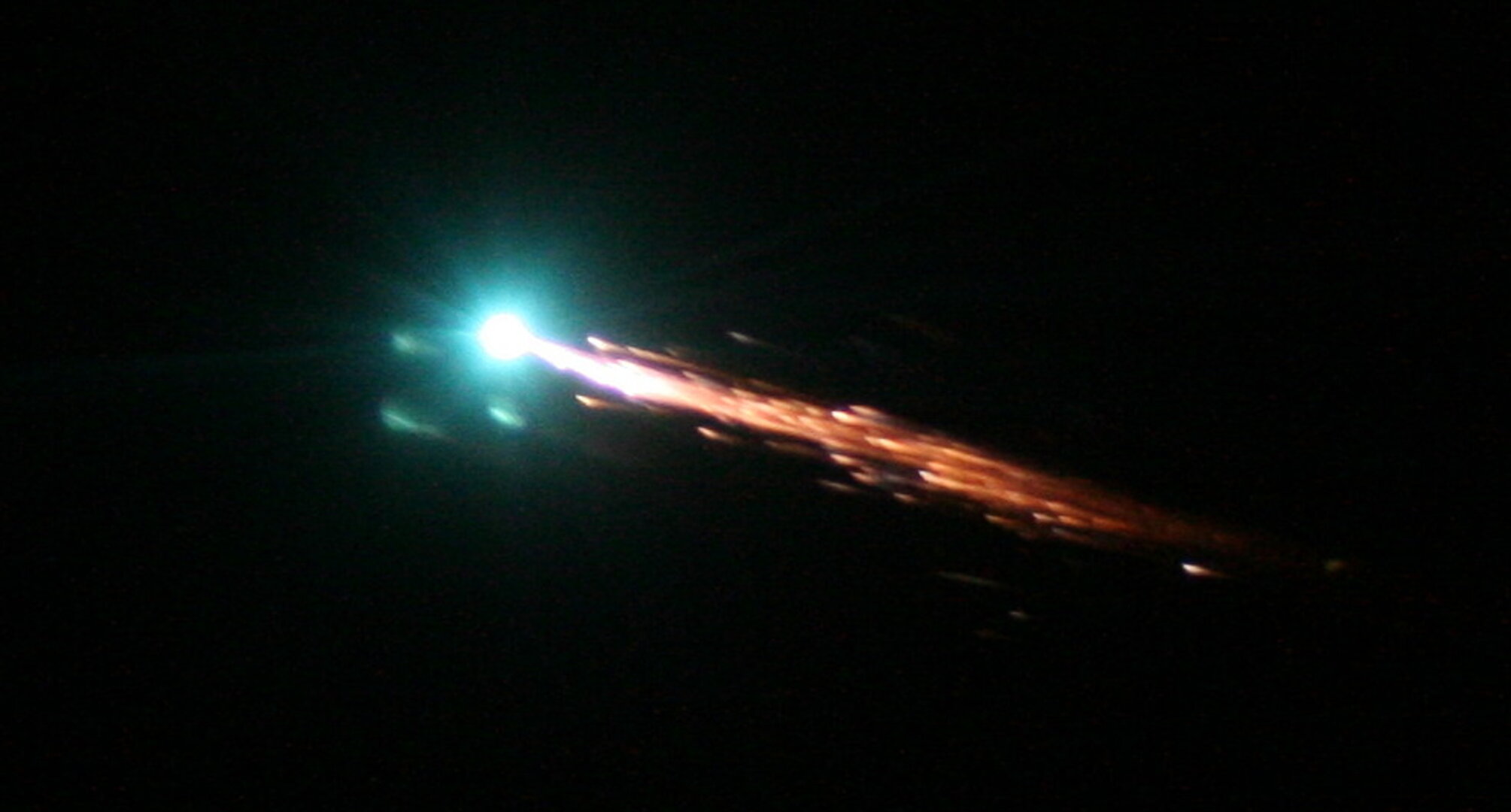
    Glow of atmospheric entry
    7 July 2010

    Shooting stars and spacecraft entering atmospheres have something in common: both are prone to glow. A workshop in Switzerland this October will gather together experts studying the radiance effects created by high-speed spacecraft plunging through planetary atmospheres.

    The ‘Fourth International Workshop on Radiation of High Temperature Gases in Atmospheric Entry’ will be held at Ecole Polytechnique Fédérale de Lausanne (EPFL) in Lausanne, Switzerland, 12–15 October.

    Space vehicles entering planetary atmospheres at high speeds have high kinetic energy, most of which is dissipated in the form of heat.

    This conversion to thermal energy occurs in several ways: atmospheric gas crossing the shock wave ahead of the vehicle is heated by compression, while additional heat is generated by friction.
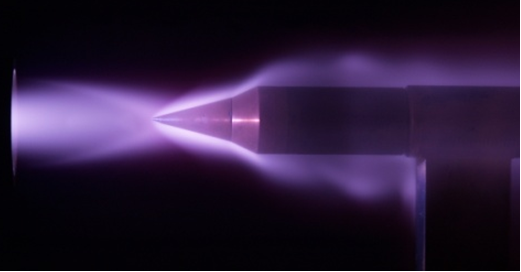
    Plasma tunnel
    Radiation of high temperature gases in plasma wind tunnel

    At very high speeds, the shock layer over the vehicle’s heatshield may be heated to such high temperatures that a significant amount of energy is released in the brilliant form of ‘radiant emission’.

    “This radiative energy can be an important and, in some cases, predominant source of heat transfer in a spacecraft,” explained Lionel Marraffa, organising the workshop for ESA.

    “A properly designed and validated thermal protection system is essential to keep the excessive heat formed in the shock layer from damaging the vehicle, its contents or even human crews.”
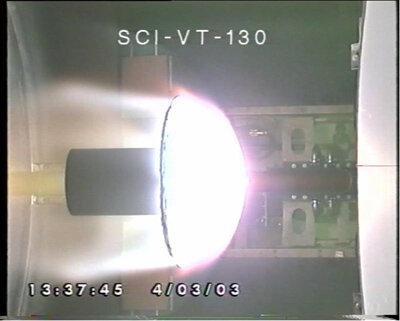

    Scirocco (Plasma wind tunnel)
    Plasma wind tunnel

    To improve their understanding of this phenomenon, important for crewed missions as well as planetary exploration, research groups model these radiation of high-temperature gases (RHTG) effects using computational fluid dynamics or simulate them with plasma wind tunnels or shock tubes.

    The workshop aims to promote a dialogue between researchers on best practice in modelling, simulation and experimental techniques in this area.

    A number of RHTG test cases – atmospheric entry models based on real or experimental scenarios – will be distributed to participants as a way of cross-checking the efficiency and accuracy of different methods employed.

    The workshop will include keynote presentations by leading experts, and highlights of research and developments in this area.

    Topics

    The following topics are included in the workshop programme:

    • Scientific and technical papers on:

      - non equilibrium chemical kinetics
      - hypersonic flow
      - plasma emission and absorption
      - computation fluid dynamics
      - experimental instrumentation techniques and facilities
      - flight experiments
      - radiation transfer

    • invited papers on RHTG

    • test-cases, which are organized in three themes:

      - radiation emission and transfer database, and models
      - re-building of selected radiative emission and absorption ground or flight experiments
      - numerical axially-symmetric test-cases for non-equilibrium flow and radiation emission and absorption calculations

    • preparation of future test-cases:
    • identification of suitable experimental results, literature reference data ,and reviews of previous re-building activities.

    The test case definitions will be issued soon.

    For further information, please contact:

    Lionel Marraffa
    Email: Lionel.Marraffa@esa.int

    Pierre Omaly
    Email: Pierre.Omaly@cnes.fr

    Rate this

    Views

    Share

    • Currently 0 out of 5 Stars.
    • 1
    • 2
    • 3
    • 4
    • 5
    Rating: 0/5 (0 votes cast)

    Thank you for rating!

    You have already rated this page, you can only rate it once!

    Your rating has been changed, thanks for rating!

    62
    Tweet
    • More information
    • Fourth International Workshop on Radiation of High Temperature Gases in Atmospheric Entry - second announcement
    • Related links
      • Propulsion and Aerothermodynamics

    Connect with us

    • RSS
    • Youtube
    • Twitter
    • Flickr
    • G+
    • Facebook
    • Livestream
    • Subscribe
    • App Store
    • LATEST ARTICLES
    • · Rare merger reveals secrets of gal…
    • · Watching for hazards: ESA opens as…
    • · ESA astronaut Timothy Peake set fo…
    • · Space drives e-mobility
    • · Proba-V opens its eyes
    • FAQ

    • Jobs at ESA

    • Site Map

    • Contacts

    • Terms and conditions