GMES Masters seeks innovative uses for Earth observation data
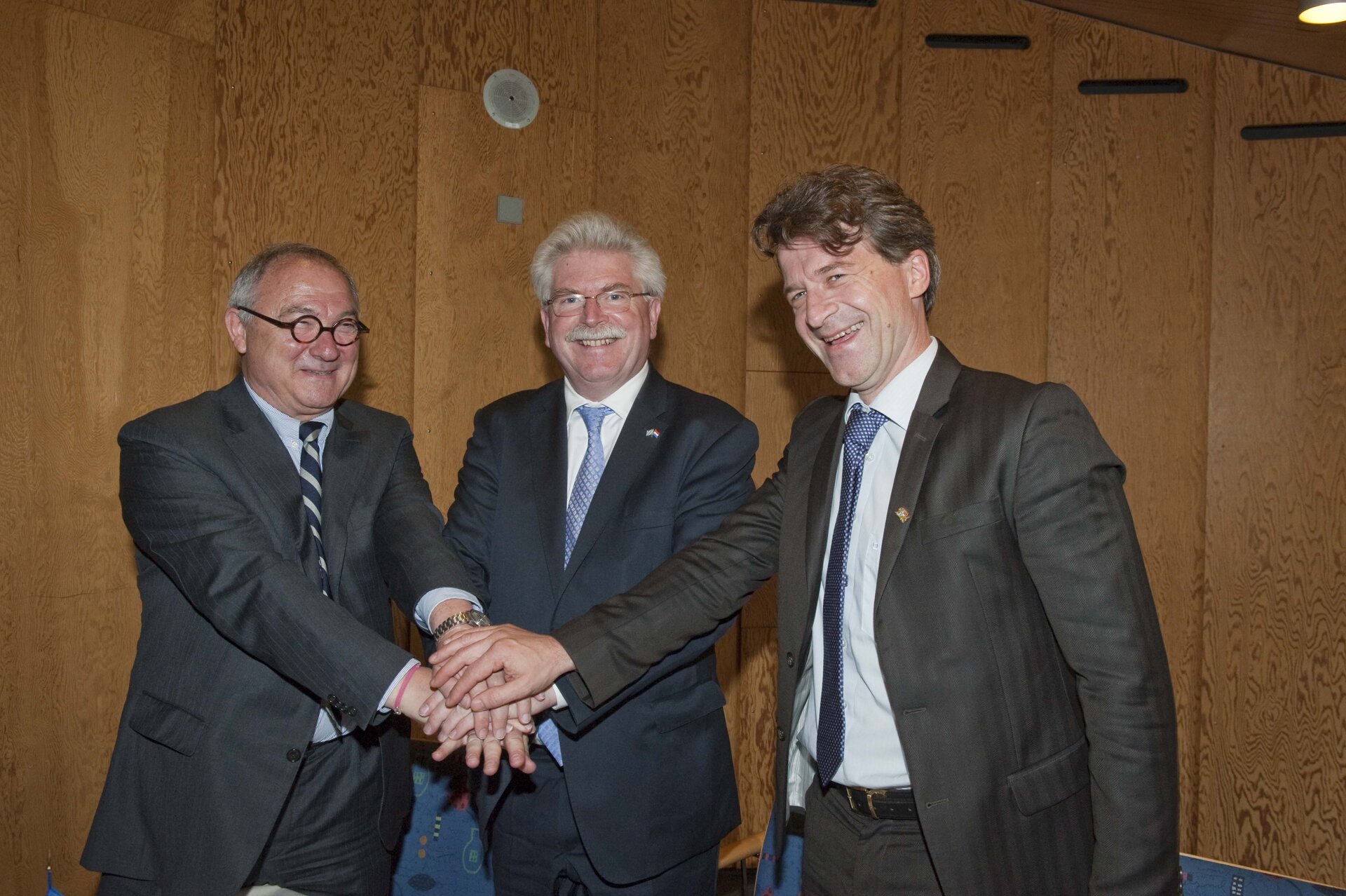
Bavarian Minister of Economic Affairs Martin Zeil joined with ESA Director General Jean-Jacques Dordain in launching the GMES Masters competition, seeking out innovative commercial uses of Earth observation data from Europe’s flagship global monitoring initiative.
Modelled on the annual Galileo Masters event encouraging satnav business ideas, GMES Masters will encourage European researchers and entrepreneurs to develop market-focused applications from data gathered through the EU -led Global Monitoring for Environment and Security (GMES) initiative.
By combining all available terrestrial- and space-based information systems, GMES is giving Europe an independent environmental monitoring capability to improve the security and quality of life of European citizens.
ESA is coordinating the GMES ‘Space Component’, including development of the Sentinel family of satellites to supply data for GMES services.

The formal signing of the GMES Masters contract took place during Minister Zeil’s visit to ESTEC, ESA’s technical centre in Noordwijk, the Netherlands, on 18 May.
Mr Dordain invited the Minister to ESTEC in recognition of Bavaria’s role as a major stakeholder in several European space programmes.
Bavarian universities and research institutions play important roles in the development of Galileo applications, and the Bavarian town of Berchtesgaden is the site of the Galileo Test and Development Environment, with Galileo-like transmitters placed atop nearby Alpine peaks for wide-area testing of Galileo-based systems and services.

ESA’s Technology Transfer Programme is another activity of interest. The Oberpfaffenhofen suburb of Bavaria’s capital Munich hosts an ESA Business Incubation Centre – one of six across Europe, providing technical and business support to fledgling companies applying space technology to terrestrial markets.
The Oberpfaffenhofen incubator is managed on behalf of the Agency by Anwendungszentrum GmbH Oberpfaffenhofen (AZO), also the organiser of the GMES and Galileo Masters competitions. AZO CEO Thorsten Rudolph joined Minister Zeil and Director-General Dordain in signing the GMES Masters contract signature.
The trio also signed a letter of intent to double the number of supported start-ups in the ESA BIC and its outposts in Bavaria, following the success of the first: the ESA BIC Oberpfaffenhofen has established 16 start-ups so far and will support 20 companies per year in future.
Bavaria also has significant GMES involvement: the German Aerospace Center DLR’s Oberpfaffenhofen site, adjacent to ESA’s incubator, hosts DLR’s Earth Observation Center, serving as a processing and archiving centre for GMES missions.
The Astrium Friedrichshafen plant in the adjacent federal state of Baden-Württemberg is also prime contractor for the construction of ESA’s Sentinel-2.
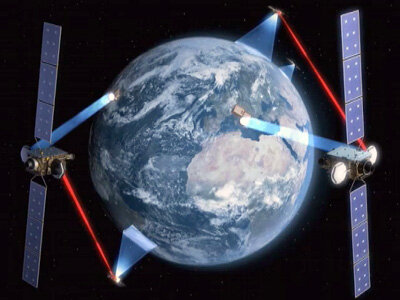
Bavaria has become Europe’s first regional government to make a financial contribution to a major ESA programme, pledging support for the European Data Relay Satellite system.
These telecommunication satellites will enable the continuous relay of large amounts of data from space, including ESA’s GMES Space Component.
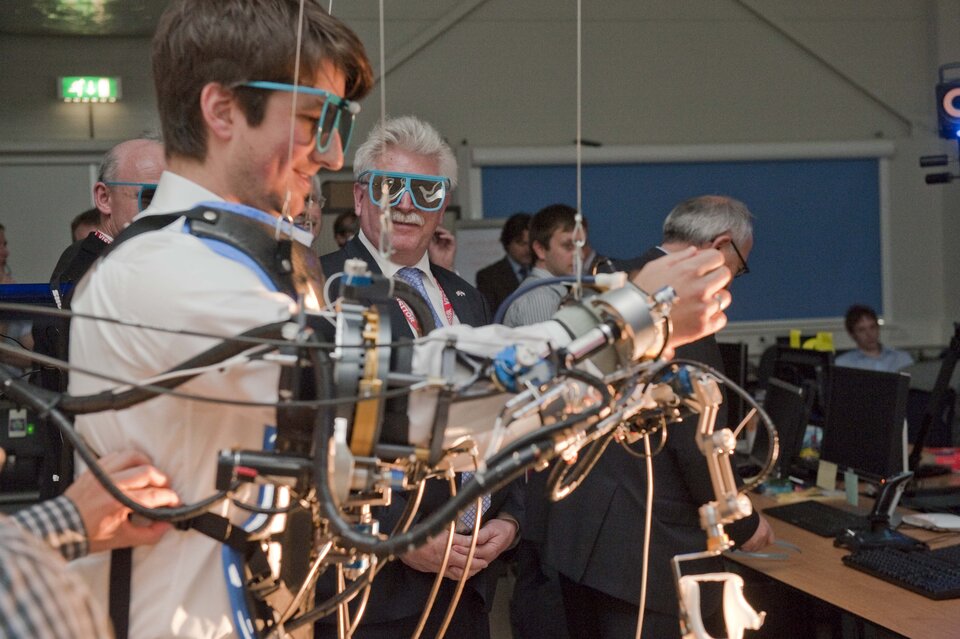
Minister Zeil’s tour included presentations on the work of ESA’s Technology Transfer Programme and the Agency’s Space Station and robotics activities, representing another Bavarian connection.
ESA’s Automation and Robotics Laboratory has established close links to DLR’s Institute of Robotics and Mechatronics at Oberpfaffenhofen, especially in the fast-growing field of telerobotics.

The two facilities are working closely alongside NASA on ESA’s Multipurpose End-to-End Robotic Operation Network (Meteron) project.
Meteron’s aim is to operate robots on Earth from the Space Station, testing the concept that future astronauts could operate robot rovers from orbit.
Among the challenges to be tackled is ‘latency’ – minimising the effects of signal delay – and assessing if force feedback controls favoured for terrestrial precision robotics can be made to work in weightlessness.