New testbed simulates space's formation flying future
Any space mission is difficult, docking a pair of spacecraft is tough but flying multiple satellites in formation is the real cutting edge. A new software testbed allows ESA and industrial teams to get to grips with multiple-satellite missions to come, starting with Proba-3.
It is hard to overstate the difficulty of formation flying: separate multi-million-euro pieces of hardware, each one moving through space at several kilometres per second come as close as a matter of metres as their relative positions precisely maintained. Lose control of one part of the formation, even momentarily, and the rest risks destruction.
Orbital dynamics dictate their orbits are likely to cross anyway as they rotate Earth, which must be taken account of. Even so, there are specific tasks only formation flying missions can do – and one new computing resource should help achieve them.

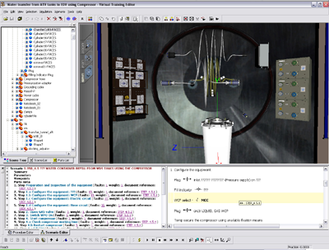
The Formation Flying Test Bed is a suite of software running across linked computers to simulate all aspects of a formation-flying mission. Overseen by ESA’s Software Systems division at ESTEC in the Netherlands, this new facility is similar to existing avionics test benches, except it can emulate running the software of more than a single spacecraft software at once.
“It is a generic simulator for formation flying missions, whether they include two spacecraft or as many as five or six,” explained Raffaella Franco of ESA’s System Modelling and Verification section.
“Simulations are a computer-intensive business anyway, but trying to emulate more than one spacecraft’s onboard computer and software simply will not run on a single CPU, in addition to the rest of the satellite and the associated ground systems and inter-satellite links.
“Instead, the Formation Flying Test Bed makes use of the High Level Architecture (HLA) standard, distributing software across multiple computers without affecting the user experience.”
The testbed will be used to address crucial operational factors for formation flying, including mission and vehicle management, guidance navigation and control, fault detection, isolation and recovery and inter-satellite links.
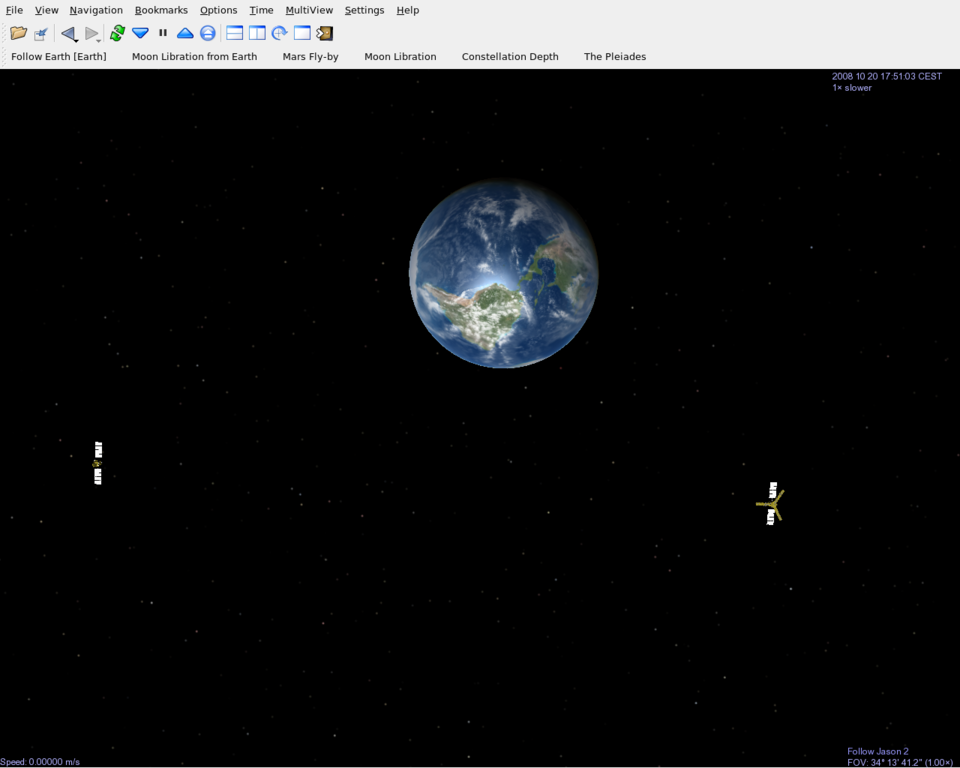
The facility has applications across all stages of a project’s life cycle, from design evaluation during early Phase-B studies to validating onboard software and the overall system during later-stage integration and testing.
It can also be used for training spacecraft controllers, preparing operational procedures or even as a troubleshooting tool once a mission has made it to orbit.
The Formation Flying Test Bed is compliant with the Simulation Model Portability (SMP) standard, allowing simulation models to be shared across different systems. A leading user of space simulations, ESA led the development of SMP through the European Cooperation for Space Standardization.

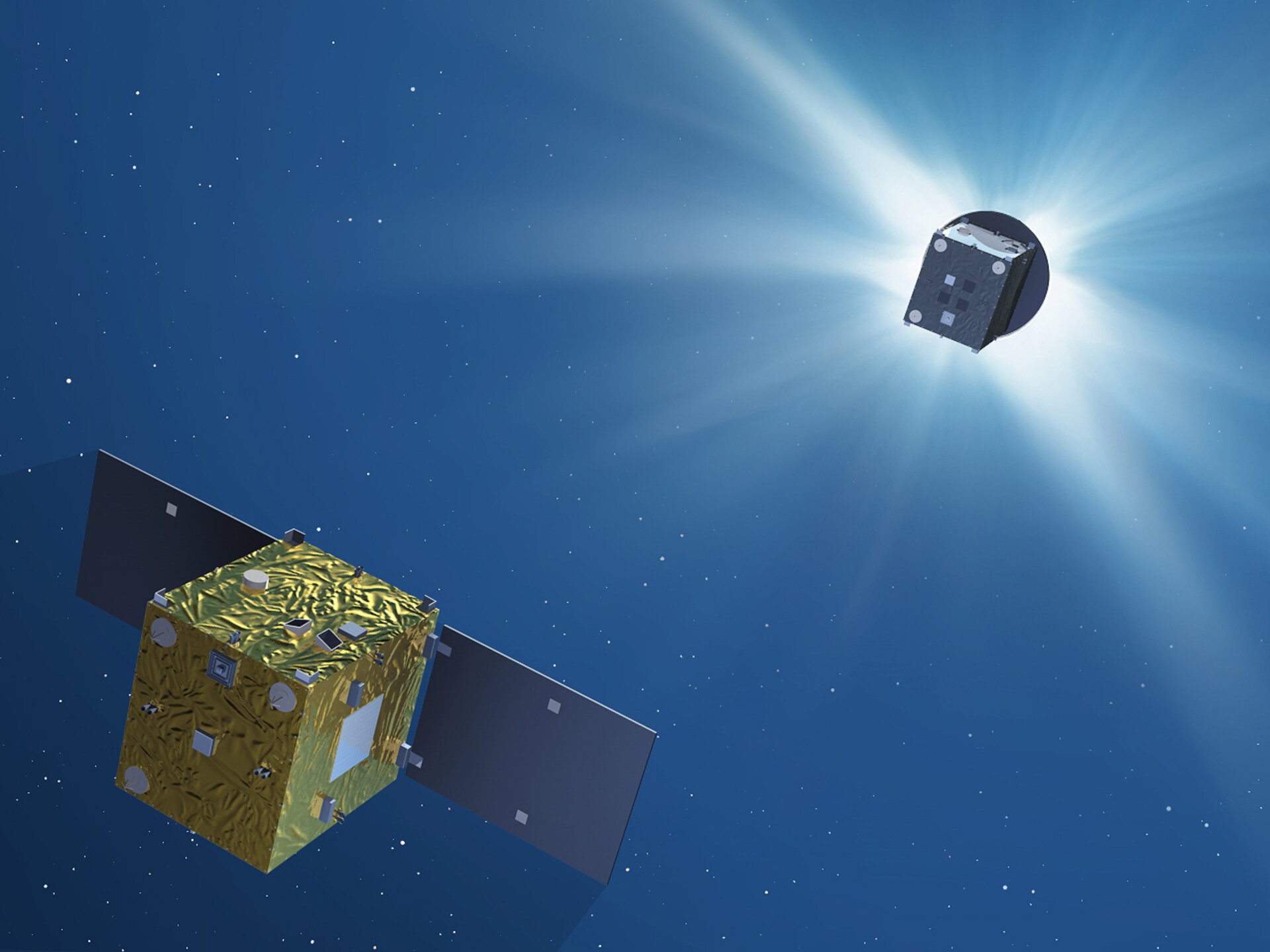
For the testbed development a demonstration model was established based on Proba-3, ESA’s next formation flying mission, due for launch in 2014–15. Proba-3’s two satellites will form the first ‘external coronagraph’ in orbit, with one satellite maintaining an artificial eclipse of the Sun as seen from the other, so that fine details of the inner solar corona can be observed.
The Formation Flying Testbed was developed by Belgium’s Spacebel, also responsible for Proba-3’s flight software. The project was backed through ESA’s General Support Technology Programme, which aims to mature basic prototypes into operational hardware.
In general, all applications which are not currently possible due to single satellite size limits can potentially be enabled by formation flying.
Besides solar occultation, other promising uses include ‘sparse aperture’ radio or optical astronomy: combining signals from multiple small satellites can produce images with a resolution equivalent to a single giant telescope – provided their positions can be maintained to pinpoint accuracy.