

Reentering the atmosphere: Expert Payloads Workshop
During September, a workshop dedicated to the experiments that will be carried on board the European Experimental Reentry Test-Bed was held at ESA’s ESTEC research and technology centre in The Netherlands.
The European eXPErimental Re-entry Test-bed (Expert) is an ESA in-flight aerothermodynamics research programme. Its aim is to design and instrument a generic configuration for in-flight measurement of the effects of hypersonic flight at high altitudes, using state-of-the-art instrumentation. It will provide ESA and the European scientific community with high-quality data on critical aerothermodynamic phenomena encountered during high-speed flight.
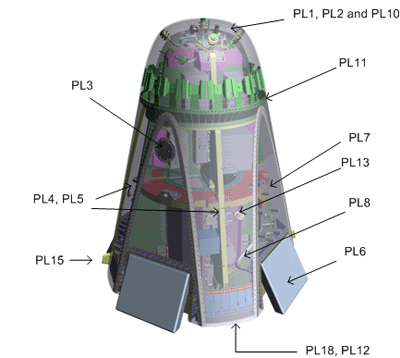
The experiments address the following phenomena: natural and roughness-induced transitions, catalicity and oxidation, shock-wave and boundary-layer interaction, plasma spectroscopy, flap efficiency and instrumentation, real-gas effects in hypersonic conditions, hot structures for hypersonic flight and their instrumentations intermetallic materials for hot structures, and base flows.
Expert provides European Industry with experience in re-entry vehicle development, manufacturing, integration and flying.
Expert will be launched from the Pacific Ocean into a sub-orbital trajectory by a Russian Volna launch system – which uses decommissioned Inter-Continental Ballistic Missiles (ICBMs). After a ballistic flight, it will land on the Kamchatka peninsula, from where it will be recovered for post-flight analysis.
Test campaign
The research industrial organisations that are providing experiments for Expert came together to discuss the on-going qualification campaign. The workshop provided an overview of the tests performed, analysed lessons learned, and identified critical areas requiring further development before flight. The qualification campaign has been completed successfully for 35 tests out of the planned 46 necessary to qualify the experiments for flight. The remaining 11 tests are scheduled for the next few weeks.
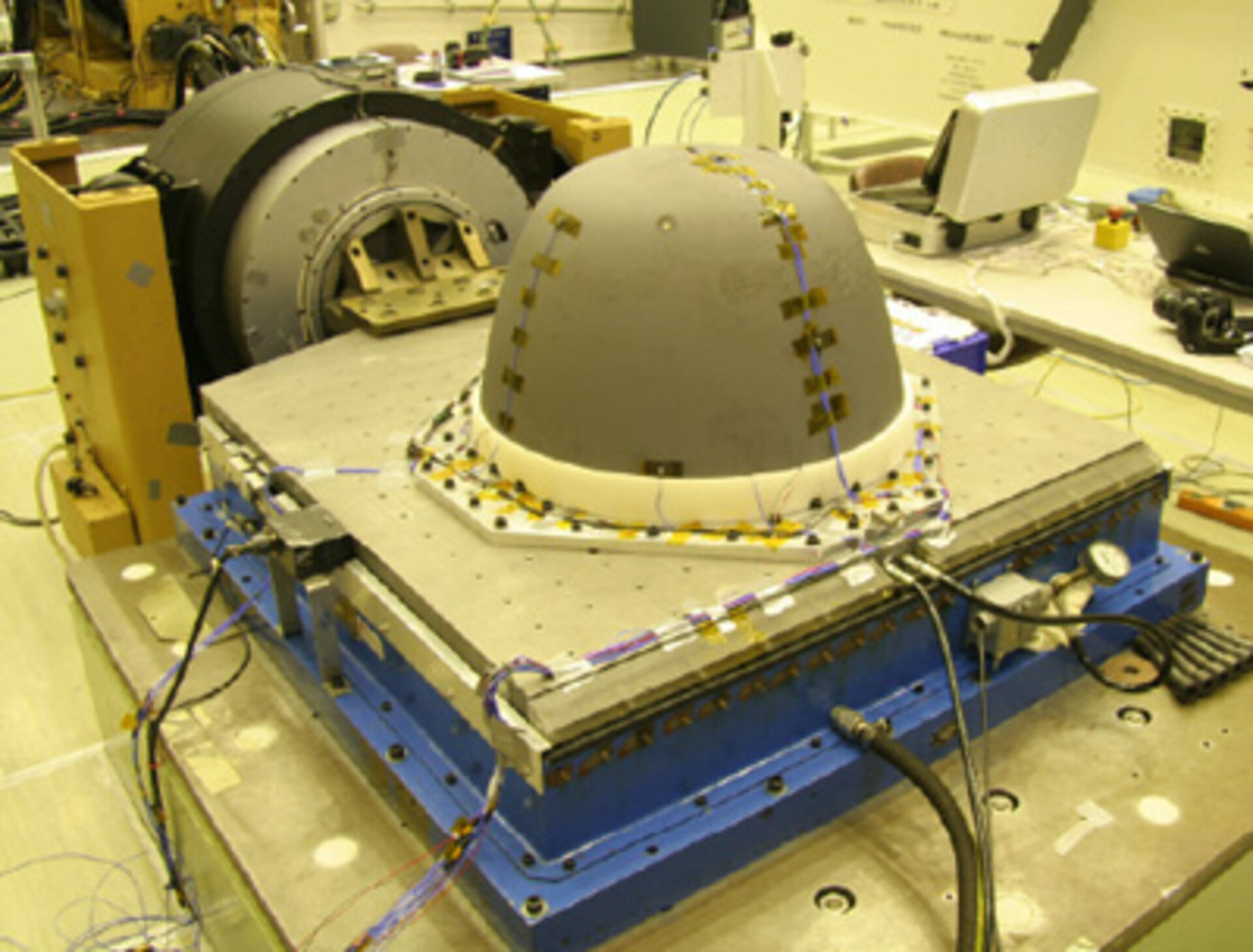
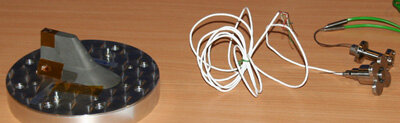
During the workshop, the qualification models of the experiments were on show. This allowed the participants to see the development of the flight hardware and to exchange several lessons learned related to manufacturing and integration.
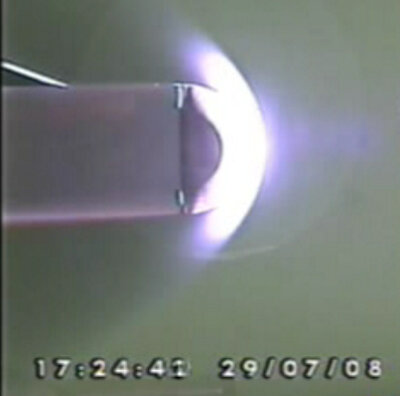
The workshop addressed uncertainties related to the experimental measurements and the extrapolation from ground experiments to flight. The complex aerothermodynamic phenomena that occur during reentry cannot be fully reproduced in ground facilities. Wind tunnel and plasma wind-tunnel tests can only reproduce some characteristics of the flight environment (for example, Mach-number heat fluxes) but complete characterisation of the extreme conditions encountered during atmospheric re-entry can only be performed during flight.
Qualification and flight
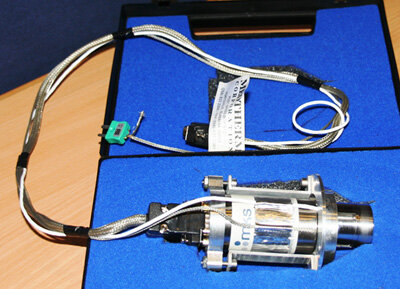
The development status of the payloads will allow their qualification reviews to be held in the coming two months and then the manufacturing of the flight model hardware will begin. The delivery of the experiments to the industrial prime contractor for integration onto the vehicle is expected by the middle of next year, with the flight scheduled for summer 2010.
Representatives of the prime contractor also attended the workshop, and expressed their satisfaction with the development status of the experiments and their design maturity in preparation for flight. The interfaces between the prime contractor and payload providers are well established and the system budgets for mass, power, and data are well within the allocated limits.
Key milestone

The Expert project is a key milestone in ESA’s strategy for space transportation systems. The development of instrumentation for characterisation of aerothermodynamics phenomena related to reentry is important in order to advance the technology of atmospheric re-entry flights and to improve the design tools. The data collected by this in-flight demonstrator will benefit future missions ranging from the re-entry of scientific probes and human transportation systems to re-usable launch vehicles.
For further information contact:
Jose Gavira,
EXPERT Project Manager
Jose.Gavira.Izquierdo@esa.int
Francesco Ratti,
EXPERT System Engineer
Francesco.Ratti @ esa.int


