

Thermal Control
Controlling the level of temperature of equipment, payloads, satellites and launchers is essential during all phases of a space mission to protect flight hardware and to guarantee the optimum performance and success of the mission.
What is the Thermal Control domain?
Thermal control is what allows maintaining the satellite‘s (or another space system) temperatures within set parameters during its lifetime. For instance, a piece of equipment could, if encountering a temperature level which is too high, be damaged or its performance could be severely affected. In space it would hardly be possible to correct such a problem and this is why space thermal control systems – like other space subsystems – need to be properly designed and tested and need to be very efficient and highly reliable. Thermal control is also what keeps the specified temperature stability for delicate electronics or optical components so as to ensure that they perform as efficiently as possible.
Thermal control for space applications covers a very wide temperature range, from the cryogenic level (down to -270 deg C) to high-temperature thermal protection systems (more than 2000 deg C).
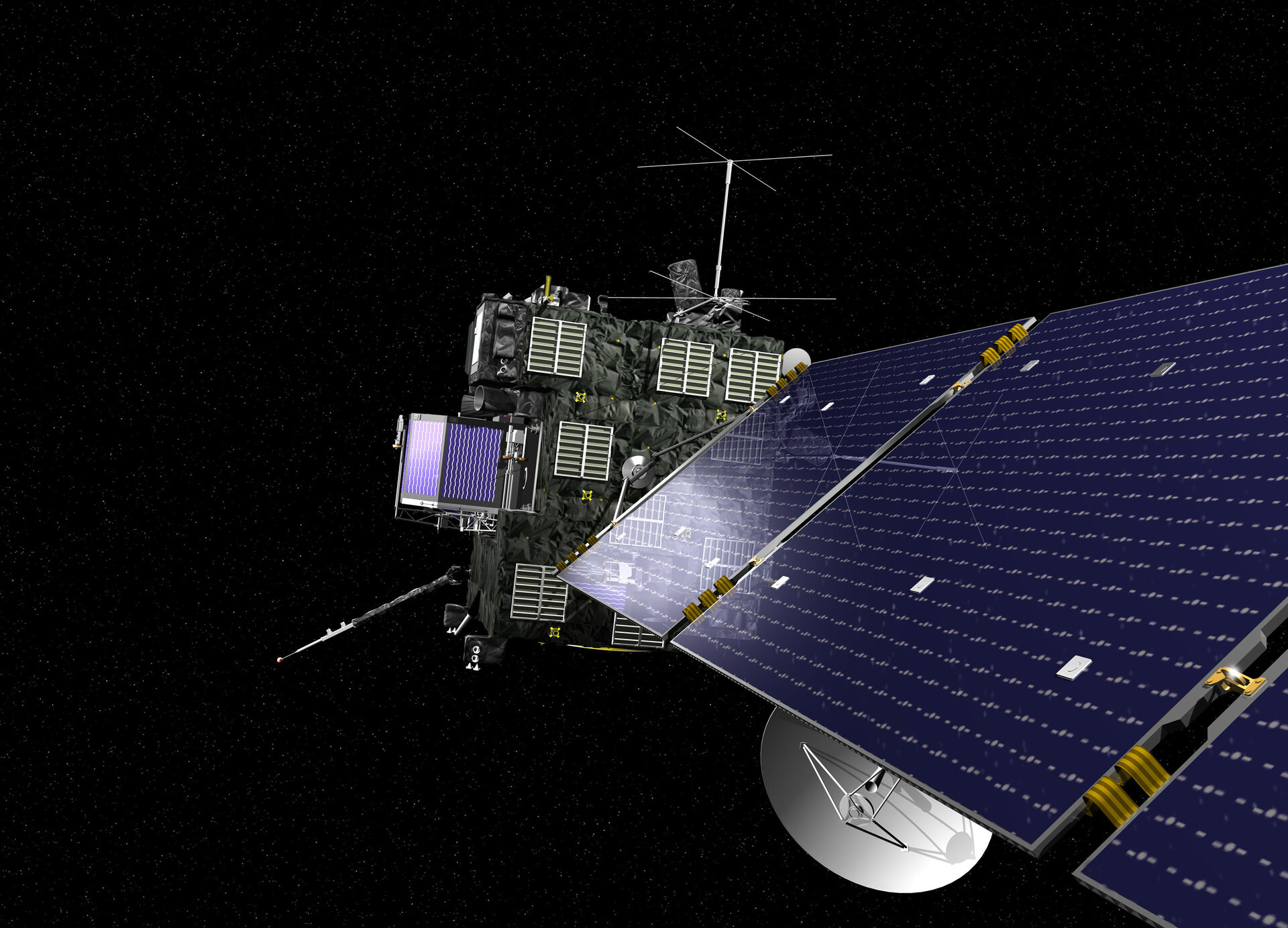
The thermal control subsystem is one of the most visually distinctive elements of a space system, composed of distinctive foil-like insulation blankets and white-painted or mirror-like radiators.
Why is Thermal Control important?
Thermal control is absolutely essential for both the physical integrity of the satellite and for its efficient operation because electronic equipment have their optimum performance within a certain temperature range.
The satellite's payload will dictate its operating range. Some instruments with infrared detectors for example require extreme low temperatures.
Many components have their lifetimes reduced by sustained high temperatures.
Large temperature differences within the satellite are also undesirable because they can lead to thermal expansion or contraction, potentially distorting its structure and thereby result in e.g misalignments of optical systems.
The level of temperature of a spacecraft is dictated by the balance prevailing between incoming external solar, albedo and planet heat fluxes, heat which is produced internally e.g by electronic equipment and the heat which is rejected to deep space. A large proportion of the sun heat flux is blocked with insulation devices called multi-layered insulation blankets (MLIs). The heat is rejected from the satellite to space (which is very cold, at a temperature of about -270 deg C) via radiators.
The thermal control subsystem seeks to maintain the overall temperature to an acceptable level but also to obtain the most adequate temperature distribution within the satellite. It is a task of the thermal engineer to manage the distribution of heat within the satellite so as to ensure that the temperature level is adequate for all phases of a mission (launch, transfer orbit, operation in orbit).

