• → European Space Agency

      • Space for Europe
      • Space News
      • Space in Images
      • Space in Videos
    • About Us

      • Welcome to ESA
      • DG's News and Views
      • For Member State Delegations
      • Business with ESA
      • ESA Exhibitions
      • ESA Publications
      • Careers at ESA
    • Our Activities

      • Space News
      • Observing the Earth
      • Human Spaceflight
      • Launchers
      • Navigation
      • Space Science
      • Space Engineering
      • Operations
      • Technology
      • Telecommunications & Integrated Applications
    • For Public

    • For Media

      • Media
      • ESA TV
      • Videos for professionals
      • Photos
    • For Educators

    • For Kids

    • ESA

    • Space Science

    • Our Universe
    • About Space Science
    • ESA's 'Cosmic Vision'
    • Science missions
    • Mission navigator
    • Target groups
    • For Media
    • For Scientists
    • For Kids
    • Multimedia
    • Science images
    • Science videos
    • Animations
    • Downloads
    • Sounds from space
    • Resources
    • Reference section
    • Services
    • FAQs
    • Glossary
    • Help
    • Portal terms of use
    • Comments
    • Follow us
    • RSS feeds
    • ESA Sci on Twitter
    • ESA Space Science Images on Flickr
    • ESA 3D on Flickr

    ESA > Our Activities > Space Science

    Double Star factsheet

    Studying the effects of the Sun on the Earth's environment

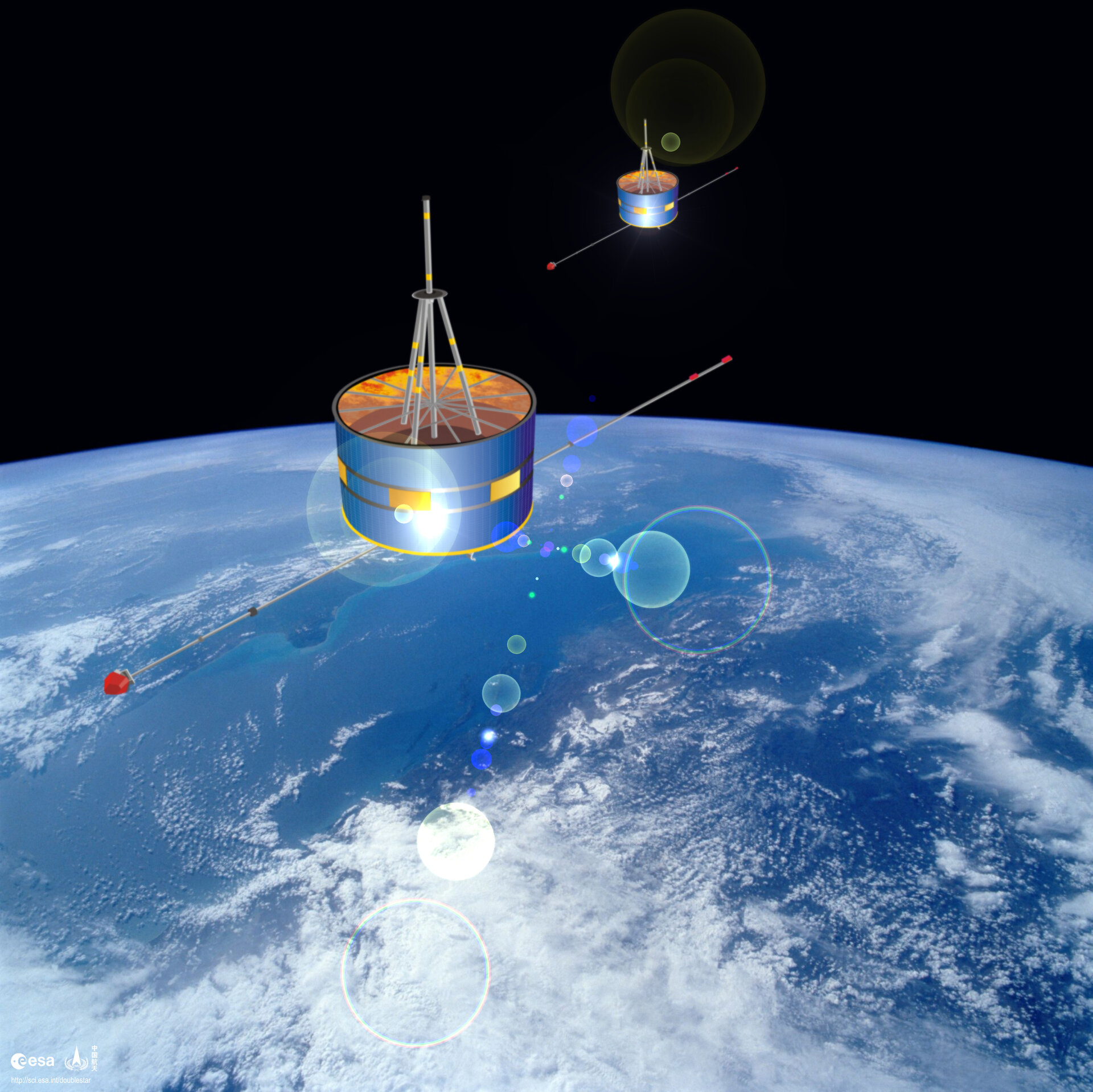
    Name As its name suggests, Double Star involves two satellites.

    Description Double Star follows in the footsteps of ESA's ground-breaking Cluster mission by studying the effects of the Sun on Earth’s environment. It is exploring Earth's magnetosphere — the magnetic 'bubble' that surrounds our planet. On 10 May 2005, ESA approved the extension of the mission for a period of 17 months, pushing back the end date to December 2006.


    Launch 29 December 2003, 20:06 CET, and 25 July 2004 (at Xichang and Taiyuan, China).

    Status In operation.

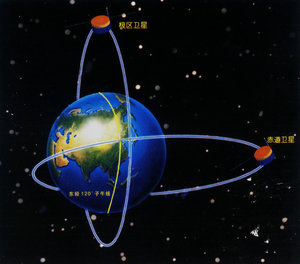
    Journey One of the Double Star spacecraft is flying in a polar orbit and the other is close to Earth's equator. It will be possible to synchronise these orbits with those of ESA's four Cluster satellites so that all six spacecraft are studying the same region of near-Earth space at the same time.

    Notes Double Star is the first mission launched by China to explore Earth's magnetosphere. Half of the experiments on board are European.

    Using Double Star alongside Cluster, scientists can investigate the Sun's 'magnetotail'. This is a region where storms of high-energy particles are generated. When these particles reach Earth, they can cause power cuts, damage satellites, and disrupt communications.

    Seven instruments on Double Star are identical to those currently flying on the four Cluster spacecraft. Conducting joint studies with similar instruments on Cluster and Double Star should increase the overall scientific return from both missions. One additional European instrument is an imager is monitoring energetic neutral atoms in the Earth's magnetosphere.

    Bringing together the Chinese hardware and the European instruments, Imperial College (University of London), United Kingdom, used a computer to simulate space conditions outside the satellite and performed data and power system tests to check whether the equipment will function happily together.

    China and ESA have a long history of scientific collaboration. The first cooperation agreement between ESA and the National Commission for Science and Technology of the Peoples Republic of China entered into force on 11 July 1980. Its purpose was to facilitate the exchange of scientific information.
    Last update: 13 May 2005

    Rate this

    Views

    Share

    • Currently 1 out of 5 Stars.
    • 1
    • 2
    • 3
    • 4
    • 5
    Rating: 1/5 (1 votes cast)

    Thank you for rating!

    You have already rated this page, you can only rate it once!

    Your rating has been changed, thanks for rating!

    34
    Tweet
    • More about...
      • Double Star overview
      • Other solar missions
        • Cluster factsheet
          • SOHO factsheet
            • Solar Orbiter in a nutshell
              • Ulysses factsheet
              • Other missions in Earth orbit
                • Cluster factsheet
                  • COROT factsheet
                    • Cos-B factsheet
                      • Exosat factsheet
                        • Hipparcos factsheet
                          • Hubble factsheet
                            • Hyper factsheet
                              • Integral factsheet
                                • ISO factsheet
                                  • IUE factsheet
                                    • XEUS factsheet
                                      • XMM-Newton factsheet

    Connect with us

    • RSS
    • Youtube
    • Twitter
    • Flickr
    • G+
    • Facebook
    • Livestream
    • Subscribe
    • App Store
    • ESA Science Twitter

    Follow ESA science

    • LATEST ARTICLES
    • · Rare merger reveals secrets of gal…
    • · Watching for hazards: ESA opens as…
    • · ESA astronaut Timothy Peake set fo…
    • · Space drives e-mobility
    • · Proba-V opens its eyes
    • FAQ

    • Jobs at ESA

    • Site Map

    • Contacts

    • Terms and conditions