Gone to the Moon...
Apart from testing a new 'ion drive' propulsion system, ESA's SMART-1 has another mission objective - lunar science.
The unanswered questions
When it arrives at the Moon in sixteen months, it will begin the second phase of the mission, carrying out exciting studies of our nearest neighbour using the latest techniques.
The Moon is a witness of the early conditions when life emerged on our planet. It holds keys for understanding our origins and for preparing for our future exploration of the Solar System.
Although Apollo astronauts brought back rock samples for analysis between 1969 and 1972, and unmanned Soviet spacecraft also recovered Moon rocks, there were many unanswered questions for the lunar scientists.
These samples were recognised as the primordial minerals that went into building the Moon and the Earth, but were mostly from the near-side equatorial region. The far side of the Moon and polar regions, which have a different geological history, have not been studied.
Two small American spacecraft, Clementine and Lunar Prospector, went into orbit around the Moon in 1994 and 1998, carrying a variety of remote-sensing instruments to explore the whole lunar surface. Lunar Prospector also mapped the Moon's gravity and discovered magnetic regions. But still many questions remained.
Using the Moon to understand the Earth

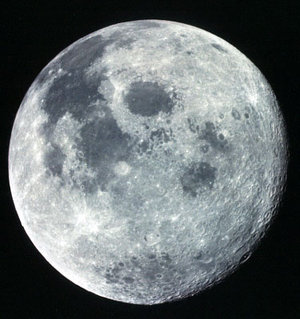
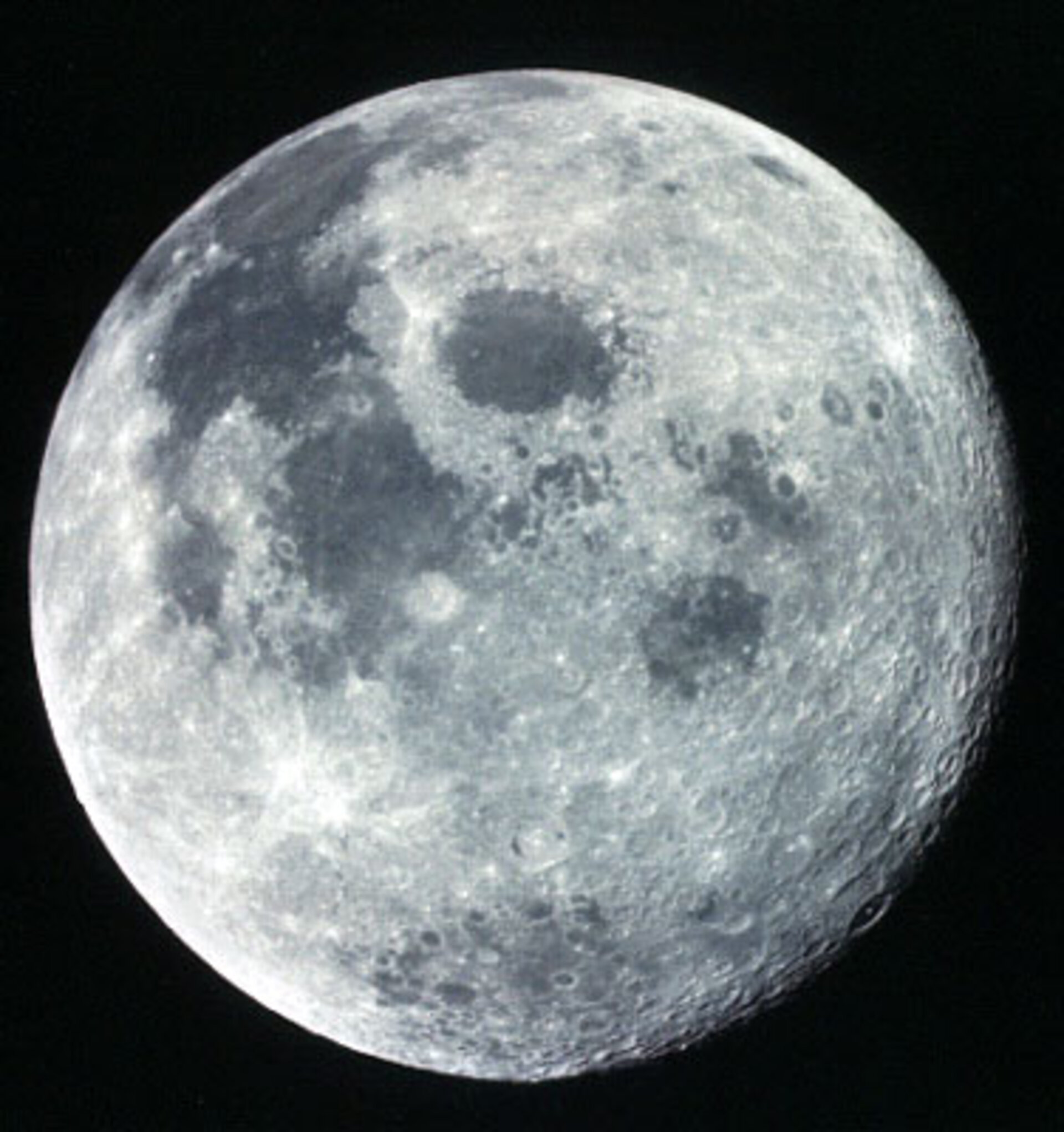
The Moon's pockmarked face gives an impression of what the Earth looked like around four thousand million years ago, when comets and asteroids impacted on the newly formed planets of the Solar System, creating craters both large and small.
The Earth's craters have mostly been eroded away or covered up, but the Moon has scarcely changed over the last three and a half thousand million years, except for molten lava making the flat, dark features we call the 'seas', or 'maria'.
SMART-1's AMIE camera will study topography and surface texture, measuring visible light at very high resolution. By looking at selected regions from different angles, and under different lighting conditions, AMIE will provide new clues as to how the lunar surface has evolved.
The infrared spectrometer SIR on board SMART-1 will map the surface distribution of minerals such as pyroxenes, olivines and feldspars, in far more detail than Clementine did. The mineralogy will reveal the effects of cratering and maria formation, and the nature of subsurface layers exposed by fractures in the Moon's crust.
The SIR is a commercially available instrument adapted for exploring other worlds. If it works as well as expected around the Moon, small and lightweight instruments like SIR could become standard for infrared observations of the planets, asteroids and comets.
Water on the Moon?
The trickiest task for the SMART-1 scientists is to peer into the darkness of the craters at the lunar poles with the SIR instrument. They are looking for the infrared signature of water-ice - and perhaps of frozen carbon dioxide and carbon monoxide too.
By definition, no direct light falls into these dark craters, but rays from nearby crater rims, catching the sunshine, may light the ice sufficiently for SIR to see it, when data from many passes are added together.
Water on the lunar surface would be very helpful in the creation of permanent bases on the Moon. But to have survived, the water must be in the form of ice, hiding from the Sun in places where the temperature never rises above -170°C.
Where did the Moon come from?
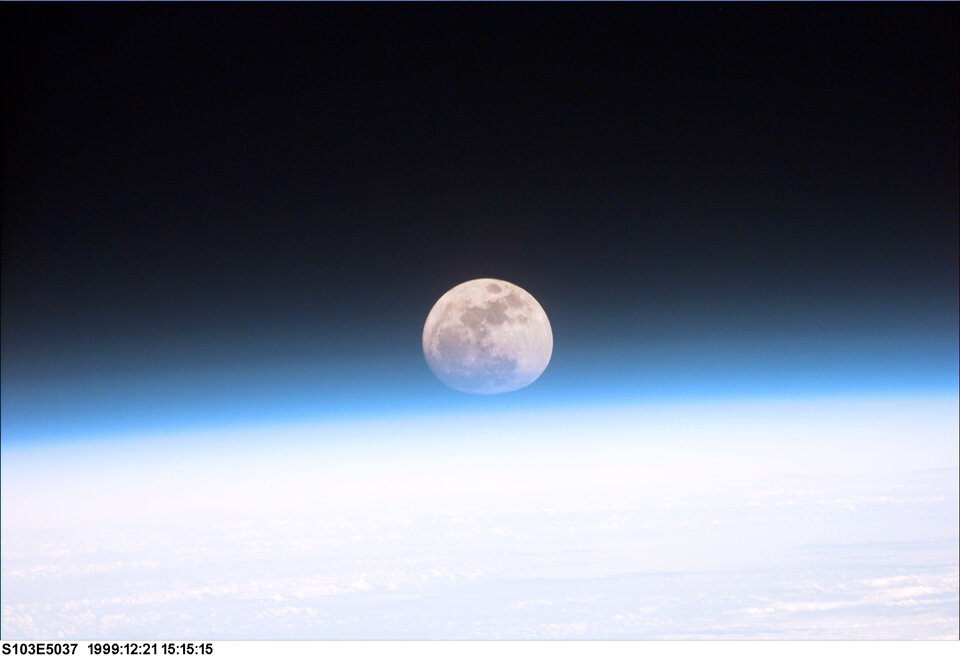
The current theory is that the Moon is the result of a collision during the birth of the Solar System 4500 million years ago. When the Earth was forming, a huge asteroid may have collided with our planet, flinging vaporised rock and debris from both bodies into space. Some of it went into orbit around the Earth and formed the Moon.
If this theory is right, scientist believe the Moon should contain less iron than the Earth, in proportion to lighter elements such as magnesium and aluminium. By gauging the relative amounts of chemical elements comprehensively for the very first time, SMART-1 can make a distinctive contribution to this momentous scientific issue.
SMART-1 will use the D-CIXS (pronounced dee-kicks) instrument to measure the precise energies carried by X-rays emitted by atoms on the lunar surface. Each X-ray is a 'signature' of the element emitting it.
No one has yet made these types of observations of the Moon, which is why the small SMART-1 spacecraft has the chance to make a great contribution to understanding the Moon and its relation to the Earth.