Getting it right: An interview with Rudi Schmidt
With one chance at landing on Mars and on chance at going into orbit around it, there is a lot of pressure on the Mars Express team - but Project Manager Rudi Schmidt remains calm.
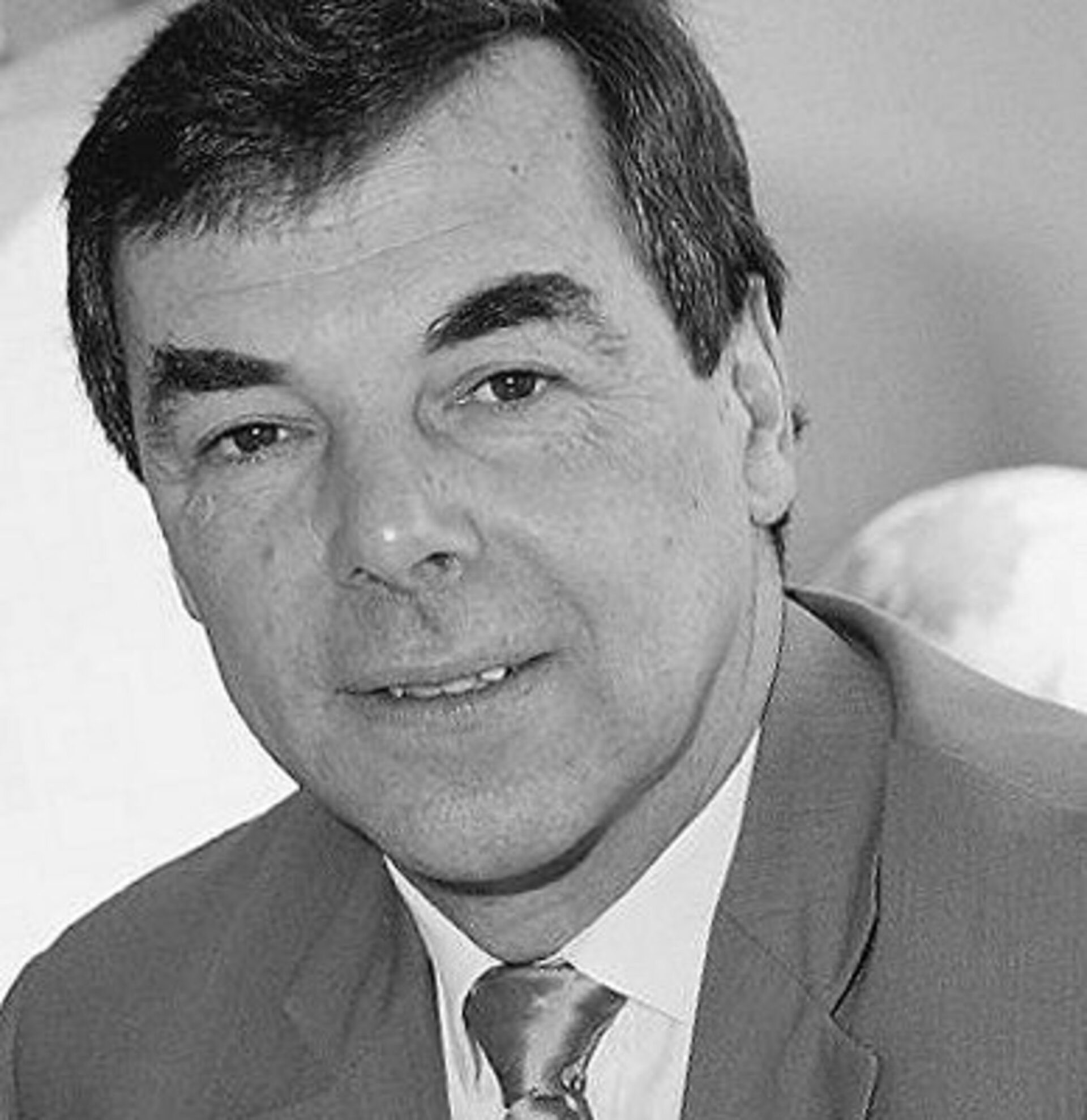
Rudolf ("Rudi") Schmidt
ESA Project Manager, Mars Express
Born: 13 Feb 1949 in Hartmannsdorf, Austria
PhD at the University of Graz, 1977; Readership at the Technical University of Graz, 1995.
He joined ESA Space Science Department as a Staff Scientist in Plasma Physics in 1982. He became the Study Scientist and later the Project Scientist for the ESA Cluster mission in 1986.
He has analysed data from several ESA satellites, and produced over 100 scientific papers on subjects ranging from the Implementation of the Cluster Science Data System to the development of new technologies for space instrumentation, e.g. liquid metal ion guns for spacecraft control, and the Atomic Force Microscope for the Rosetta MIDAS instrument.
In 1997 he transferred to the Science Project Department, and became Mars Express Project Manager in 1998.
He is married with two sons, aged 15 and 17, and enjoys tennis and handicraft.
ESA: How do you feel as Mars Express gets so close to its final destination?
Rudi Schmidt
Naturally I’m getting slightly nervous as time goes on, as there is simply no room for mistakes now. For me personally, I am also under pressure because as well as working on Mars Express, I am involved with Venus Express, which plans to set off for Venus in 2005. This project is progressing extremely fast – in fact the spacecraft is already built.
We just get one single chance at the landing, and that’s it!
ESA: What most fascinates you about Mars?
Rudi Schmidt
I think it is the challenge of landing on it. It is so difficult that you can never be sure that you have tested your lander for every eventuality. Mars Express has had a long cruise in space and this is now followed by a very critical orbit injection. If we get the timing wrong, the spacecraft could burn up in the atmosphere or miss Mars altogether - so we have to get it right. We just get one single chance at it, and that’s it!
ESA: What is your greatest hope for the mission?
Rudi Schmidt
As well as making a successful landing, I am looking forward to seeing the Mars Express orbiter successfully inserted into its orbit around Mars, and that it returns lots of great science to us.
Space science is so very exciting, so GO FOR IT!
ESA: How did you first become interested in space science?
Rudi Schmidt
I have to admit that it was a kind of coincidence, really. For my PhD, I was building magnetometers that measured the magnetic fields produced by electrical currents in the heart or brain. When I finished, there were not many jobs available in this field, but I saw one advertised that involved taking measurements in space at the Space Research Institute in Austria, which sounded interesting. I got the job and found myself working closely with ESA, which eventually led to my current position.
ESA: What advice would you give somebody who wanted to work in space research?
Rudi Schmidt
Quite simply – it’s very exciting, so GO FOR IT!