• → European Space Agency

      • Space for Europe
      • Space News
      • Space in Images
      • Space in Videos
    • About Us

      • Welcome to ESA
      • DG's News and Views
      • For Member State Delegations
      • Business with ESA
      • ESA Exhibitions
      • ESA Publications
      • Careers at ESA
    • Our Activities

      • Space News
      • Observing the Earth
      • Human Spaceflight
      • Launchers
      • Navigation
      • Space Science
      • Space Engineering
      • Operations
      • Technology
      • Telecommunications & Integrated Applications
    • For Public

    • For Media

    • For Educators

    • For Kids

    • ESA

    • Integral

    • ESA Science

    • Integral in brief
    • Integral overview
    • Integral factsheet
    • A truly international mission
    • About Integral
    • The spacecraft
    • The launcher
    • The launch site - Baikonur
    • The journey
    • Integral's mission

      • What's special?
      • Why do we observe gamma rays?
      • Observations: Seeing in the gamma-ray wavelengths
      • The atoms that make us
      • The densest objects in the Universe
      • Giant black holes
      • Gamma-ray bursts (GRBs)
    • Multimedia
    • Image gallery
    • Pre-launch images, Sept 2002
    • Pre-launch images, October 2002
    • Video gallery
    • 3D Flash 'model'
    • Make a model

    ESA > Our Activities > Space Science > Integral

    ESA presents Integral's first images

    Integral has already captured a gamma-ray burst
    11 December 2002

    ESA PR 79-2002. Integral, the European Space Agency’s gamma-ray satellite, has taken its first images and collected its first scientific data. These 'first-light' images confirm that Integral is working superbly. Everyone involved with the project is delighted with its performance so far.

    Professor David Southwood (ESA Director of Science), Dr Arvind Parmar (Integral's Acting Project Scientist), and the Principal Investigators will be presenting Integral’s first ground-breaking images and results at a press conference on 18 December at ESA Headquarters in Paris, France.

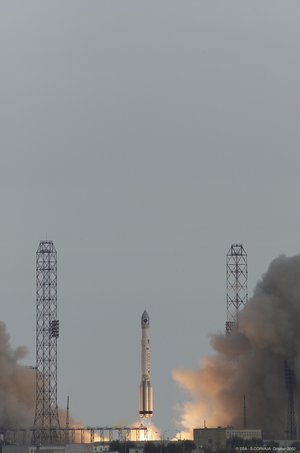
    Since its launch on 17 October, scientists have manoeuvred Integral into its operational orbit, thoroughly tested their communications link, and verified the spacecraft's response to their commands. They have also been fine-tuning the instruments by observing the famous black hole, Cygnus X-1. "We have beautiful gamma-ray images and spectra of the sky to show," says Arvind Parmar. Astronomers use spectra to analyse the energy of the radiation that they observe.

    Integral's results promise to be very special because it has already captured one of the most elusive events in the cosmos – a gamma-ray burst. Gamma-ray bursts are titanic explosions of varying duration that occur about twice daily. Scientists think that collapsing stars in the very distant Universe cause these mysterious, tremendous explosions. The fascinating and thought-provoking results from this observation will be presented at the press conference.

    Media representatives wishing to attend are kindly requested to complete the attached accreditation form and return it, preferably by fax, to the ESA Media Relations Service in Paris.

    Rate this

    Views

    Share

    • Currently 0 out of 5 Stars.
    • 1
    • 2
    • 3
    • 4
    • 5
    Rating: 0/5 (0 votes cast)

    Thank you for rating!

    You have already rated this page, you can only rate it once!

    Your rating has been changed, thanks for rating!

    17
    Tweet
    • Related news
      • Everyone wants gamma-ray eyes!
        • Europe opens a window onto a violent Universe
          • Integral launched
          • Related links
          • Accreditation form
          • Sci & Tech Integral page
          • ESA Science
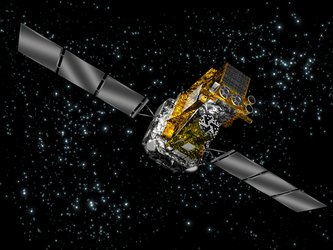
          • Artist's view of Integral
            Artist's view of Integral
            ESA's gamma-ray astronomy mission

    Connect with us

    • RSS
    • Youtube
    • Twitter
    • Flickr
    • G+
    • Facebook
    • Livestream
    • Subscribe
    • App Store
    • LATEST ARTICLES
    • · Proba-V opens its eyes
    • · First new Galileo satellite arrive…
    • · Next destination: space
    • · Leak repaired on International Spa…
    • · After Chelyabinsk: European expert…
    • FAQ

    • Jobs at ESA

    • Site Map

    • Contacts

    • Terms and conditions