Doing real planetology: An interview with Agustin Chicarro
As Project Scientist (1997-2009) for Mars Express, Agustin Chicarro monitored the development of the scientific instruments before the mission was launched. On arrival at Mars, he made sure that each instrument fulfilled its scientific objectives. This interview was conducted in 2003, just before Mars Express arrived at Mars.
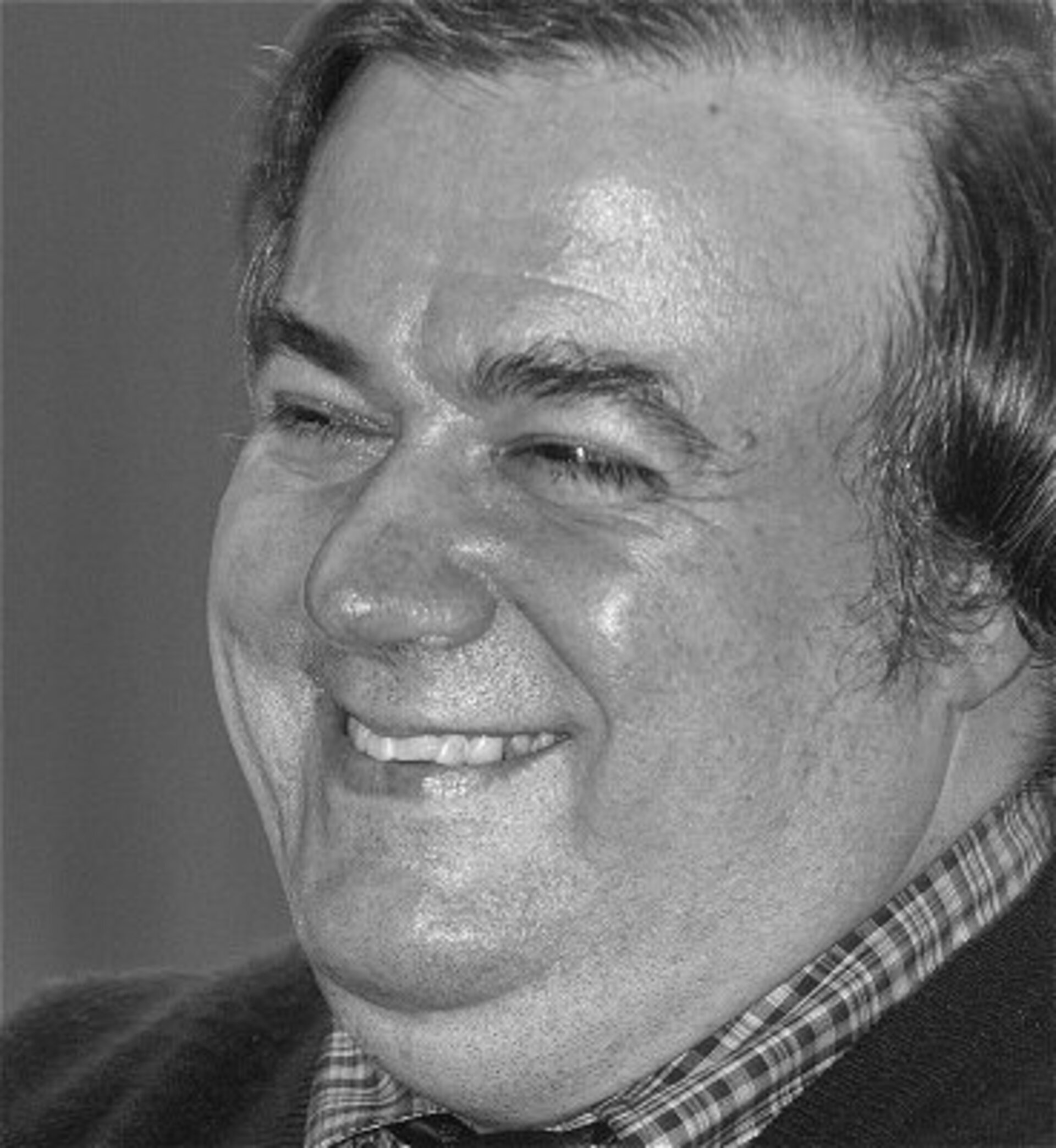
Agustin Chicarro
Mars Lead Scientist, Mars Express
Born: 23 July 1956 in Madrid, Spain
Agustin studied geology, geophysics, geochemistry, biology and astrophysics at the University of Paris in Orsay and obtained his PhD in 'Compressive tectonics of Mars'.
He then carried out three years research at the Lunar and Planetary Institute in Houston, USA, on the geology of Mars, Venus, the Moon and Mercury.
After continuing research in Madrid at the Museum of Natural Sciences and teaching at universities in Taiwan, he joined ESA in 1988, working on studies for future missions to Mars and the Moon.
Agustin lives in the Netherlands and enjoys reading, travel, photography and learning Russian, Japanese and Chinese.
ESA: How do you feel as Mars Express gets so close to its final destination?
Agustin Chicarro
I am very excited. Under pressure, of course, but hopeful.
We aim to get a complete view of the planet - history, geology, how it has evolved. Real planetology!
ESA: What most fascinates you about Mars?
Agustin Chicarro
Mars is the most similar planet to Earth in terms of its surface geology and climate, while Venus is the most similar when it comes to the interior and geodynamics. I am deeply fascinated by the differences in the evolutionary paths of Earth, Mars and Venus, and the processes that transformed Mars into the barren cold world we see today.
With Mars Express, we will find out what these were. Above all, we aim to obtain a complete global view of the planet - its history, its geology, how it has evolved. Real planetology!
ESA: What is your greatest hope for this mission?
Agustin Chicarro
Mars Express is exciting because it will provide a global view of Mars at a much higher level than we have today. Each mission to Mars takes a quantum leap in terms of what we know.
And, of course, it is particularly exciting when these big jumps are made on the questions of water and life on Mars. I still have an interest in biology so I'm really excited that a major goal for Mars Express is to find out whether there is or has been life on Mars, and on where the water is and how much we have on the planet at present.
My father showed me how to spot satellites circling Earth.
ESA: How did you first become interested in space science?
Agustin Chicarro
Well, I have heard that everyone’s passions are started when they are around five years old. At that age, I was very curious about space, triggered by my father who showed me the night sky and how to spot the big satellites circling Earth at that time.
When I was a teenager I wanted to become a doctor. Then I began to realise that medicine is a part of life science, which is a part of Earth science. Earth, in turn, is just one planet among others in the Solar System. I went in the opposite direction of somebody who wants to specialise by expanding my horizons.
Doing what you love is more important than how much you earn.
ESA: What advice would you give somebody who wanted to work in space research?
Agustin Chicarro
I would say that doing what you love is more important than how much you earn. I would say to young people, don’t look at the financial prospects, just do it.