• → European Space Agency

      • Space for Europe
      • Space News
      • Space in Images
      • Space in Videos
    • About Us

      • Welcome to ESA
      • DG's News and Views
      • For Member State Delegations
      • Business with ESA
      • ESA Exhibitions
      • ESA Publications
      • Careers at ESA
    • Our Activities

      • Space News
      • Observing the Earth
      • Human Spaceflight
      • Launchers
      • Navigation
      • Space Science
      • Space Engineering
      • Operations
      • Technology
      • Telecommunications & Integrated Applications
    • For Public

    • For Media

      • Media
      • ESA TV
      • Videos for professionals
      • Photos
    • For Educators

    • For Kids

    • ESA

    • ESA Science

    • Mars Express

    • Europe goes to Mars

      • Europe reclaims a stake in Mars exploration
      • Space age transforms our knowledge about Mars
    • About Mars Express

      • Mars Express mission facts
      • Mars Express instruments
      • The mission
      • The spacecraft
      • The launcher
    • About Mars

      • Geography of Mars
      • Water on early Mars?
      • Signatures of life
      • Facts about Mars
    • Meet the team

      • International collaboration
      • Project Manager
      • Project Scientist
      • Mars Lead Scientist
      • Principal Investigators
      • Operations
      • Industry
    • Multimedia
    • VideoTalk
    • Mars Express images
    • Mars Express videos
    • HRSC videos
    • Animation in 11 languages
    • Download wallpapers
    • Download screensavers
    • 3D Flash 'model'
    • Make a model
    • Services
    • Comments

    ESA > Our Activities > Space Science > Mars Express

    Filling up for the long journey

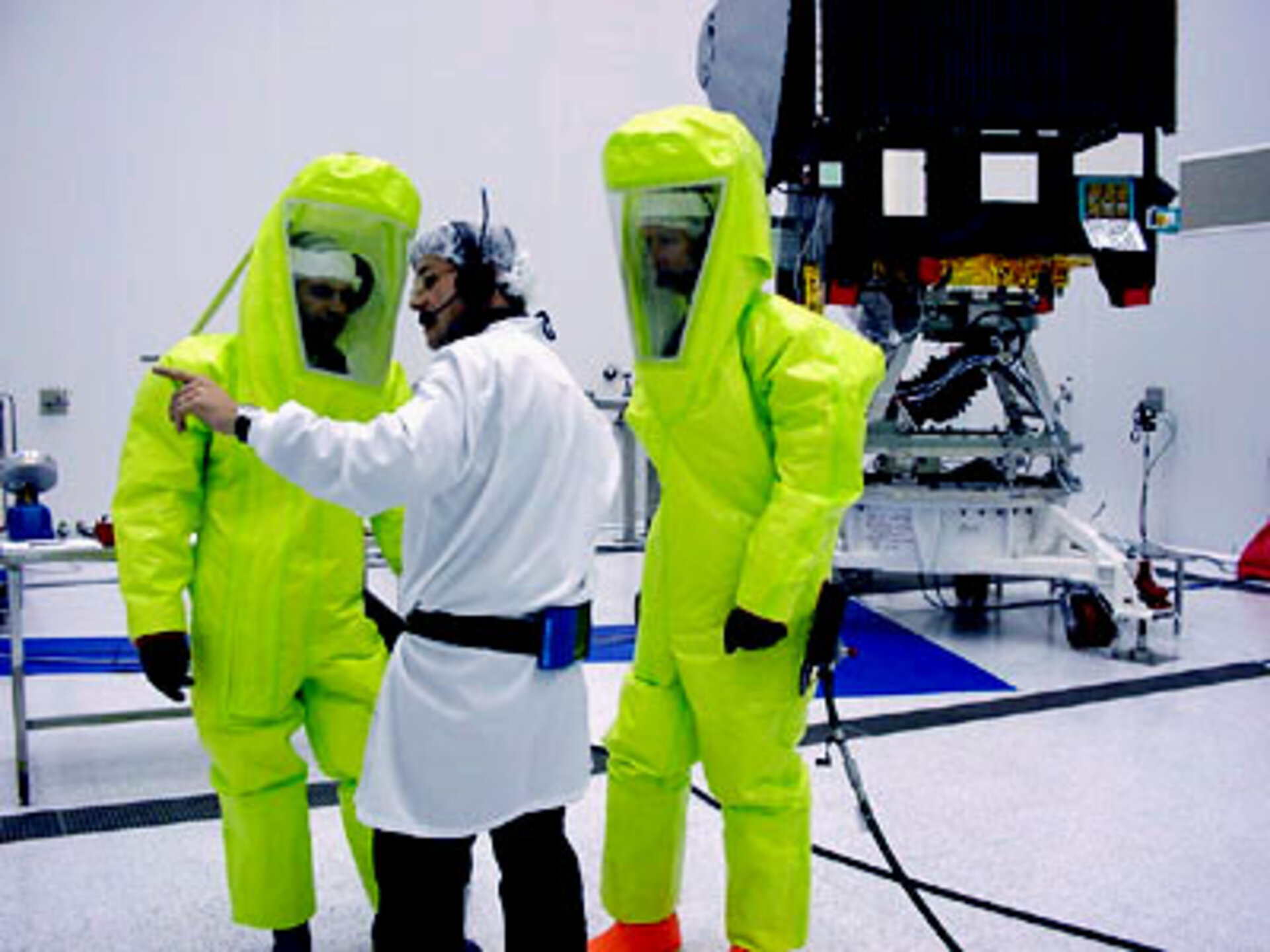
    Training for the fuelling operation
    Training for the fuelling operation
    26 May 2003

    Mars Express launch diary 10

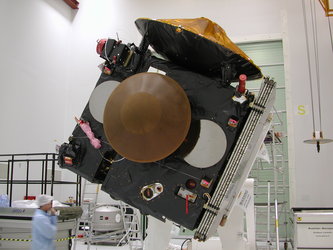
    Propellant loading is one of the most challenging and risky actions of the launch preparation. In the final phase of the preparation, the team has to work in perfect co-ordination to achieve this, as Ared Schnorhk, Principal Mechanical and Propulsion Engineer for Mars Express, explains.

    "Just as motor vehicles need fuelling before long journeys, so spacecraft require full tanks before they set off to visit other worlds. To get into orbit around Mars and to perform its daily operations around the planet, Mars Express has one main rocket engine and a set of eight small control thrusters. These engines need to be fed with 'propellants', which in this case are two highly toxic chemical liquids that react together when mixed.

    "Mars Express has two propellant tanks, one for each liquid, which have to be filled just before launch. In order to perform these dangerous operations, a lot of accurate preparation is needed from every participant and perfect coordination is needed with the facility operators.

    "For the loading operations, a specific facility is used: the Hazardous Processing Facility. During the loading itself, contamination levels are constantly monitored, with firemen and medical support ready nearby. Access is restricted to the essential personnel only. All precautions are taken to prevent injury to people or any con-tamination of the environment.

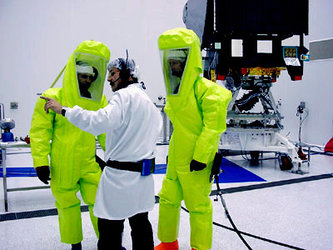
    "During a training session, our Launch Campaign Manager Michael Witting got the opportunity to experience what it is like being a fuelling operator. For this job, he has to wear a special environmentally sealed 'SCAPE' suit. SCAPE stands for Self-Contained Apparatus Protective Ensemble and is a bit like a space suit, but used for hazardous operations during ground processing.

    "Even though you are never more than a few steps away from a 'SCAPE colleague', you quickly feel lonely and very dependent on the air supply, the communication system and the integrity or 'airtightness' of the suit.

    "For Mars Express, we first loaded the 297 kilogrammes of oxidiser and two days later we loaded 178 kilogrammes of fuel . As hoped, everything went fine. During one of the last SCAPE activities, the communication system of one SCAPE operator failed. However, this was solved quickly. His colleague instructed him with sign language to sit down and wait until all the dangerous operations were completed.

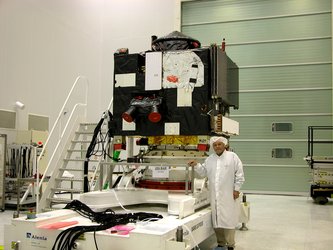
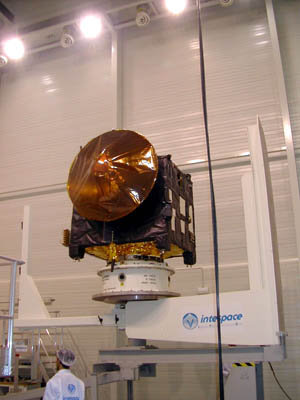
    "Once the facility was cleared of all hazardous vapour, the Mars Express spacecraft was transferred to the Upper Composite Integration Facility for stacking onto its adapter and then onto the Soyuz-Fregat upper-stage rocket.

    "The success of this fuelling operation brings to an end a hectic and critical part of the launch campaign. It was the last major activity on the spacecraft, and the most dangerous, so now we are now looking forward to launch."
    Rate this

    Views

    Share

    • Currently 0 out of 5 Stars.
    • 1
    • 2
    • 3
    • 4
    • 5
    Rating: 0/5 (0 votes cast)

    Thank you for rating!

    You have already rated this page, you can only rate it once!

    Your rating has been changed, thanks for rating!

    44
    Tweet
    • Launch diary
      • Ready for lift off!
        • Ground control to Mars Express
          • Filling up for the long journey
            • "All along the launch tower"
              • It all started with Gagarin
                • Preparing the Mars Express launch in Baikonur
                  • "Leaving on a jet plane"
                    • Packing for Mars
                      • No one will ever hear you outside this chamber
                        • "Putting on weight at Christmas?"
                          • "After the vacuum, things may get nasty"
                            • "A whole lot of heating going on"

    Connect with us

    • RSS
    • Youtube
    • Twitter
    • Flickr
    • G+
    • Facebook
    • Livestream
    • Subscribe
    • App Store
    • LATEST ARTICLES
    • · Rare merger reveals secrets of gal…
    • · Watching for hazards: ESA opens as…
    • · ESA astronaut Timothy Peake set fo…
    • · Space drives e-mobility
    • · Proba-V opens its eyes
    • FAQ

    • Jobs at ESA

    • Site Map

    • Contacts

    • Terms and conditions