• → European Space Agency

      • Space for Europe
      • Space News
      • Space in Images
      • Space in Videos
    • About Us

      • Welcome to ESA
      • DG's News and Views
      • For Member State Delegations
      • Business with ESA
      • ESA Exhibitions
      • ESA Publications
      • Careers at ESA
    • Our Activities

      • Space News
      • Observing the Earth
      • Human Spaceflight
      • Launchers
      • Navigation
      • Space Science
      • Space Engineering
      • Operations
      • Technology
      • Telecommunications & Integrated Applications
    • For Public

    • For Media

    • For Educators

    • For Kids

    • ESA

    • Space Science

    • Our Universe
    • About Space Science
    • ESA's 'Cosmic Vision'
    • Science missions
    • Mission navigator
    • Target groups
    • For Media
    • For Scientists
    • For Kids
    • Multimedia
    • Science images
    • Science videos
    • Animations
    • Downloads
    • Sounds from space
    • Resources
    • Reference section
    • Services
    • FAQs
    • Glossary
    • Help
    • Portal terms of use
    • Comments
    • Follow us
    • RSS feeds
    • ESA Sci on Twitter
    • ESA Space Science Images on Flickr
    • ESA 3D on Flickr

    ESA > Our Activities > Space Science

    Notes for editors

    11 January 2011

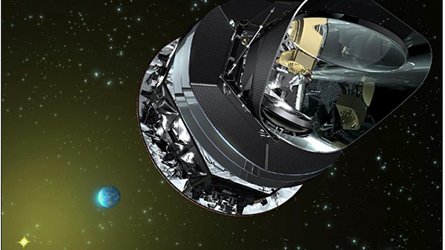
    Planck is a mission of the European Space Agency (ESA), which has managed the project since its inception in 1993 and funded the development of the satellite, its launch, and its operations.

    ESA's prime industrial contractor for Planck was Thales Alenia Space (Cannes, France). Industry from all over Europe has contributed to the development of Planck. Especially notable contributions to the development are due to Thales Alenia Spazio (Torino, Italy) for the Service Module, Astrium (Friedrichshafen, Germany) for the Planck reflectors, and Oerlikon Space (Zürich, Switzerland) for the payload structures.

    Much of the most challenging cryogenic and optical testing has been carried out at the Centre Spatial de Liège in Belgium and on the premises of Thales Alenia Space in Cannes.

    Two large international Consortia, comprising a total of around 50 scientific institutes within Europe and North America, and funded by agencies from the participating countries, have each brought outstanding know-how to the development of the Low Frequency Instrument (LFI) and the High Frequency Instrument (HFI). Details can be found on the following web sites: LFI and HFI.

    Important industrial contributions to the instrument development are due to Thales Alenia Space (Milano, Italy) for LFI, and Air Liquide - DTA (Grenoble, France) for HFI.

    The Consortia are also responsible for scientific operations of their respective instruments and processing the acquired data. The Consortia are led by the Principal Investigators: J.-L. Puget of the Institut d’Astrophysique Spatiale in Orsay (France) leads HFI (funded principally by CNES and CNRS [INSU, IN2P3]), and N. Mandolesi of the Instituto di Astrofisica Spaziale e Fisica Cosmica in Bologna (Italy) leads LFI (funded principally by ASI and INAF).

    NASA has funded the US Planck Project, based at JPL and involving scientists at many US institutions, which has contributed significantly to the efforts of these two Consortia.

    A Consortium of Danish institutes, funded by the Danish National Research Council, has participated with ESA in a joint development of the two reflectors for the Planck telescope.

    Planck is being operated by a Flight Control Team at the Mission Operations Centre (MOC) at ESA's European Space Operations Centre (ESOC), Darmstadt, Germany.

    The Planck Science Office, located at ESA's European Space Astronomy Centre (ESAC), Spain, manages the survey and coordinates scientific operations of the two instruments.
    For more information:
    ESA Media Relations Office
    Tel: +33 1 53 69 72 99
    Fax: +33 1 53 69 76 90
    Email: media@esa.int
    Markus Bauer
    ESA Science and Robotic Exploration Communication Officer
    Email: markus.bauer@esa.int
    Tel: +31 71 565 6799
    Mob: +31 61 594 3 954
    Jan Tauber
    ESA Planck Project Scientist
    Email: Jan.Tauber@esa.int
    Tel: +31 71 565-5342
    Jean-Loup Puget
    Institut d'Astrophysique Spatiale
    CNRS-Université Paris Sud, France
    Email: jean-loup.puget@ias.u-psud.fr
    Tel: +33 1 69 85 86 65
    Nabila Aghanim
    Institut d'Astrophysique Spatiale
    CNRS-Universite Paris Sud, France
    Email: nabila.aghanim@ias.u-psud.fr
    Tel: +33 1 69 85 86 46
    Clive Dickinson
    Jodrell Bank Centre for Astrophysics
    University of Manchester, U.K.
    Email: Clive.Dickinson@manchester.ac.uk
    Tel: +44-(0)161-275-4232

    Rate this

    Views

    Share

    • Currently 0 out of 5 Stars.
    • 1
    • 2
    • 3
    • 4
    • 5
    Rating: 0/5 (0 votes cast)

    Thank you for rating!

    You have already rated this page, you can only rate it once!

    Your rating has been changed, thanks for rating!

    44
    Tweet
    • Press conference 11 Jan
    • Replay of conference
    • Planck: looking back at the dawn of time
    • Planck on YouTube
    • Looking inside Planck
    • Related articles
      • Planck's HFI completes its survey of early Universe
        • Planck steps closer to the cosmic blueprint
          • Planck’s new view of the cosmic theatre
            • Planck unveils the Universe – now and then
              • Planck highlights the complexity of star formation
                • Planck sees tapestry of cold dust
                  • Planck first light yields promising results
                    • Herschel and Planck pass in-orbit 'exam'
                      • Coolest spacecraft ever in orbit around L2
                        • Planck satellite manoeuvre aims at L2 arrival
                          • Herschel and Planck commissioning has begun
                          • Read more
                            • L2, the second Lagrangian Point
                            • In depth
                            • In depth overview
                            • Galaxy clusters
                            • Coldest objects
                            • Anomalous radiation
                            • Early structure
                            • Planck in depth
                            • International participation in Herschel and Planck (pdf)
                            • For specialists
                            • Planck Science Team
                            • Related links
                            • Planck on Chromoscope

    Connect with us

    • RSS
    • Youtube
    • Twitter
    • Flickr
    • G+
    • Facebook
    • Livestream
    • Subscribe
    • App Store
    • ESA Science Twitter

    Follow ESA science

    • LATEST ARTICLES
    • · ESA astronaut Timothy Peake set fo…
    • · Space drives e-mobility
    • · Proba-V opens its eyes
    • · First new Galileo satellite arrive…
    • · Next destination: space
    • FAQ

    • Jobs at ESA

    • Site Map

    • Contacts

    • Terms and conditions