T - U - V
T
Telemetry
Data and commands sent from the spacecraft to ground stations.
Telescope
Instrument used to focus electromagnetic radiation (light, X-rays...) into an image.
Telescope (Wolter)
German physicist Hans Wolter (1911-1978) conceived a series of designs for grazing-incidence telescopes, requiring photons to undergo two successive reflections from combinations of paraboloid-hyperboloid (particularly suited for extended field of view imaging) or paraboloid-ellipsoid surfaces (for spectroscopy requiring smaller field of view but higher spatial resolution).
Temperature
Physical parameter characterising the thermal state of a body. Measured in units of degrees Celsius (oC), Fahrenheit (oF) or Kelvin (K).
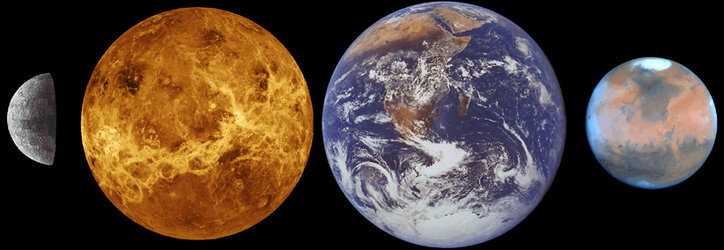
Terrestrial planets
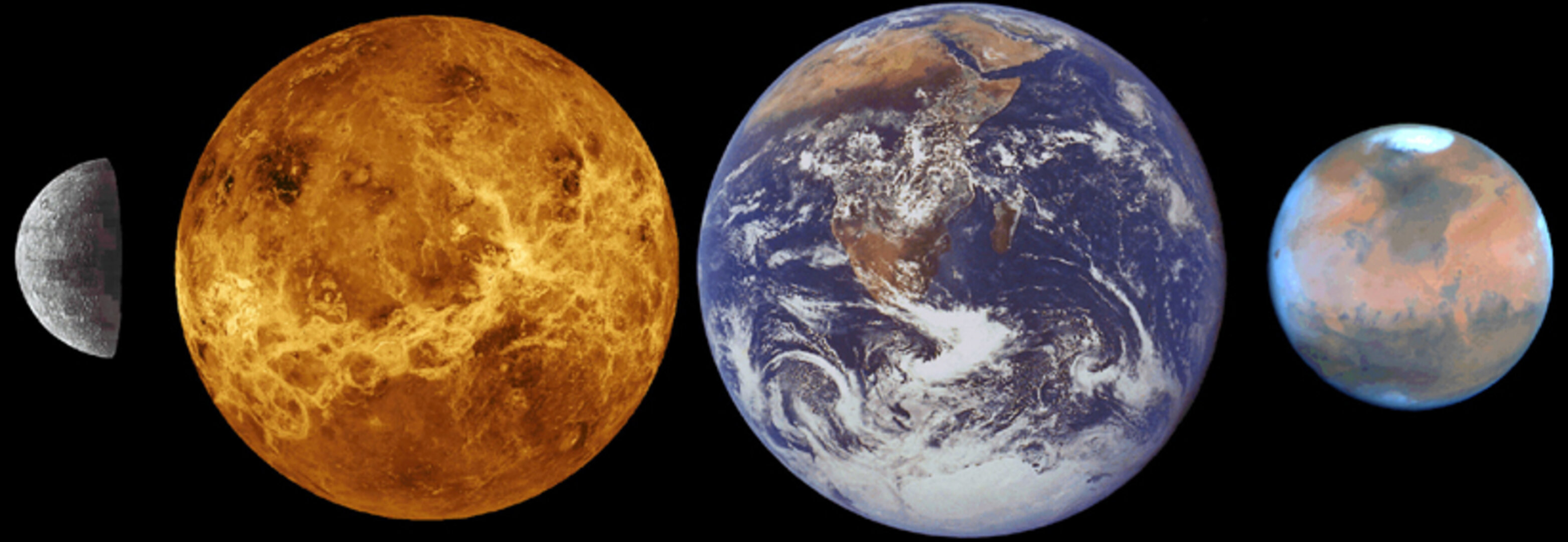
The four innermost planets in the Solar System, which have solid rocky surfaces.
Testing (spacecraft)
All the procedures, including the simulation of space environment, to ascertain that a spacecraft is ready for launch.
Thermal gradient
The rate at which the temperature changes with position.
Thrusters
Small reaction engines on a spacecraft that can provide thrust used to control its orbit, orientation and attitude.
Titan
The largest and most intriguing moon of Saturn. Titan is the second largest moon in the Solar System after Ganymede (one of Jupiter's moons), and is larger than the planet Mercury. Titan was discovered by the Dutch astronomer Christiaan Huygens on March 25 1655.
Tracking
Ground facilities employed to follow the progress and to communicate with a satellite.
Tube
Cylindrical or conical structure in a telescope between its optics and its focal plane.
U
Ultra Luminous Infrared Galaxies (ULIRG)
A type of galaxy which is very bright when observed at infrared wavelengths. They were discovered by the IRAS satellite. Astronomers are now investigating the cause of their enormous infrared luminosity.
Ultraviolet light Region of the electromagnetic spectrum spanning wavelengths from 91.2 nm to 350 nm, wavelengths largely blocked by the Earth's atmosphere.
Universe
Everything that exists. The size of the observable Universe is determined by the distance light has travelled since the Universe was formed in the Big Bang, 13.7 billion years ago.
Uranus
At 19.2 AU away from the Sun, Uranus is the seventh planet in the Solar System and one of the gas giants. Its diameter is four times that of Earth and it has a thick atmosphere composed mainly of hydrogen and helium. Uranus rotates about an axis that is almost perpendicular to the plane in which it orbits the Sun. Hence it appears to be lying on its side. It has at least 20 moons and its surface temperature is typically 58 K.
V
Van Allen radiation belt
See Radiation belt (van Allen).
Vacuum
Space which is entirely devoid of matter.
Venus
One of the terrestrial planets, Venus is the second planet out from the Sun, orbiting at a distance of 0.7 AU. It is about the same size as the Earth and has slightly lower gravity. Venus has a dense atmosphere consisting mainly of carbon dioxide and nitrogen. Atmospheric pressure at the surface is very high, about 92 times that on Earth. Average surface temperature is 737 K. Venus rotates about its axis in a clockwise or retrograde direction, compared with most other Solar System bodies which have anti-clockwise orbits. See Retrograde.
Visibility
Periods at which a celestial object, either natural or artificial, is visible from a point on Earth.
Volt (V)
Unit of electric potential in the SI unit system. It measures the difference in electric potential that causes a current of 1 ampere to flow through a conductor of 1 ohm.