• → European Space Agency

      • Space for Europe
      • Space News
      • Space in Images
      • Space in Videos
    • About Us

      • Welcome to ESA
      • DG's News and Views
      • For Member State Delegations
      • Business with ESA
      • ESA Exhibitions
      • ESA Publications
      • Careers at ESA
    • Our Activities

      • Space News
      • Observing the Earth
      • Human Spaceflight
      • Launchers
      • Navigation
      • Space Science
      • Space Engineering
      • Operations
      • Technology
      • Telecommunications & Integrated Applications
    • For Public

    • For Media

    • For Educators

    • For Kids

    • ESA

    • Space Science

    • Our Universe
    • About Space Science
    • ESA's 'Cosmic Vision'
    • Science missions
    • Mission navigator
    • Target groups
    • For Media
    • For Scientists
    • For Kids
    • Multimedia
    • Science images
    • Science videos
    • Animations
    • Downloads
    • Sounds from space
    • Resources
    • Reference section
    • Services
    • FAQs
    • Glossary
    • Help
    • Portal terms of use
    • Comments
    • Follow us
    • RSS feeds
    • ESA Sci on Twitter
    • ESA Space Science Images on Flickr
    • ESA 3D on Flickr

    ESA > Our Activities > Space Science

    Venus Express electrical tests complete

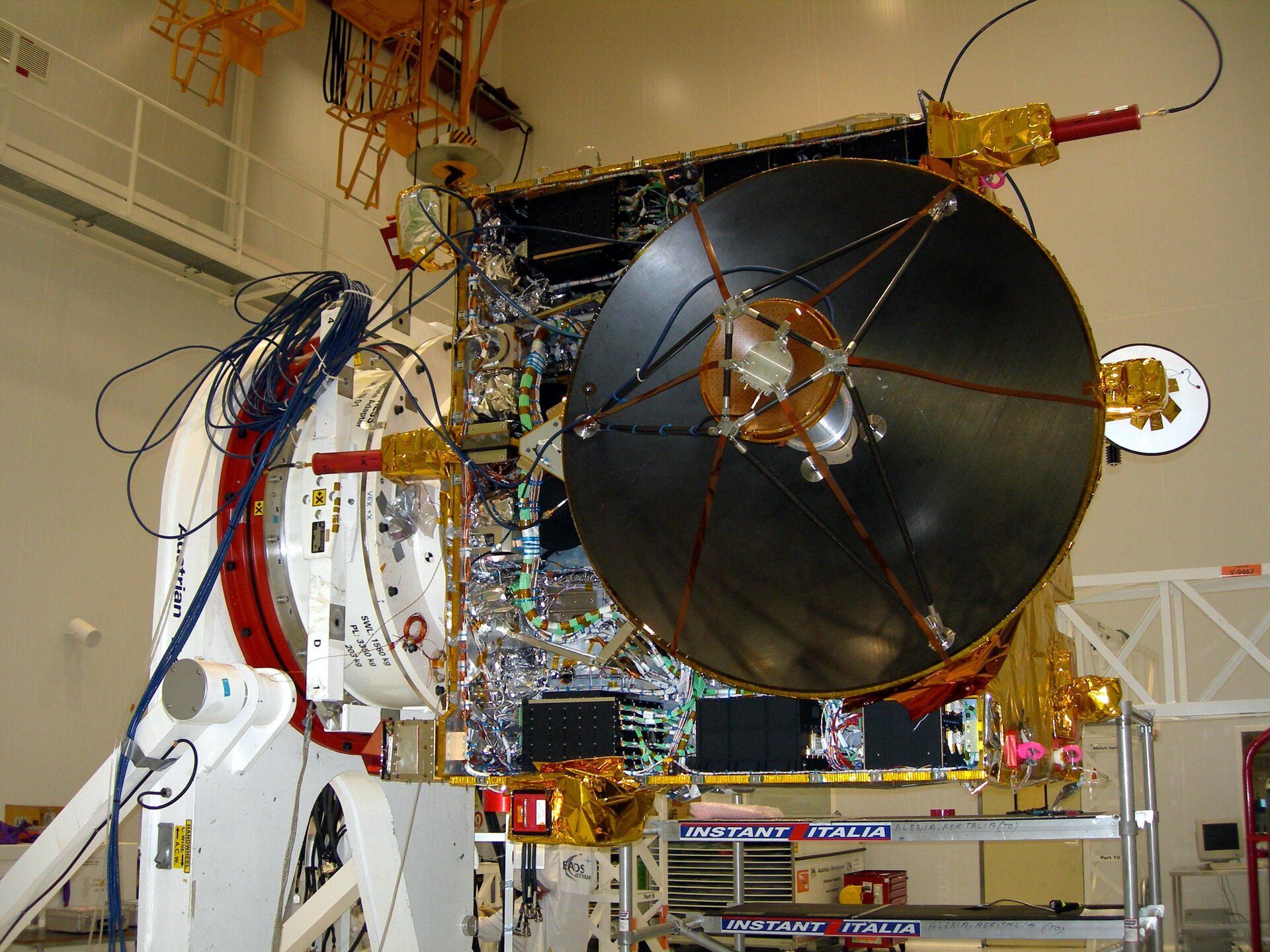
    Venus Express in Payload Processing Facility, Baikonur
    8 September 2005

    With less than 50 days to go until the scheduled launch of Venus Express, the successful completion of main electrical functional testing means another milestone has been reached.

    The System Validation Test 2 (SVT2) was conducted from 29 August until 2 September 2005. The objective of the test was to verify the chain of communications from the Mission Operations Centre (MOC) at ESOC in Darmstadt, Germany, to the spacecraft located at the Baikonur Cosmodrome in Kazakhstan.

    The first day of test was a full simulation of the Low Earth Orbit Phase (LEOP) - an important step in validating the readiness of both the MOC and the spacecraft for launch. For this test, the local team in Baikonur configured the spacecraft in exactly the same way as it will be for launch.

    This was followed by a simulated separation of the spacecraft from the launcher. The spacecraft was ‘tricked’ in to thinking it had left an imaginary ‘launcher’ by the opening of a number of electrical connections in its umbilical cables which simulated the launch vehicle adaptor.

    It correctly sensed the situation and automatically started an on-board sequence (the Separation Sequence Application Programme, SSAP), bringing the spacecraft to life. This sequence included, among other things, priming the propulsion system and deploying the solar array ‘wings’ (which were not actually installed on the spacecraft for this test).

    At the end of this automatic sequence, the flight operations team at ESOC took control of the spacecraft and performed, as they will after the real launch, a sequence of manoeuvres required to safely get the spacecraft on its way to Venus. This was the last time that ESOC had the opportunity to directly command the spacecraft before the launch in October - the next time it will be for real!
    Rate this

    Views

    Share

    • Currently 0 out of 5 Stars.
    • 1
    • 2
    • 3
    • 4
    • 5
    Rating: 0/5 (0 votes cast)

    Thank you for rating!

    You have already rated this page, you can only rate it once!

    Your rating has been changed, thanks for rating!

    11
    Tweet
    • Looking at Venus
    • Launch replay
    • Venus Express launch
    • Related articles
      • Venus Express performs flawlessly, LEOP complete
        • Venus Express mission operations update
          • "Venus Express, give me a GO/NO GO for launch..."
            • Venus Express: ready for lift-off
              • Green light for Venus Express launcher fuelling
                • Venus Express countdown activities started
                  • Venus Express moved back to launch pad
                    • Venus Express set for transport to launcher assembly building
                      • Venus Express mated with upper-stage
                      • More about...
                      • Status reports
                      • Launch in detail
                        • Venus Express factsheet
                        • Related links
                        • Starsem - the Soyuz
                        • Venus Express operations
                        • Cebreros station webcam

    Connect with us

    • RSS
    • Youtube
    • Twitter
    • Flickr
    • G+
    • Facebook
    • Livestream
    • Subscribe
    • App Store
    • ESA Science Twitter

    Follow ESA science

    • LATEST ARTICLES
    • · ESA astronaut Timothy Peake set fo…
    • · Space drives e-mobility
    • · Proba-V opens its eyes
    • · First new Galileo satellite arrive…
    • · Next destination: space
    • FAQ

    • Jobs at ESA

    • Site Map

    • Contacts

    • Terms and conditions