Venus Express overview

Name: Venus Express
Launched: 9 November 2005
Status: Completed (2014)
Objective: Perform a global investigation of the Venusian atmosphere
What’s special?
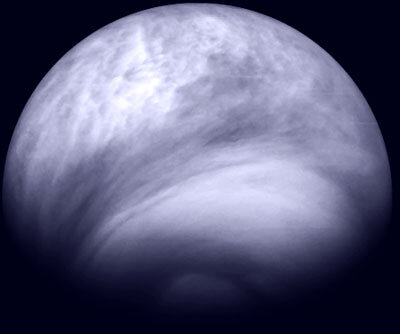
Venus Express was ESA's first spacecraft to study our nearest planetary neighbour. In particular, it investigated the noxious atmosphere and clouds in detail and made global maps of the planet’s surface temperatures.
Venus approaches twice as close to Earth as Mars ever does. In terms of size and mass, Venus is Earth’s twin and yet it has evolved in a radically different manner, with a surface temperature hotter than a kitchen oven and a choking mixture of noxious gases for an atmosphere. Venus Express made unique studies of this atmosphere.
In the past, both the Russians and Americans sent spacecraft to Venus. As the closest planet to the Earth, it was a natural target. These studies revealed details about the surface of the planet, but left many scientific puzzles unresolved.
Venusian weather cannot be explained simply by comparing it to Earth’s. Scientists are unable to explain some of the more extreme atmospheric phenomena that take place on Venus. For example, the planet only rotates once every 243 Earth days, and in the opposite direction. However, in the upper atmosphere, hurricane-force winds sweep around Venus, taking just four Earth days to entirely circumnavigate the planet!
The surface of Venus also baffles scientists. The oldest craters seem to be only 500 million years old, which may indicate that the planet behaves like a volcanic pressure cooker. On Earth, the constant, steady eruption of volcanoes and the shifting of Earth’s surface, causing earthquakes, ensure that the energy released by Earth is dissipated gradually.
This probably does not happen on Venus. Instead, pressure builds up inside the planet until the whole world is engulfed in a global eruption, resurfacing the planet and destroying any craters that have formed. This probably last happened 500 million years ago and so accounts for the lack of older craters. Today, there is a strong relationship between the surface and the atmosphere. This may be similar to the oceanic–atmospheric relationship we have on Earth.
Venus Express supplied scientific data that sheds light on all of these mysteries.
Spacecraft
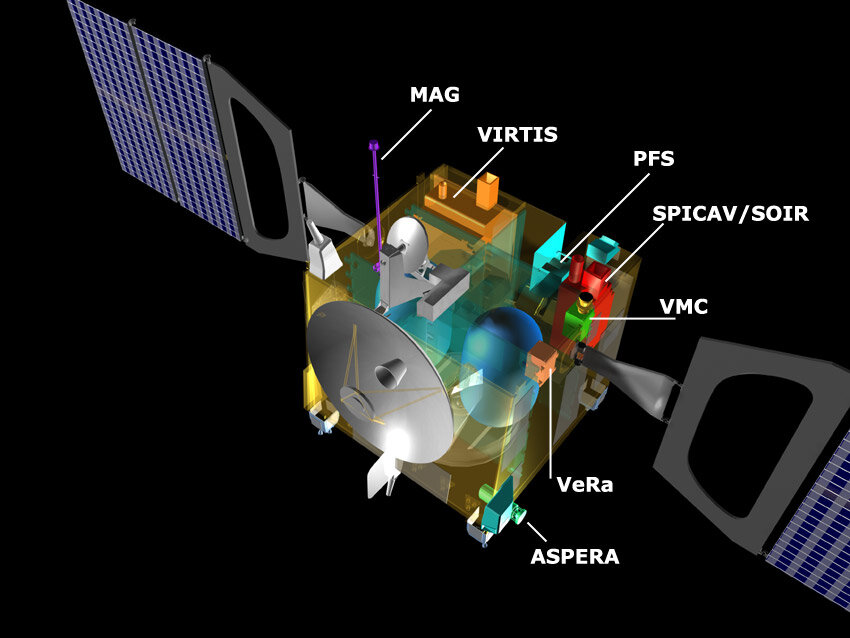
The Venus Express spacecraft was an adapted copy of Mars Express. The spacecraft body itself, termed a ‘bus’, was a honeycombed, aluminium box about one and a half metres wide. With its solar arrays extended, it measured about eight metres across.
Venus is only half the distance from the Sun compared to Mars, meaning that the spacecraft was heated four times more than Mars Express. Therefore, some design changes were required to make the spacecraft better suited to operating around Venus. For example, the radiators for Venus Express were increased in area and efficiency. On the other hand, the increased solar illumination means that radiation to power the spacecraft is plentiful. Venus Express’s solar arrays were therefore only about half the size of those on Mars Express.
Venus Express had seven scientific instruments: the Venus Monitoring Camera (VMC); Analyser of Space Plasma and Energetic Atoms (ASPERA); Planetary Fourier Spectrometer (PFS); Visible/Ultraviolet/Near-infrared Mapping Spectrometer (VIRTIS); Venus Express Magnetometer (MAG); Venus Radio Science Experiment (VeRa); and the Ultraviolet and Infrared Atmospheric Spectrometer (SPICAV/SOIR).
Journey
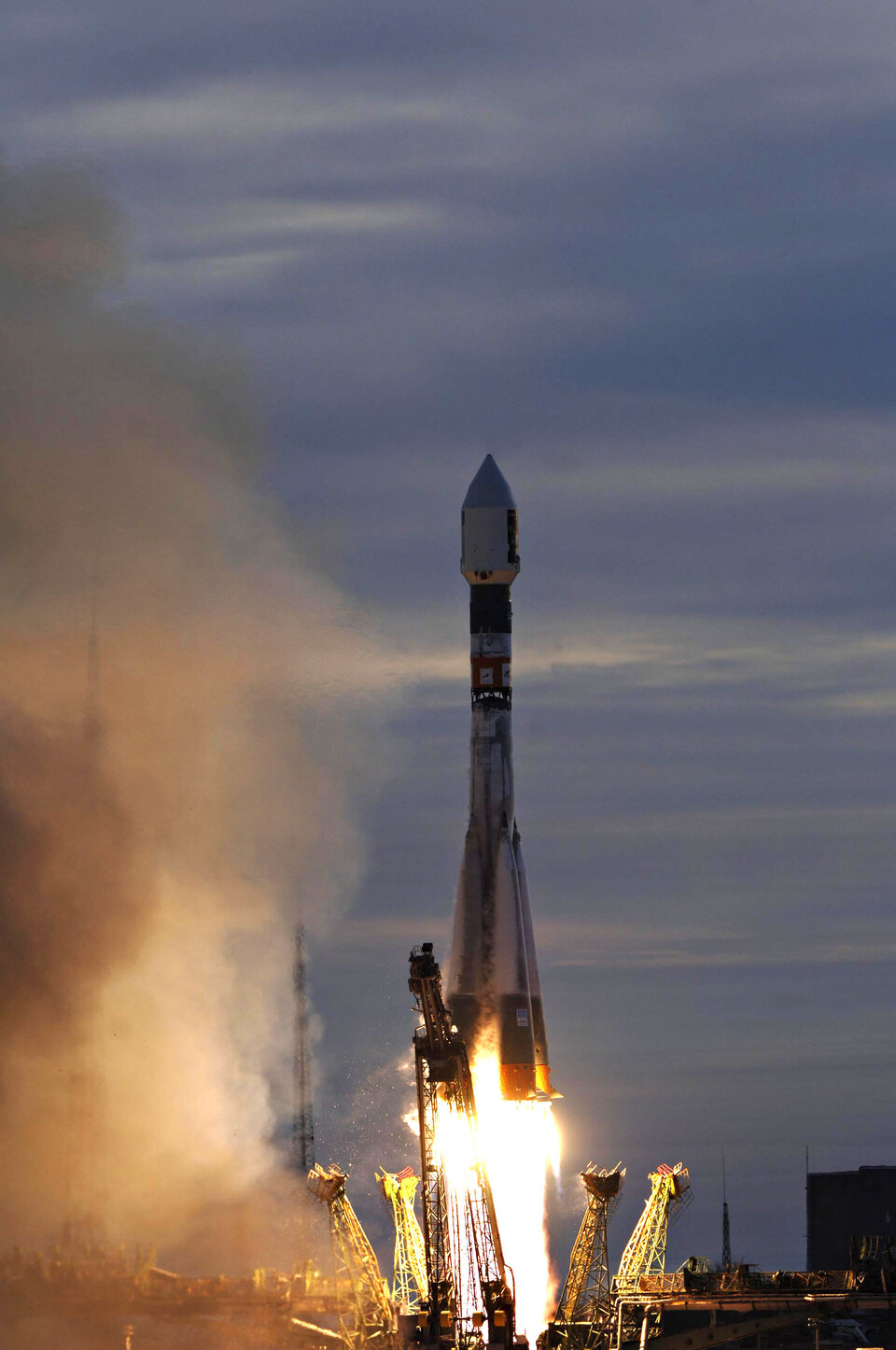
Venus Express was launched from the Russian Baikonur Cosmodrome in Kazakhstan on 9 November 2005, using a Soyuz-Fregat launcher. It arrived at Venus on 11 April 2006 for a nominal mission of 500 days. After more than eight years of operations, the spacecraft exhausted its propellant in November 2014 and could no longer maintain its orbit. The spacecraft eventually was lost in the planet's atmosphere. The Venus Express mission officially ended in December 2014.
History
The mission was proposed in March 2001 after ESA asked for suggestions for reusing the design for the Mars Express spacecraft. The guidelines were extremely strict. The mission would have to run to a tight timeframe because it had to make use of the same equipment as Mars Express, and the same industrial teams that worked on that mission. It would have to be ready to fly in 2005.
Venus Express was especially attractive as it used many of the spare instruments developed for the Mars Express and Rosetta missions. ESA gave the green light to start the spacecraft development on 11 July 2002 and on 5 November 2002, ESA made its final decision on the payload complement and therefore to proceed with the mission.