• → European Space Agency

      • Space for Europe
      • Space News
      • Space in Images
      • Space in Videos
    • About Us

      • Welcome to ESA
      • DG's News and Views
      • For Member State Delegations
      • Business with ESA
      • ESA Exhibitions
      • ESA Publications
      • Careers at ESA
    • Our Activities

      • Space News
      • Observing the Earth
      • Human Spaceflight
      • Launchers
      • Navigation
      • Space Science
      • Space Engineering
      • Operations
      • Technology
      • Telecommunications & Integrated Applications
    • For Public

    • For Media

    • For Educators

    • For Kids

    • ESA

    • Technology

    • Technology Transfer

    • About technology
    • Foundation of innovation
    • A solid investment
    • Going up
    • Competitive edge
    • Supporting science
    • Giant leaps
    • Cross-Cutting Initiatives
    • Strategy and harmonisation
    • About strategy and harmonisation
    • Generic technology programmes
    • Basic Technology Research Programme (TRP)
    • General Support Technology Programme (GSTP)
    • Technology Transfer Programme (TTP)
    • European Components Initiative (ECI)
    • Technology in domain programmes
    • Technology in Domain programmes
    • Services
    • ESA Conferences
    • RSS feeds
    • Subscribe

    ESA > Our Activities > Technology

    Micro-rover NANOKHOD
    Robotics for planetary exploration

    About the Basic Technology Research Programme (TRP)

    What is it?

    ESA's Basic Technology Research Programme (TRP) enables researchers to explore new ideas from the very earliest stages, starting with the first time they ask themselves 'what would happen if…?' Technological progress is such a constant in our lives that it is easy to think of it as occurring automatically. In fact, making it happen comes down to ongoing human ingenuity, effort and most of all curiosity.

    This programme is there to investigate blue-sky thinking in-line with the Agency's objectives. A tentative idea is confronted with reality through proof-of-concept testing, then – if all goes well – comes confirmation that 'we've got something'.

    The TRP is the only ESA technology programme that supports all Agency directorates across the entire spectrum of technical disciplines, providing the technological nucleus for most future developments.

    Why is the TRP needed?

    As the saying goes, the best way to predict the future is to invent it. By testing the feasibility of prospective technologies, the TRP gives Europe the ability to look ahead and plan and define future space missions and activities. Long-term planning is inherently risky when it comes to space, but the TRP reduces the degree of risk by demonstrating the workability of a given technology long before a mission is based around it.

    How is the TRP implemented?

    All ESA Member States contribute to the TRP on a mandatory basis.

    All ESA Member States contribute to the TRP on a mandatory basis. It is run on a three-year work plan and organised according to technology themes based in turn on application areas, such as Earth Observation Space Science and Human Spaceflight.

    The TRP work plan is drafted by groups of senior ESA experts known as the Technical Network (TECNET), with reference to the ESA Long Term Plan (ESA LTP) ten-year roadmap.

    The TRP also currently allocates a third of its effort to so-called Generic Technologies, either of use to multiple missions or else advanced basic technologies of common interest to all applications, such as component design, spacecraft propulsion or power generation.

    Notable initiatives within the TRP include the so-called Star Tiger scheme, involving the rapid development and prototyping of advanced technology - typically 'spin-ins' from non-space sectors – in a timescale of months rather than years, and the Innovation Triangle Initiative, which accepts unsolicited innovation proposals focused on non-space technologies to solve space problems.

    What benefits does it deliver?

    The TRP is a mechanism for seeding the availability of novel technologies into the long-term...

    The TRP is a mechanism for seeding the availability of novel technologies into the long-term, helping to ‘future-proof’ the European economy. A knowledge society is built upon the process of invention, and the sheer challenge of designing for space poses uniquely challenging engineering problems, inspiring engineers to push the edge of the possible as they search for solutions.

    The high-precision, high-performance technologies that result often find wider markets elsewhere, strengthening European competitiveness as well as its technology base.
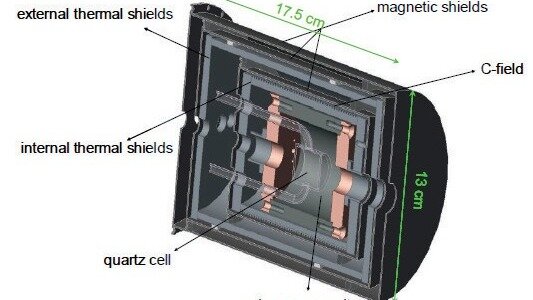
    In its current activities the TRP is making so-called disruptive innovations a special priority. These are technologies with the potential to transform the way space missions are designed and run. Examples include, microsystems and nanotechnology and ultra-light materials. Success in any one of these projects could contribute to a dramatic reduction in the time and cost involved in space missions – and the mastered technologies would have multiple applications on the ground too.

    In operation since ESA itself started in 1975, the TRP has historically given rise to most of the Agency's advanced technologies. Taking near-future missions as examples, that includes everything from to the terrestrial soil moisture sensor aboard the SMOS satellite to the advanced ion engines propelling the Bepi Colombo to the moon. The same is true of autonomous control systems aboard the ExoMars rover and the super-accurate rubidium atomic clocks that enable the Galileo satellite navigation system.

    How to participate?

    Procurements plans are made annually, with 100% contracts offered to industry and universities on an open competitive basis. Invitations to Tender are issued continuously throughout the year on ESA’s EMITS website, with registration needed for access.

    Ideas can be also proposed to open initiatives. Calls for Star Tiger exercises are made yearly via the designated website. Innovation Triangle Initiative proposals for research are accepted online and evaluated periodically three to four times a year.

    Last update: 9 December 2012

    Rate this

    Views

    Share

    • Currently 0 out of 5 Stars.
    • 1
    • 2
    • 3
    • 4
    • 5
    Rating: 0/5 (0 votes cast)

    Thank you for rating!

    You have already rated this page, you can only rate it once!

    Your rating has been changed, thanks for rating!

    267
    facebook
    twitter
    reddit
    google plus
    digg
    tumbler
    digg
    blogger
    myspace
    • Innovation Triangle Initative
    • EMITS
    • Related articles
      • Laser radar illuminates the way to deep space

    Connect with us

    • RSS
    • Youtube
    • Twitter
    • Flickr
    • Google Buzz
    • Subscribe
    • App Store
    • LATEST ARTICLES
    • · CryoSat hits land
    • · Ariane 5 completes seven launches …
    • · Measuring skull pressure without t…
    • · Malargüe station inauguration
    • · The solar wind is swirly
    • FAQ

    • Jobs at ESA

    • Site Map

    • Contacts

    • Terms and conditions