

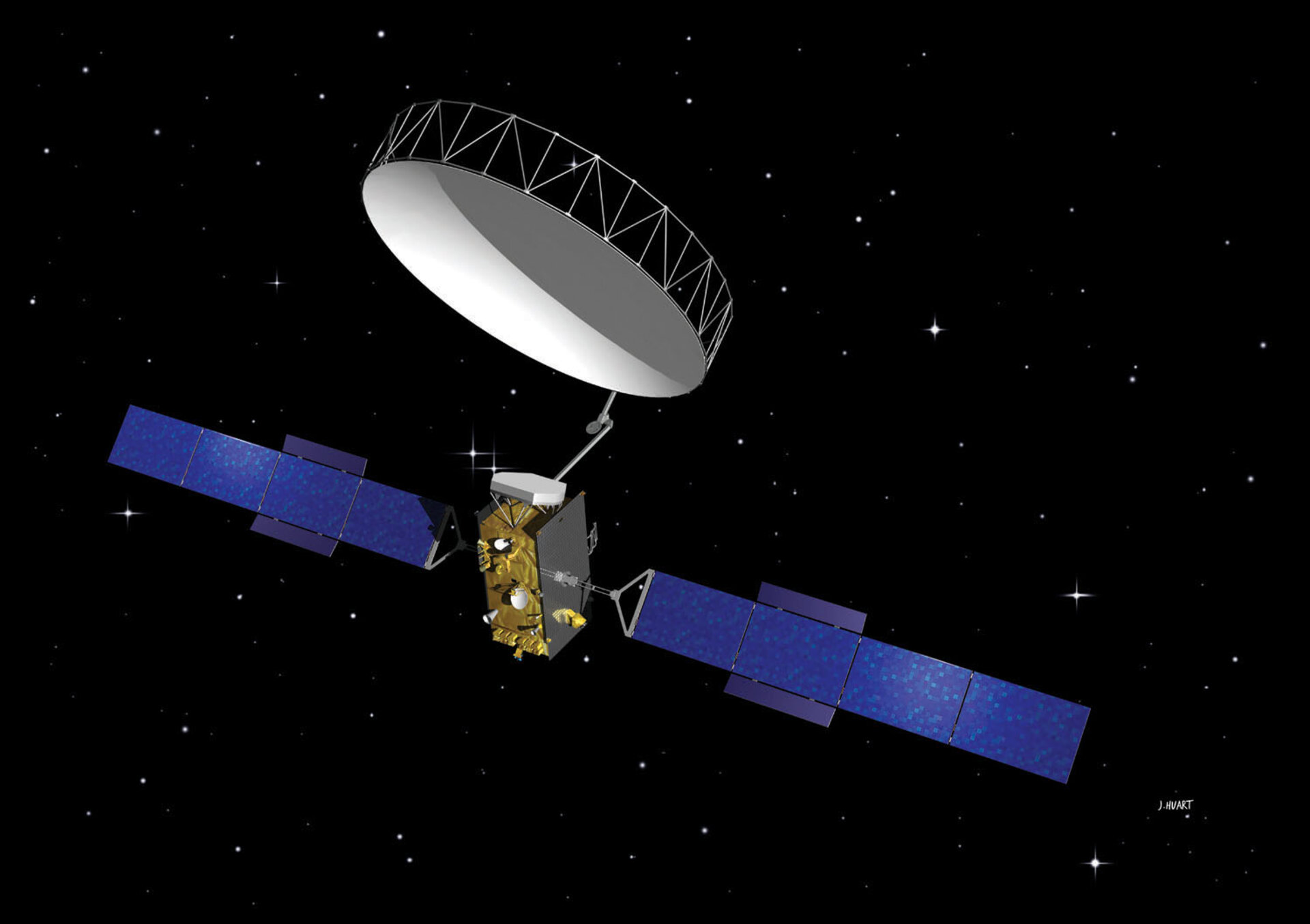
Alphasat Technology Demonstration Payloads
Alphasat is a test satellite to demonstrate and validate the new Alphabus generation of telecommunication satellite platforms being developed with industry. Also known as Inmarsat 1-XL, Alphasat is a joint project by ESA (through its ARTES 8 programme), Inmarsat and the French space agency CNES.
ESA’s contributions to Alphasat include a quartet of non-operational Technology Demonstration Payloads, forming 15% of its overall payload. Final selection came after several technology studies and preliminary accommodation activities, with the following payloads selected:
- An advanced laser communications terminal to link from geostationary to low-Earth orbit, contributed by German space agency DLR with Tesat-Spacecom
- A Q-V band communications experiment to assess the feasibility of these unexploited bands for future commercial applications, overseen by Space Engineering S.p.A.
- An advanced star tracker with Active Pixel Sensor technology, offering enhanced radiation tolerance and dynamic range, developed by Selex Galileo
- An environmental effects facility to monitor the geostationary radiation environment and its effects on electronic components and sensors. This Alphasat Environment and Effects Facility (AEEF) is the work of a consortium led by RUAG Space Switzerland (formerly Oerlikon Space).

