• → European Space Agency

      • Space for Europe
      • Space News
      • Space in Images
      • Space in Videos
    • About Us

      • Welcome to ESA
      • DG's News and Views
      • For Member State Delegations
      • Business with ESA
      • ESA Exhibitions
      • ESA Publications
      • Careers at ESA
    • Our Activities

      • Space News
      • Observing the Earth
      • Human Spaceflight
      • Launchers
      • Navigation
      • Space Science
      • Space Engineering
      • Operations
      • Technology
      • Telecommunications & Integrated Applications
    • For Public

    • For Media

      • Media
      • ESA TV
      • Videos for professionals
      • Photos
    • For Educators

    • For Kids

    • ESA

    • Proba Missions

    • Proba-V at a glance
    • Overview
    • Objectives
    • About the instrument
    • V for Vegetation
    • Serving science
    • Fitting the world in a box
    • About the platform
    • Joining ESA’s Proba family
    • Boxing clever
    • About the mission
    • Made in Belgium
    • On the ground
    • Starting operations
    • New technology
    • Hitching a ride
    • Tracking aircraft from orbit
    • New space semiconductor
    • Detecting radiation
    • Fly by fibre
    • About the launch
    • Launcher
    • Launch site
    • Proba-V launch diary part 1
    • Proba-V launch diary part 2
    • Proba-V launch diary part 3
    • Proba-V launch diary part 4
    • What's next
    • Proba-3
    • Already flying
    • Proba-1
    • Proba-2
    • Multimedia
    • Proba-V images
    • Proba images
    • Proba Earth images
    • Videos
    • Animations
    • Contact
    • Contact us

    ESA > Our Activities > Technology > Proba Missions

    Facts and figures

    Proba-2
    Launch: 2 November 2009 (auxiliary passenger of SMOS)
    Launcher: Rockot
    Launch site: Plesetsk Cosmodrome, Russia
    Orbit: Altitude between 700 km and 800 km, Sun-synchronous, Inclination 98.298 degrees
    Attitude control: Sun-pointing with automatic manoeuvring
    Nominal life: 2 years
    Size: 600 x 700 x 850 mm
    Mass: 130 kg
    Power consumption: 53–86 watts
    RF: S-band, 64 kbit/s uplink; 1 Mbit/s downlink
    Mission cost: €18 million (excluding launcher and operations)
    Ground station, mission control and processing/archiving: Redu (Belgium)
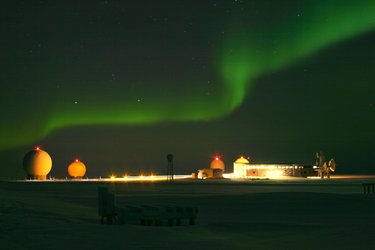
    Data download to: Redu (Belgium) and Svalbard (Norway)
    Number of new technologies to be tested: 17
    Number of scientific experiments: 4
    Developed by: Consortium led by QinetiQ Space (formerly Verhaert) nv of Belgium, a subsidiary of QinetiQ (GB)

    Last update: 4 October 2010

    Rate this

    Views

    Share

    • Currently 4 out of 5 Stars.
    • 1
    • 2
    • 3
    • 4
    • 5
    Rating: 4/5 (1 votes cast)

    Thank you for rating!

    You have already rated this page, you can only rate it once!

    Your rating has been changed, thanks for rating!

    142
    Tweet
    • More information
    • Technology demonstrations
    • Science payloads
    • Spacecraft
      • About the launch
        • Facts and figures
          • Contractors
          • Publications
          • Proba-2 fact sheet (English)
          • Proba-2 fact sheet (Dutch)
          • Proba-2 fact sheet (French)
          • Poster archive
          • Eurockot
          • Plesetsk
            • Redu station
              • Svalbard station
              • QinetiQ Space

    Connect with us

    • RSS
    • Youtube
    • Twitter
    • Flickr
    • G+
    • Facebook
    • Livestream
    • Subscribe
    • App Store
    • LATEST ARTICLES
    • · Earth Explorers take centre stage …
    • · The fast winds of Venus are gettin…
    • · ExoMars 2016 set to complete const…
    • · Herschel ends operations as orbiti…
    • · Europe’s largest spaceship reache…
    • FAQ

    • Jobs at ESA

    • Site Map

    • Contacts

    • Terms and conditions