• → European Space Agency

      • Space for Europe
      • Space News
      • Space in Images
      • Space in Videos
    • About Us

      • Welcome to ESA
      • DG's News and Views
      • For Member State Delegations
      • Business with ESA
      • ESA Exhibitions
      • ESA Publications
      • Careers at ESA
    • Our Activities

      • Space News
      • Observing the Earth
      • Human Spaceflight
      • Launchers
      • Navigation
      • Space Science
      • Space Engineering
      • Operations
      • Technology
      • Telecommunications & Integrated Applications
    • For Public

    • For Media

    • For Educators

    • For Kids

    • ESA

    • Proba Missions

    • Proba V
    • About Proba-V
    • Mission
    • Platform
    • Technologies
    • User segment
    • What's next
    • Proba-3
    • Already flying
    • Proba-1
    • Proba-2
    • Multimedia
    • Proba images
    • Proba Earth images
    • Videos
    • Contact
    • Contact us

    ESA > Our Activities > Technology > Proba Missions

    Proba-V
    Proba-V

    Platform

    Proba-V’s platform – otherwise known as its ‘bus’, the surrounding structure containing all necessary subsystems to let the payload do its work – takes its flight heritage from the Proba series of small satellites. The platform has been demonstrated in orbit by the Proba-1 and Proba-2 missions.

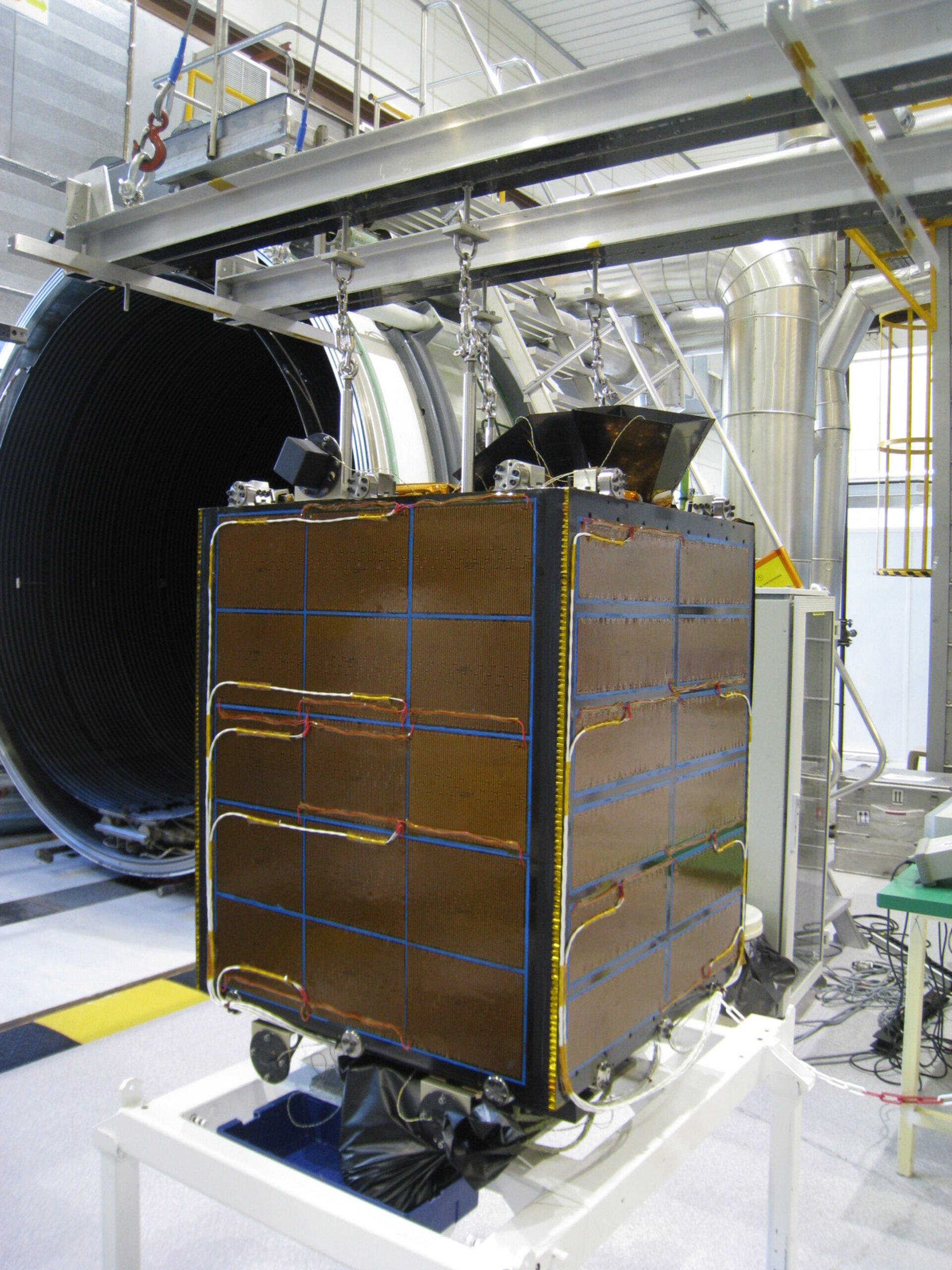
    The underlying design is recurrent from Proba-2. It is box-shaped, with precise dimensions 765 x 730 x 840 mm3. The platform is based around a H-structure with structural panels made from aluminium and carbon fibre reinforced plastic (CFRP) material. Unlike Proba-2, which has deployable panels, Proba-V will have its solar array mounted onto its satellite body.
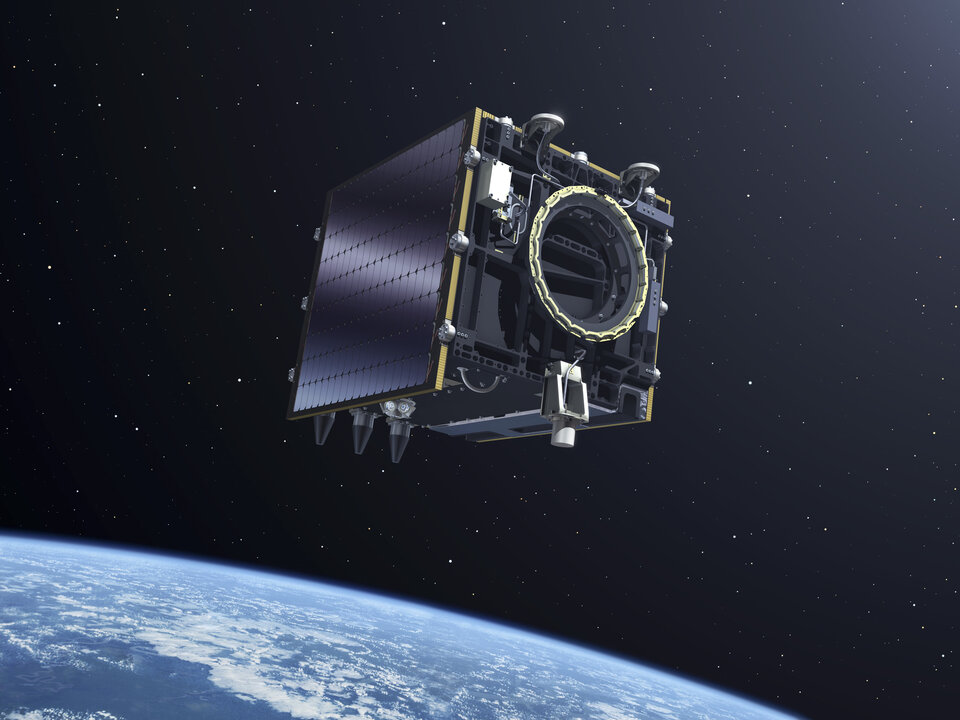
    Artistic view of the Proba-V satellite

    The satellite is three-axis stabilised, with an attitude and orbit control system inherited from Proba-2. incorporating a star tracker, GPS receivers, magnetometer and magneto-torquers.

    In an significant upgrade from previous Proba missions, the star trackers - as well as the Vegetation instrument payload – have been placed on an optical bench to minimise temperature-driven structural deformation. Navigation and manoeuvres take place on a largely autonomous basis, with minimal input from the ground.

    The satellite has a design lifetime of 2.5 years, and possesses total system redundancy to make it single-failure tolerant.

    Last update: 18 December 2012

    Rate this

    Views

    Share

    • Currently 4 out of 5 Stars.
    • 1
    • 2
    • 3
    • 4
    • 5
    Rating: 4/5 (1 votes cast)

    Thank you for rating!

    You have already rated this page, you can only rate it once!

    Your rating has been changed, thanks for rating!

    92
    facebook
    twitter
    reddit
    google plus
    digg
    tumbler
    digg
    blogger
    myspace

    Connect with us

    • RSS
    • Youtube
    • Twitter
    • Flickr
    • Google Buzz
    • Subscribe
    • App Store
    • LATEST ARTICLES
    • · CryoSat hits land
    • · Ariane 5 completes seven launches …
    • · Measuring skull pressure without t…
    • · Malargüe station inauguration
    • · The solar wind is swirly
    • FAQ

    • Jobs at ESA

    • Site Map

    • Contacts

    • Terms and conditions