• → European Space Agency

      • Space for Europe
      • Space News
      • Space in Images
      • Space in Videos
    • About Us

      • Welcome to ESA
      • DG's News and Views
      • For Member State Delegations
      • Business with ESA
      • ESA Exhibitions
      • ESA Publications
      • Careers at ESA
    • Our Activities

      • Space News
      • Observing the Earth
      • Human Spaceflight
      • Launchers
      • Navigation
      • Space Science
      • Space Engineering
      • Operations
      • Technology
      • Telecommunications & Integrated Applications
    • For Public

    • For Media

    • For Educators

    • For Kids

    • ESA

    • Proba Missions

    • Proba-V at a glance
    • Overview
    • Objectives
    • About the instrument
    • V for Vegetation
    • Serving science
    • Fitting the world in a box
    • About the platform
    • Joining ESA’s Proba family
    • Boxing clever
    • About the mission
    • Made in Belgium
    • On the ground
    • Starting operations
    • New technology
    • Hitching a ride
    • Tracking aircraft from orbit
    • New space semiconductor
    • Detecting radiation
    • Fly by fibre
    • About the launch
    • Launcher
    • Launch site
    • Proba-V launch diary part 1
    • Proba-V launch diary part 2
    • Proba-V launch diary part 3
    • Proba-V launch diary part 4
    • What's next
    • Proba-3
    • Already flying
    • Proba-1
    • Proba-2
    • Multimedia
    • Proba-V images
    • Proba images
    • Proba Earth images
    • Videos
    • Animations
    • Contact
    • Contact us

    ESA > Our Activities > Technology > Proba Missions

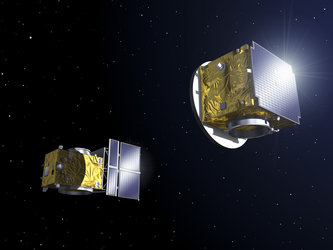
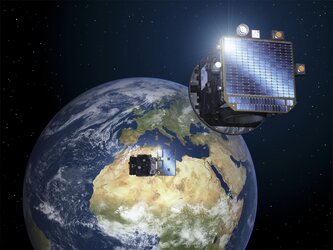
    Proba-3's pair of satellites

    Platforms

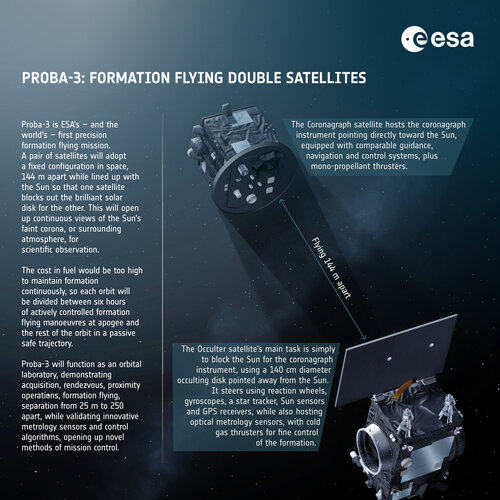
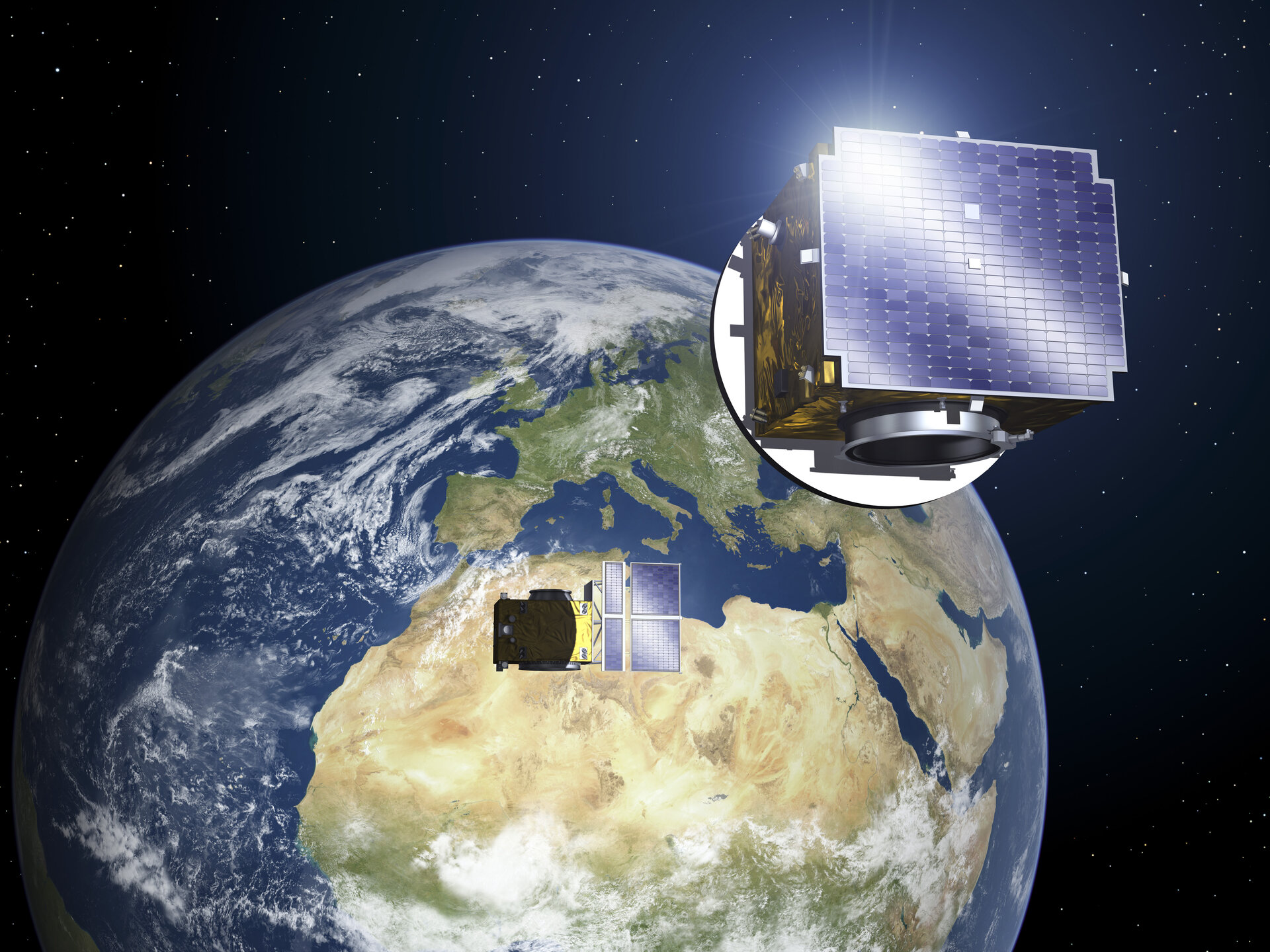
    Both the larger Coronagraph and the smaller Occulter satellites are derived from ESA’s standard Proba platform.

    The 340 kg coronagraph satellite has a volume of 1100 x 1800 x 1700 mm3. It hosts the coronagraph instrument which will point directly at the Occulter satellite to observe the corona of the Sun. It takes power from a deployable solar array.

    Its front panel has an opening for the coronagraph instrument and for optical metrology sensors. The guidance, navigation and control (GNC) system consists of four reaction wheels, 2x3-axis gyroscopes, one three-headed star tracker, six Sun sensors and two GPS receivers. The majority of the formation flying system is housed within the coronagraph satellite which performs most of the manoeuvres.

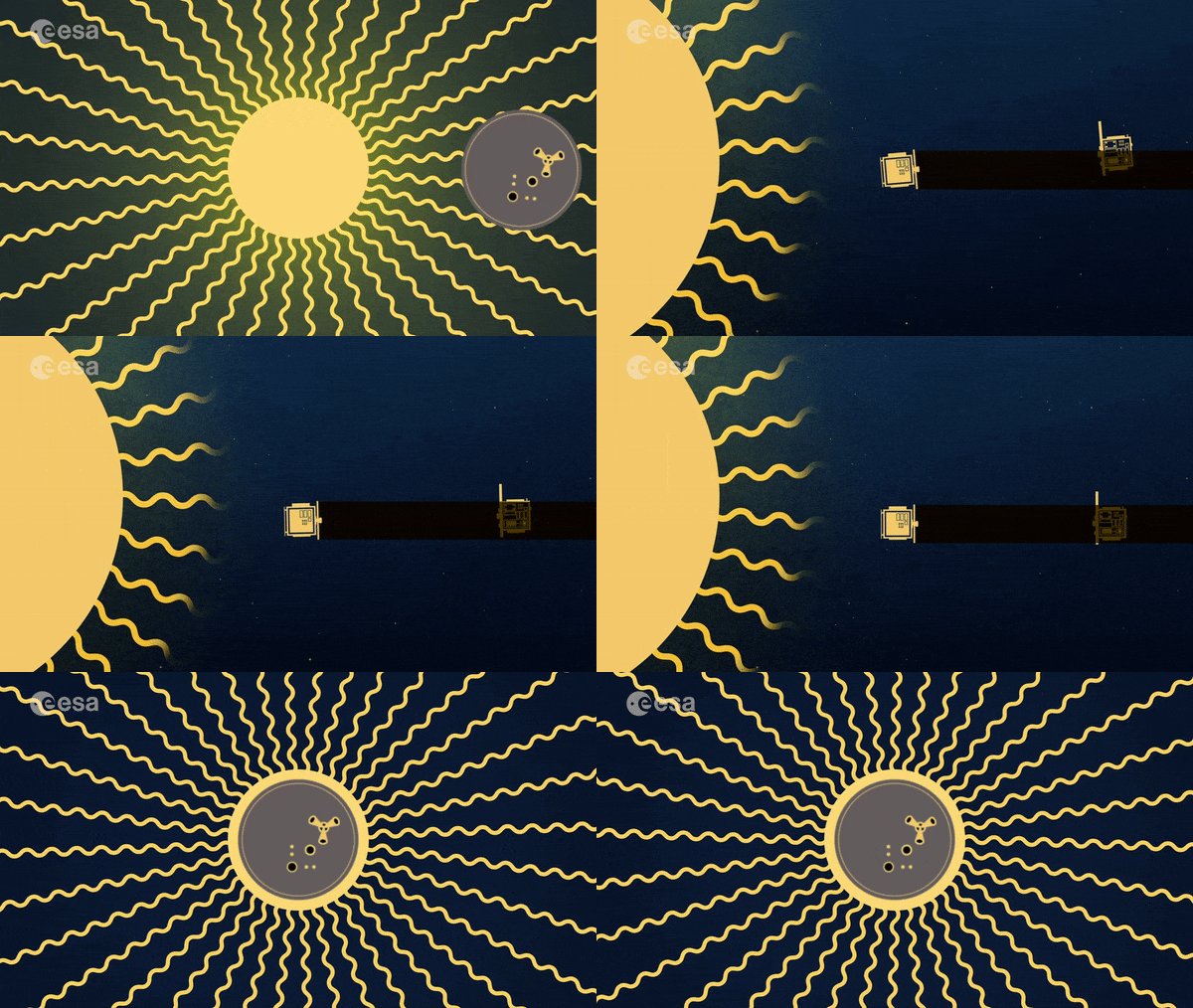
    The 200 kg Occulter satellite has a volume of 900 x 1400 x 900 mm3. Its main task is simply to block the Sun for the coronagraph instrument, with a 1400-mm diameter occulting disk on its face pointing away from the Sun.

    The opposite side accommodates the satellite’s solar array. Its GNC system consists of four reaction wheels, three three-axis gyroscopes, one triple-headed star tracker, six Sun sensors and two GPS receivers.

    Last update: 16 November 2012

    Rate this

    Views

    Share

    • Currently 0 out of 5 Stars.
    • 1
    • 2
    • 3
    • 4
    • 5
    Rating: 0/5 (0 votes cast)

    Thank you for rating!

    You have already rated this page, you can only rate it once!

    Your rating has been changed, thanks for rating!

    273
    Tweet
    • More information
      • About Proba-3
        • Mission
          • Platforms
            • Technologies
              • Science payload
              • Proba-3 fact sheet (English)
              • Related article
                • ESA’s Tigers on prowl for solar corona’s secrets

    Connect with us

    • RSS
    • Youtube
    • Twitter
    • Flickr
    • G+
    • Facebook
    • Livestream
    • Subscribe
    • App Store
    • LATEST ARTICLES
    • · ESA astronaut Timothy Peake set fo…
    • · Space drives e-mobility
    • · Proba-V opens its eyes
    • · First new Galileo satellite arrive…
    • · Next destination: space
    • FAQ

    • Jobs at ESA

    • Site Map

    • Contacts

    • Terms and conditions