• → European Space Agency

      • Space for Europe
      • Space News
      • Space in Images
      • Space in Videos
    • About Us

      • Welcome to ESA
      • DG's News and Views
      • For Member State Delegations
      • Business with ESA
      • ESA Exhibitions
      • ESA Publications
      • Careers at ESA
    • Our Activities

      • Space News
      • Observing the Earth
      • Human Spaceflight
      • Launchers
      • Navigation
      • Space Science
      • Space Engineering
      • Operations
      • Technology
      • Telecommunications & Integrated Applications
    • For Public

    • For Media

      • Media
      • ESA TV
      • Videos for professionals
      • Photos
    • For Educators

    • For Kids

    • ESA

    • Technology

    • Technology Transfer

    • About technology
    • Foundation of innovation
    • A solid investment
    • Going up
    • Competitive edge
    • Supporting science
    • Giant leaps
    • Cross-Cutting Initiatives
    • Strategy and harmonisation
    • About strategy and harmonisation
    • Generic technology programmes
    • Basic Technology Research Programme (TRP)
    • General Support Technology Programme (GSTP)
    • Technology Transfer Programme (TTP)
    • European Components Initiative (ECI)
    • Technology in domain programmes
    • Technology in Domain programmes
    • Services
    • ESA Conferences
    • RSS feeds
    • Subscribe

    ESA > Our Activities > Technology

    Technology potential for the future

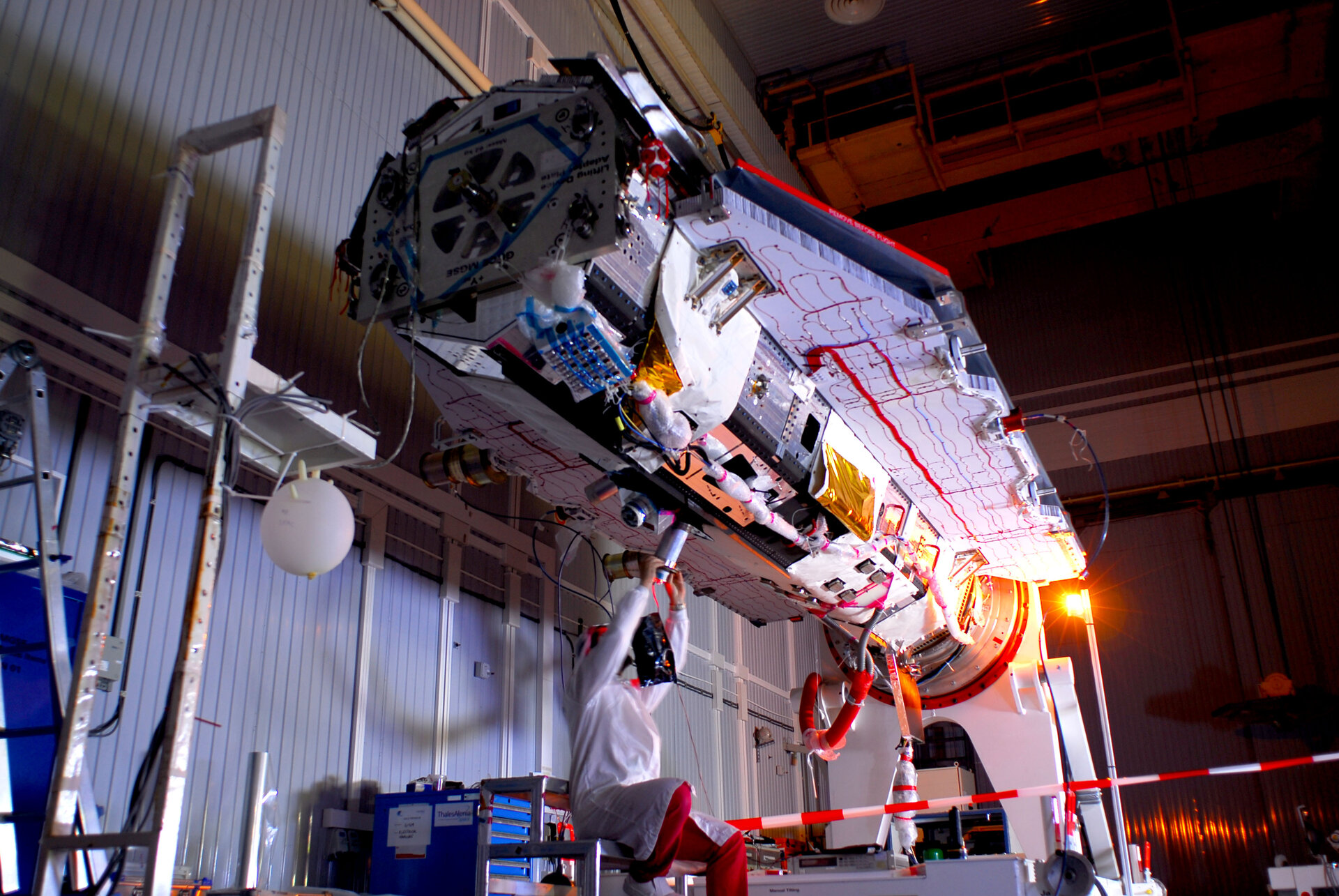
    Testing the startrackers in darkened cleanroom

    The technologies proven by GOCE are likely to find further application in enabling a new class of next-generation science missions that require extreme stability and positioning control. These include ESA's LISA Pathfinder and France's Microscope missions, which both seek to investigate how test masses behave when cut off from all other forces acting upon them, down to and including solar radiation pressure, operating to a high level of precision in orbits further from Earth.
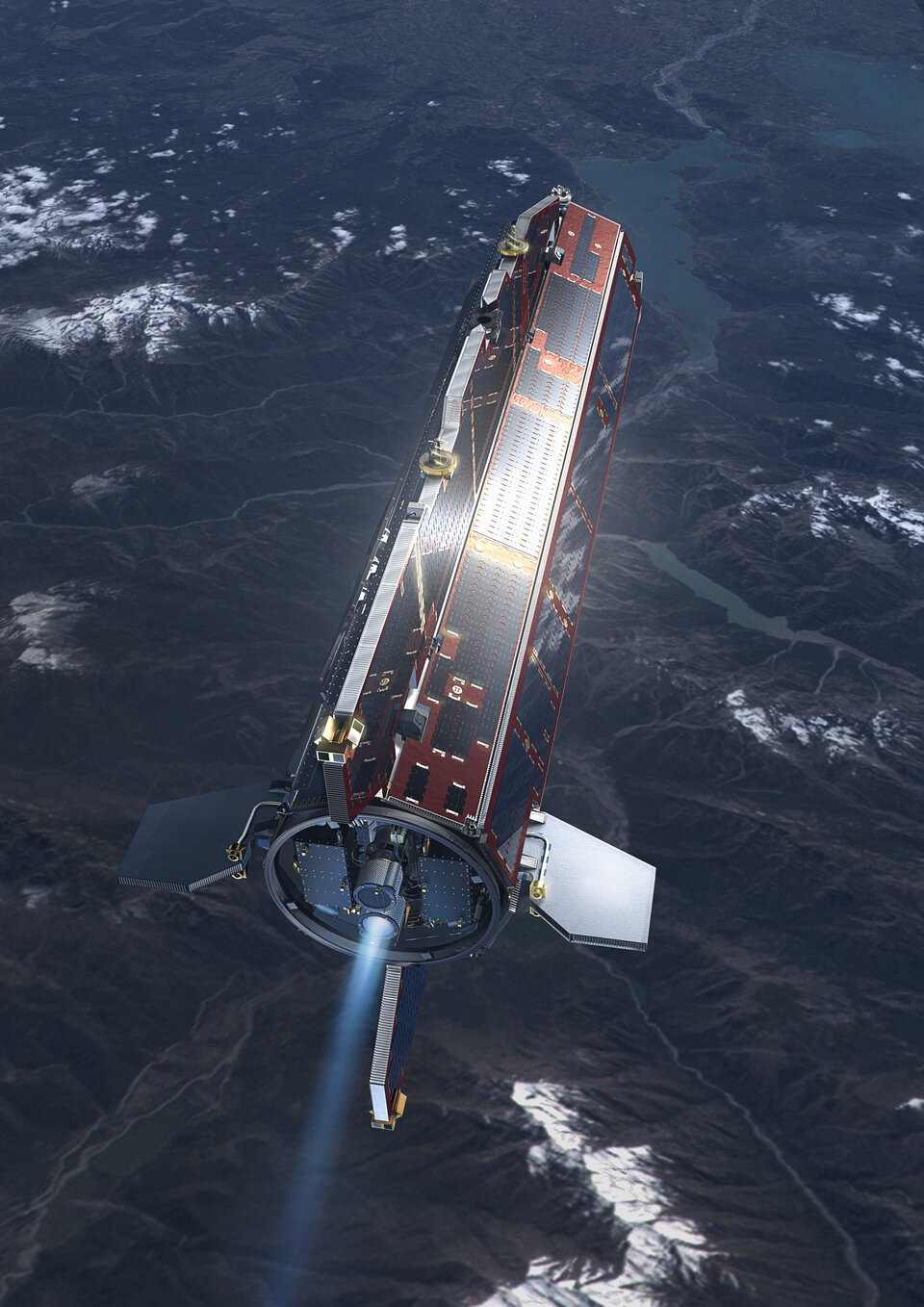
    GOCE in orbit
    GOCE in orbit

    And if multiple spacecraft can maintain their position in space to a very high degree of accuracy then a scientifically valuable technique called interferometry becomes possible. This involves combining light or radar waves together to produce more data than a single satellite could provide. Interferometry forms the basis of ESA's three-satellite LISA mission to detect gravitational waves, as well as the Darwin space telescope aimed at combining light from a trio of satellites to detect Earth-like planets around other stars.

    GOCE's expected success could open up access to very low altitude orbits for future Earth-observing spacecraft. While these missions typically fly at around 800 km today, the ability to fly closer in future would potentially yield improvements in optical or radar resolution. And any follow-on gravity-detecting mission would have uses including monitoring changing ocean currents and ongoing earth movements such as isostatic uplift.

    Meanwhile the techniques and materials ensuring GOCE's high thermal stability are available to future missions planned to venture much closer to the heat of the Sun: the Bepi-Colombo mission to Mercury, and Solar Orbiter, intended to approach just a one fifth Earth's distance from our nearest star, where it will be exposed to 20 times more intense sunlight and powerful bursts of atomic particles.
    Last update: 2 March 2009

    Rate this

    Views

    Share

    • Currently 0 out of 5 Stars.
    • 1
    • 2
    • 3
    • 4
    • 5
    Rating: 0/5 (0 votes cast)

    Thank you for rating!

    You have already rated this page, you can only rate it once!

    Your rating has been changed, thanks for rating!

    21
    Tweet
    • More Information
      • Building ESA's gravity mapping mission posed hi-tech challenge
        • Flying a suite of technologies
          • A unique technical achievement
            • Technology potential for the future
            • GOCE launch
            • GOCE technical site
            • Related links
            • The Living Planet

    Connect with us

    • RSS
    • Youtube
    • Twitter
    • Flickr
    • G+
    • Facebook
    • Livestream
    • Subscribe
    • App Store
    • LATEST ARTICLES
    • · Rare merger reveals secrets of gal…
    • · Watching for hazards: ESA opens as…
    • · ESA astronaut Timothy Peake set fo…
    • · Space drives e-mobility
    • · Proba-V opens its eyes
    • FAQ

    • Jobs at ESA

    • Site Map

    • Contacts

    • Terms and conditions