


Technology preparing way for space exploration missions to come
What new technologies need development to explore deeper into space? It’s a question of key significance for long-term space efforts, one that European experts gathered at ESA’s technical centre to begin answering.
Some 15 delegates from 10 ESA Member States and 50 representatives of European industry met with 25 Agency experts at ESA’s ESTEC site in Noordwijk, the Netherlands for the Exploration Technology Roadmaps Workshop on Wednesday 18 May.
Exploration beyond Earth orbit is high on the agenda of space agencies worldwide. There is general agreement that such exploration will be best pursued on a global, cooperative basis. Consensus has yet to be reached on the destinations, timeframe or mission details, but it is obvious that many new technologies will be demanded.
Giuseppe Morsillo, ESA’s Director of ESA Policies, Planning and Control, was among those welcoming the participants: “It is not a question of if humankind will explore space, only a question of when. Technologies are on the critical path to make it happen.”

Franco Ongaro, Head of ESTEC and ESA’s Director of Technical and Quality Management, agreed: “New technologies are fundamental for future developments – they are essential for exploration. The possibilities for spin-off should be strongly considered, as well as existing European competences, as industry and Member States decide on which technologies make the most sense to target.”
Sylvia Kainz-Hubber, Deputy Head of the European Commission’s Space Policy and Coordination Unit, was on hand to welcome the national and industrial representatives.
ESA experts presented a number of technology roadmaps intended to pave the way for European participation in international space missions. These involve detailed plans of how to build expertise and technology in essential fields on an incremental basis, with intermediate concrete milestones along the way.
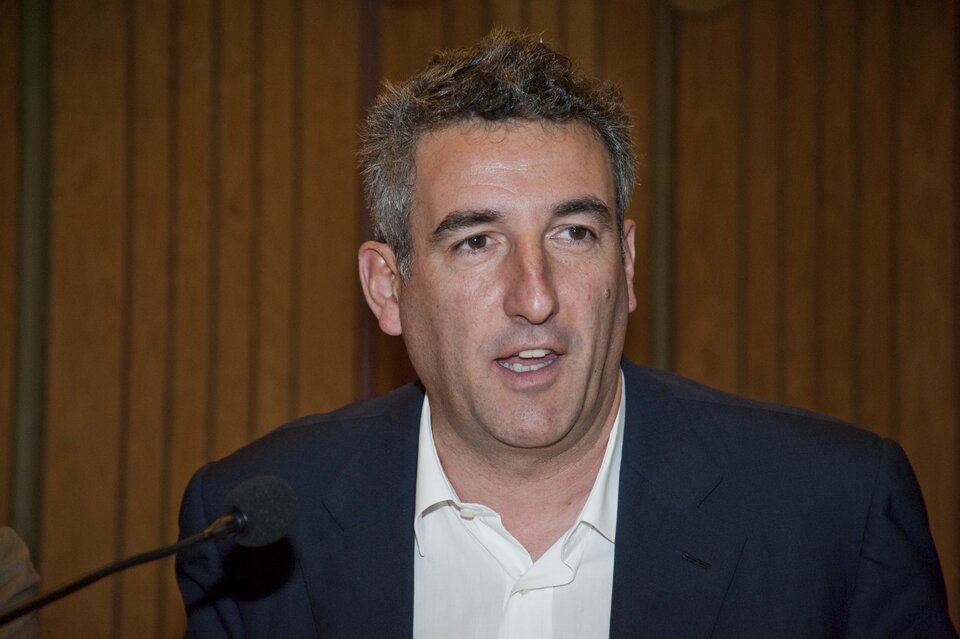
“The model defined by ESA is built on a sequence of capabilities that must be developed and demonstrated to reach defined steps within an exploration scenario,” explained Giorgio Saccoccia, Head of ESA’s Propulsion and Aerothermodynamics Division and co-organiser of the event.
The plans cover four priority fields, based on the conclusions of the Second Exploration Conference held in Brussels last October:
Life support: closed-loop systems, (including water, air and food, for long missions; microbial and chemical contaminant monitoring.
Automation and robotics: next-generation planetary explorers, orbital systems, and mobility and logistics support for planetary crews.
Advanced propulsion: 5–25 kW electric thrusters, evolved chemical propulsion systems, descent/ascent engines for planetary landings and transfer/departure stages.
- Novel energy sources: nuclear and thermoelectric power, regenerative fuel cells, high-energy-density batteries.
As well as the questions received on the day, participants will continue to return comments until mid-June, focusing on the plausibility of budget and schedule estimates, likely synergies with terrestrial research activities and potential collaborators, as well as any elements that might have been missed.
“This is just the start of the process,” explained Isabelle Duvaux-Béchon, Head of the Future & Strategic Studies Office in the Directorate for ESA Policies, Planning & Control, co-organiser of the event.
“In the coming weeks, we expect comments from all participants and interaction with the experts.
“The aim is to support the preparation of an inter-Directorate Exploration proposal for the ESA’s next Ministerial Council in 2012.”


