Communicating with the world
Communications systems are the lifeblood of our modern planet. From prehistoric pictures on cave walls to the invention of writing, books, the radio, telephone, television and now computers, the systems that man has developed have transformed our world and created the information-rich society we know today.
Now, more than any other time, technology is advancing at an unprecedented rate, and with the advent of mobile communications, the internet and multi-media, humankind is turning to space technology to help in the quest for a truly global network.
Satellites are the key to satisfying that demand. There are more than 200 telecommunication satellites in geostationary orbit. Over the last three decades they have revolutionised society, changed the way our economies work and introduced new dimensions to television and entertainment.
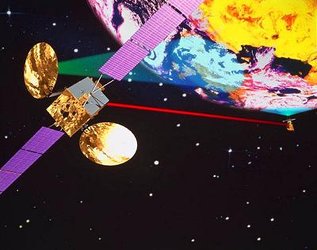
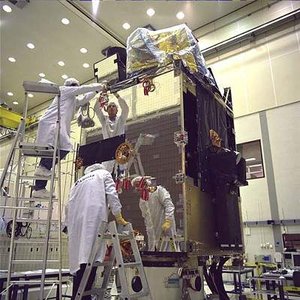
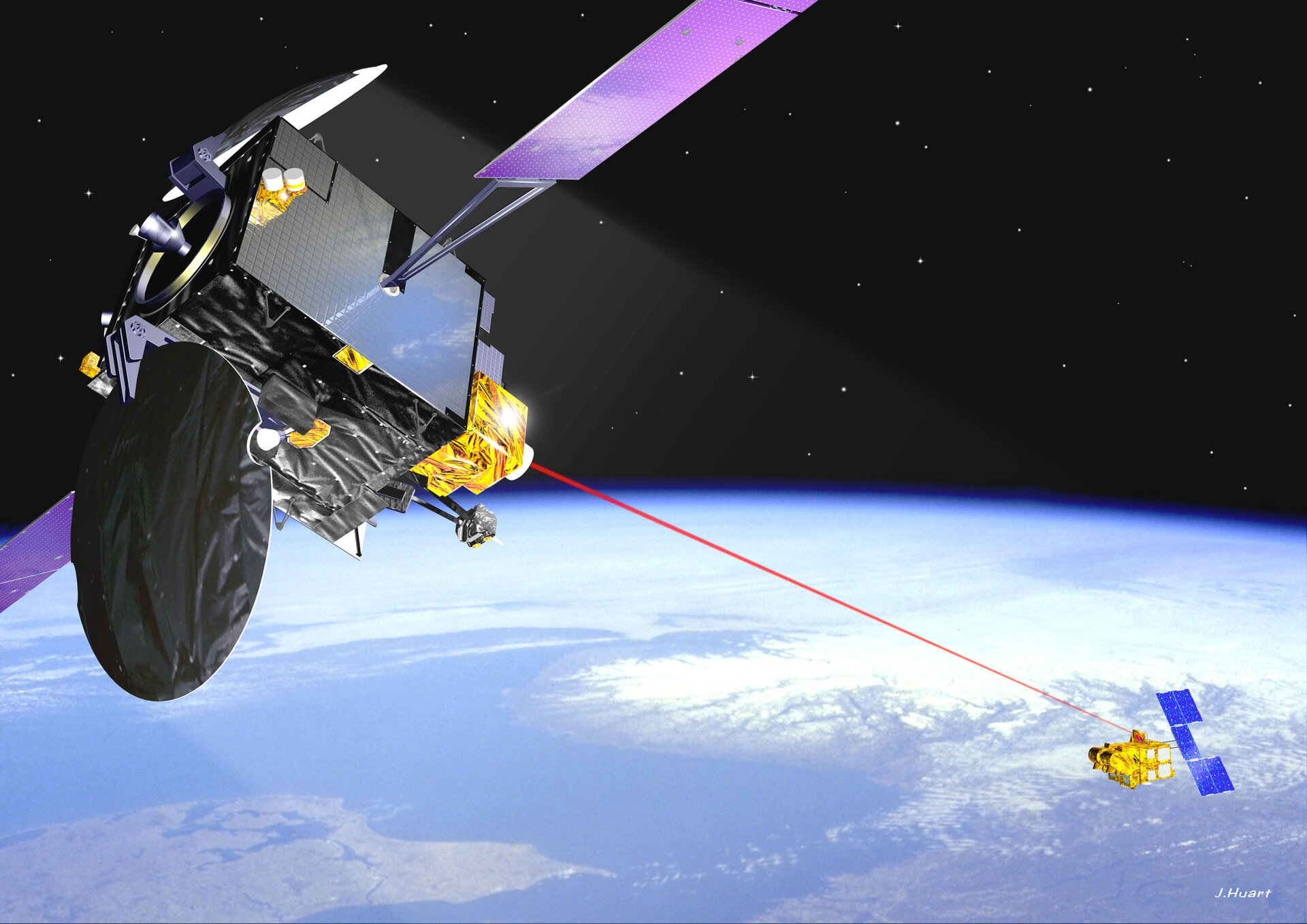
Europe, represented by ESA, is at the forefront of this transformation and is introducing a new era of telecommunication services to the world with its latest multi-purpose telecommunications and technology demonstration satellite, Artemis.
Artemis, which stands for Advanced Relay Technology Mission, was launched on 12 July 2001 on an Ariane 5 from Europe’s spaceport in Kourou, French Guiana. It shared the launcher with the BSAT-2b direct broadcasting satellite.
Artemis carries three sophisticated payloads for the fulfilment of navigational, mobile communication and data relay missions over the next 10 years:
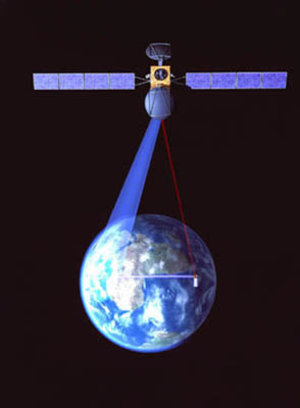
The provision of voice and data communications between mobile terminals, mainly for trucks, trains or boats in remote areas of Europe and North Africa, as well as on the Atlantic.
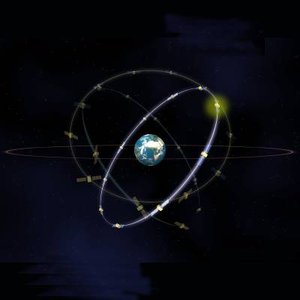
Performing a key role within Europe's EGNOS satellite Navigation System by broadcasting enhanced GPS and Glonass signals for use by civilian 'safety critical' transport and navigational services.
- The provision of inter-orbit satellite links using advanced S and Ka band frequencies and laser technology.
Touching our lives
What do telecommunication satellites do for us on Earth?
Satellites have changed the way and speed at which we communicate. They permeate our lives on every level.
Two out of every three intercontinental telephone calls are transmitted via telecommunication satellites today.
The everyday business communications between retail chains and banks, national lottery systems and even petrol and water pipelines are often operated in some form by satellite.
Broadcast, text or audio news distributed by agencies is mostly sent via satellite links informing us of world events as they happen.
Sports or other events happening just a few kilometres away are just as likely to be transmitted via satellite link.
Access to the backbone of the internet in many countries of the world is by satellite communications.
- Satellite systems are an indispensable component of global mobile communication networks. Systems such as Inmarsat have changed the way that sea-faring vessels communicate with the rest of the world.