ESA-supported mobile telecom system receives top engineering award
A satellite-based mobile communication system developed by Inmarsat with ESA support has been awarded Britain’s top prize for engineering innovation. The judges noted how well the BGAN system served relief teams responding to the Haiti earthquake.
Inmarsat’s Broadband Global Area Network (BGAN) system – a development supported by ESA through its Advanced Research in Telecommunications Systems (ARTES) programme – was the recipient of this year’s McRobert Award, presented each year by the UK’s Royal Academy of Engineering.
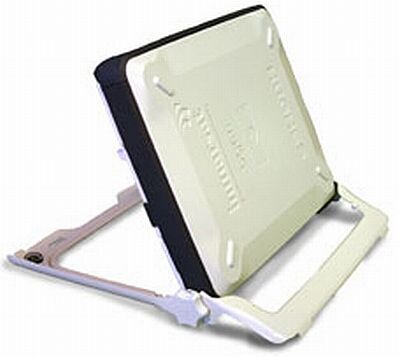
BGAN provides communications coverage to mobile users anywhere on Earth through a quartet of geostationary satellites, explained Juan Rivera Castro, ESA’s technical officer: “BGAN provides, on a global scale, the most advanced communication services to mobile users on planes, vessels and on land. It has demonstrated its capabilities to support communications in harsh conditions and emergency scenarios.”
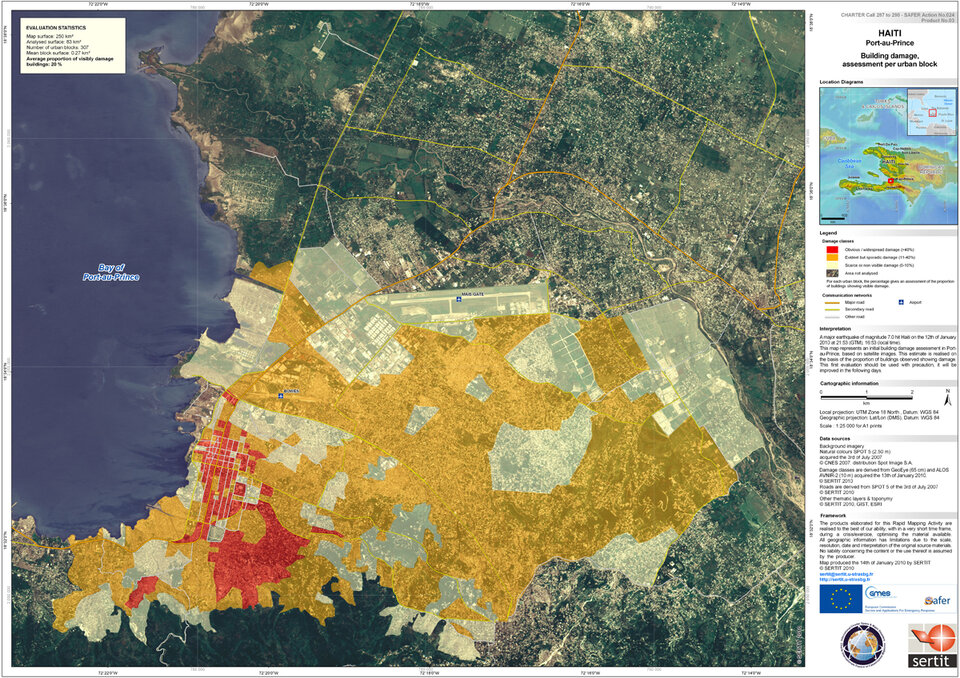
A dramatic example of BGAN’s usefulness came last January. Only a few days after the devastating Haiti earthquake destroyed most of the terrestrial infrastructure, BGAN supported the communications needs of disaster relief teams on the ground.
A total of 472 user terminals accessed the system’s spot beam over Haiti. At a single moment, 137 terminals – supporting many more individual users – were sending and receiving data, while at the same time some 35 telephone conversations were underway. In the course of a day, the beam enabled a total 36 054 minutes of communication.
“The Inmarsat team is, of course, delighted that its engineering effort on BGAN, which spanned more than a decade, has been acknowledged,” said Eugene Jilg, chief technical officer of Inmarsat.
“The team is regularly rewarded as it learns of occasions where BGAN has been used to save lives, ease suffering or otherwise benefited the global community, but to have the special recognition the award imparts – particularly in light of the impressive finalist competitors – is deeply gratifying.
“ESA’s contributions to the BGAN programme over the years have been decisively enabling. They continue to be so.”
ESA and Inmarsat began collaborating on BGAN in 2003 with the establishment of an ARTES project called the ‘BGAN extension’ (BGAN-X). Focused on the creation of new satellite terminal types, the project helped to expand the commercial terminal range, increasing the penetration of the initial BGAN system.
In 2007 ESA and Inmarsat started to work on extending the capabilities through BGAN-X phase 2, with new capabilities including ‘point to multi-point’ communications, allowing data to be disseminated rapidly to large populations of users.
That same year, ESA and Inmarsat also signed a public private partnership for Alphasat, the first mission to employ a new class of European high-power telecommunication platform.
In 2009 ESA and Inmarsat embarked on the Alphasat-Extension programme, which will extend the capabilities and applications of the BGAN system to take advantage of this new satellite platform.