• → European Space Agency

      • Space for Europe
      • Space News
      • Space in Images
      • Space in Videos
    • About Us

      • Welcome to ESA
      • DG's News and Views
      • For Member State Delegations
      • Business with ESA
      • ESA Exhibitions
      • ESA Publications
      • Careers at ESA
    • Our Activities

      • Space News
      • Observing the Earth
      • Human Spaceflight
      • Launchers
      • Navigation
      • Space Science
      • Space Engineering
      • Operations
      • Technology
      • Telecommunications & Integrated Applications
    • For Public

    • For Media

    • For Educators

    • For Kids

    • ESA

    • Telecommunications & Integrated Applications

    • TIA - About Telecommunications
    • About ESA's TIA Directorate
    • Telecommunications satellites
    • Orbits
    • The Satcom market
    • Historical overview
    • Artemis
    • Hylas-1
    • ESA's Telecommunication Programmes
    • ARTES programme overview
    • Alphabus/Alphasat
    • SmallGEO
    • EDRS
    • Iris
    • Integrated Applications Promotion (IAP)
    • Partner Programme: Electra
    • Multimedia
    • Image gallery
    • Video gallery
    • Services
    • Subscribe
    • RSS feeds

    ESA > Our Activities > Telecommunications & Integrated Applications

    ESA helps establish emergency medical service in Canada’s remote communities

    Emergency medicine
    Emergency medicine
    7 December 2000
    Good health and a good education are arguably the two most important things in life - and the European Space Agency is helping to bring together those vital ingredients for people in the remotest parts of Canada, with a million dollar investment in a ground-breaking Multimedia satellite project.
    The Remote Communities Services Telecentre (RCST) project, is being run by satellite operator, Telesat and comes under ESA’s ARTES 3 Multimedia initiative.

    The project has been operating since 1998 linking a number of rural ‘telecentres’ in Labrador and Newfoundland with others in more populated areas. These centres have been providing integrated tele-learning and tele-health facilities via broadband satellite links, such as high-speed internet access, video-conferencing and digital imaging.

    The RCST project has proven invaluable in the field of health care. A doctor using the system in a remote telecentre in Port aux Basques on the western edge of New Foundland can, for example, transmit images of a patient’s condition to a specialist in St John’s more than 450 kilometres away.

    By examining the images on a monitor the specialist can then diagnose the condition and either prescribe treatment or request a personal visit. In this respect the satellite system saves patients the inconvenience and cost of travelling substantial distances for standard consultations.
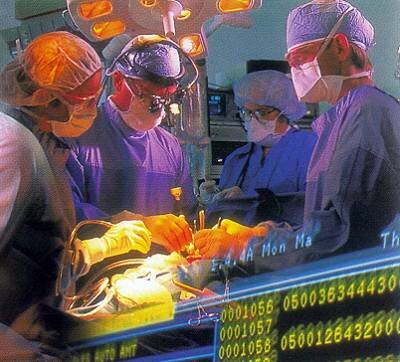
    Telemedicine
    Telemedicine
    Initially focusing on new ways to integrate health, education and information services for small businesses and government agencies, the RCST project has taken a new turn with the introduction of the Integrated Emergency Medicine Network (IEMN), a system that provides crisis medical care for patients during ambulance transit.

    Now, the new IEMN system has further implications for the development of emergency health care in remote areas. Ambulances, including the airborne variety are fitted out with mobile satellite voice and data service (MSAT) - in this case supplied by TMI Communications. These special ambulances allow doctors to monitor the vital signs of patients in transit and better prepare for their arrival. Better preparation means faster treatment and more lives saved.

    Telesat’s senior specialist in applications and networks, Abdul Lakhani, believes the IEMN system has huge potential. “When connected to a portable telemedicine satellite terminal, the IEMN could also save lives in the event of floods, fires, avalanches, or other disasters,” he explained.

    “Given the frequency of environmental disasters worldwide, a system that offers victims a better chance of survival stands to have global appeal and we are working with ESA to see how we can use satellite technology and bring solutions such as this to the marketplace,” said Mr Lakhani.
    Rate this

    Views

    Share

    • Currently 0 out of 5 Stars.
    • 1
    • 2
    • 3
    • 4
    • 5
    Rating: 0/5 (0 votes cast)

    Thank you for rating!

    You have already rated this page, you can only rate it once!

    Your rating has been changed, thanks for rating!

    23
    Tweet
    • Related news
      • ESA's Multimedia Programme ARTES-3 calls for ideas
        • Trapeze project runs lifeline to remote areas
          • University uses satellite applications for distance learning
          • Related links
          • Telecommunications Homepage
          • ARTES-3 website
          • Remote Communities Services Telecentre (RCST)
          • TMI Communications

    Connect with us

    • RSS
    • Youtube
    • Twitter
    • Flickr
    • G+
    • Facebook
    • Livestream
    • Subscribe
    • App Store
    • LATEST ARTICLES
    • · ESA astronaut Timothy Peake set fo…
    • · Space drives e-mobility
    • · Proba-V opens its eyes
    • · First new Galileo satellite arrive…
    • · Next destination: space
    • FAQ

    • Jobs at ESA

    • Site Map

    • Contacts

    • Terms and conditions
